
In laboratory settings, the preparation and preservation of bacteriostatic water peptides are critical to maintaining experimental integrity and preventing contamination. Unlike standard sterile water, this specialized solvent contains a mild preservative that inhibits microbial growth, making it indispensable for multi-use research vials. Understanding the science behind this sterile solution is essential for any researcher analyzing delicate peptide chains.
What Is Bacteriostatic Water?
Bacteriostatic water is a sterile, non-pyrogenic preparation of water for injection containing 0.9% benzyl alcohol added as an antimicrobial preservative. The term “bacteriostatic” refers to the solution’s ability to arrest the replication of bacteria without necessarily destroying the organisms outright. This is a crucial distinction from bactericidal agents, which actively kill bacteria. By keeping any introduced microorganisms in a static, non-replicating state, the solution prevents the rapid colonization that would otherwise degrade organic compounds and compromise laboratory studies.
The key ingredient, benzyl alcohol, is a naturally occurring organic alcohol often derived from fruits or synthesized for high-purity applications. At a concentration of 0.9%, it effectively disrupts the cell membranes of potential bacterial contaminants without altering the chemical structure of the dissolved solutes. This chemical balance is critical in laboratory research where even minor chemical modifications can completely alter a peptide’s folding pattern, stability, and receptor-binding affinity.
Why Scientists Choose Bacteriostatic Water for Peptides
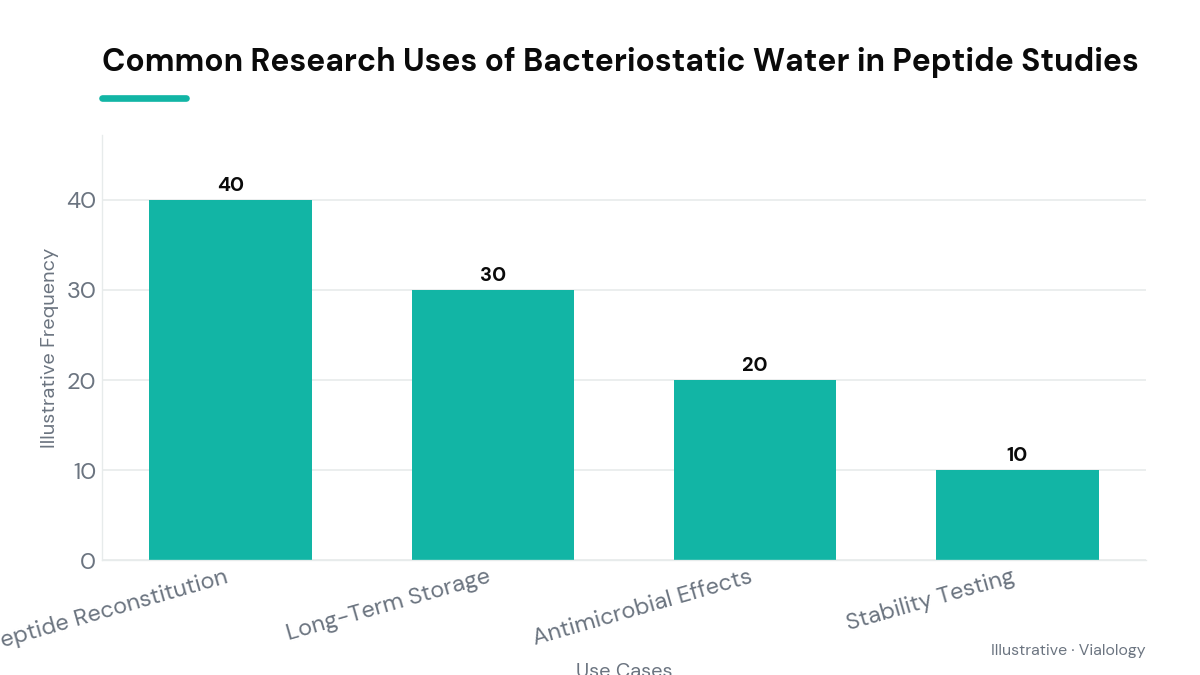
Peptide molecules are notoriously fragile, consisting of short chains of amino acids linked by peptide bonds that are highly susceptible to enzymatic degradation and microbial breakdown. When preparing solutions for laboratory study, choosing bacteriostatic water for peptides is a standard protocol due to its ability to prevent bacterial growth over extended periods. Because research protocols often involve withdrawing multiple micro-doses from a single vial over several days or weeks, each needle insertion introduces a risk of environmental contamination that would quickly ruin a standard sterile water solution.
In contrast, sterile water for injection contains no preservative agents. Once a vial of sterile water is punctured, it must be used immediately or discarded, as it lacks any defense mechanism against opportunistic microbes. For long-term in vitro studies or animal models where consistency across multiple test points is required, bacteriostatic water ensures that the underlying peptide solution remains chemically stable and microbiologically pure throughout the duration of the testing window.
The Chemistry of Peptide Stability and Reconstitution
Reconstitution is the process of restoring a lyophilized (freeze-dried) peptide powder to a liquid state. Lyophilization is used by manufacturers because peptides in aqueous solutions undergo rapid hydrolysis—a chemical reaction where water molecules break the peptide bonds—and oxidation. By removing water, the peptide is kept in a stable, dormant state. However, once reconstituted, the clock begins ticking, and the presence of even minor bacterial populations can accelerate enzymatic cleavage, rendering the experimental compound useless.
The addition of 0.9% benzyl alcohol slightly lowers the pH of the water, typically resulting in a mildly acidic environment (around pH 4.5 to 7.0). Interestingly, many research peptides exhibit optimal stability in slightly acidic conditions, which further helps to prevent premature degradation. Researchers must carefully calculate dilution ratios to ensure the concentration of the preservative remains effective while keeping the delicate peptide structure intact during scientific analysis.
Safety and Storage Protocols in Laboratory Settings
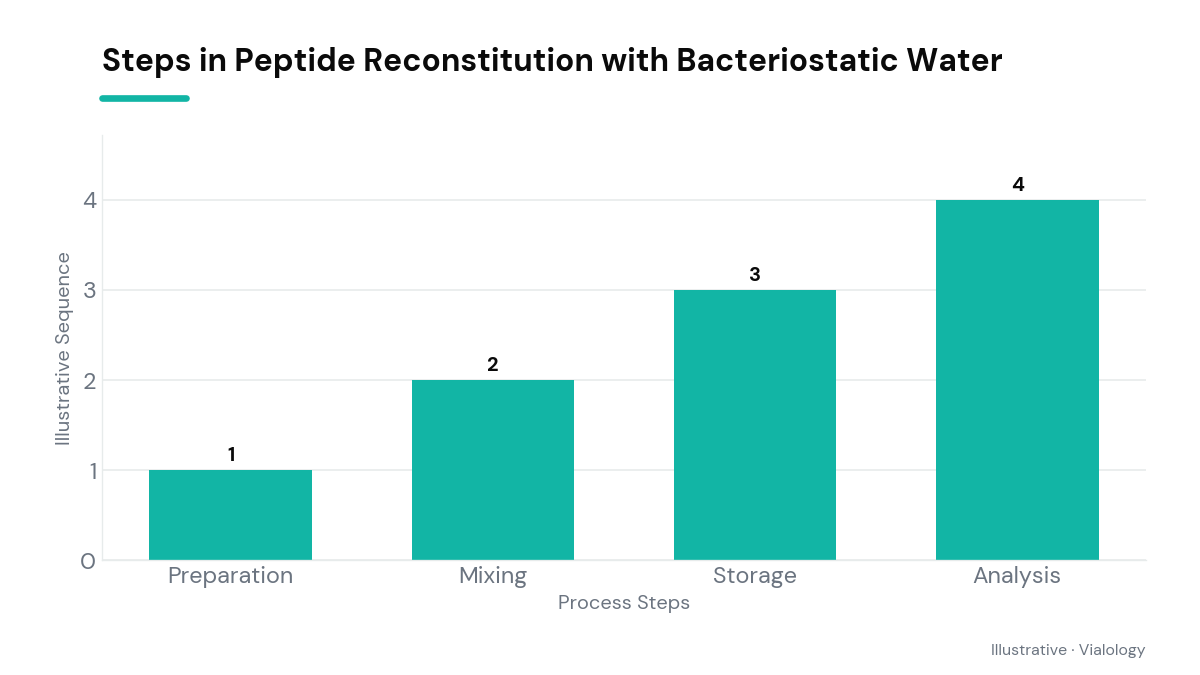
While bacteriostatic water is highly effective at preventing bacterial replication, it does not keep a solution stable indefinitely. Most laboratory guidelines suggest that reconstituted peptide solutions using bacteriostatic water should be stored in a controlled, refrigerated environment between 2°C and 8°C (36°F to 46°F) and typically used within 28 days. After this period, the efficacy of the benzyl alcohol preservative can begin to decline, and the physical stability of the reconstituted peptide itself may degrade significantly, risking experimental error.
Additionally, researchers must be aware of species-specific sensitivities to benzyl alcohol in animal models. While standard research rodents generally tolerate the low concentrations of benzyl alcohol used in bacteriostatic preparations, certain specialized cell cultures or hypersensitive models may require alternative preservation methods. This underscores the importance of thoroughly reviewing literature on target receptor pathways and solvent compatibility before initiating any peptide-based research protocol.
Related on Vialology
Frequently asked questions
What is the difference between sterile water and bacteriostatic water?
Sterile water contains no antimicrobial additives and must be discarded after a single use, whereas bacteriostatic water contains 0.9% benzyl alcohol to prevent bacterial growth, allowing for multiple vial punctures over a period of up to 28 days.
How long do bacteriostatic water peptides remain stable after reconstitution?
Once reconstituted with bacteriostatic water, most peptide solutions remain stable and free of bacterial growth for up to 28 days when kept refrigerated between 2°C and 8°C.
Can bacteriostatic water be frozen after reconstitution?
Freezing reconstituted peptide solutions is generally discouraged because the formation of ice crystals can shear and damage the delicate peptide bonds, potentially neutralizing the compound’s experimental efficacy.
Why does bacteriostatic water contain benzyl alcohol?
Benzyl alcohol is included at a 0.9% concentration as a bacteriostat, which safely inhibits the replication of bacteria that may be introduced to the vial during needle punctures without altering the peptide’s chemical structure.
Educational use only. Vialology publishes journalistic and educational content about peptide science. Nothing here is medical advice, diagnosis, or treatment, and nothing should be taken as an endorsement to use any substance. Many peptides discussed are experimental and are not approved by the FDA for human use. Always consult a licensed healthcare professional before making any health decision.