

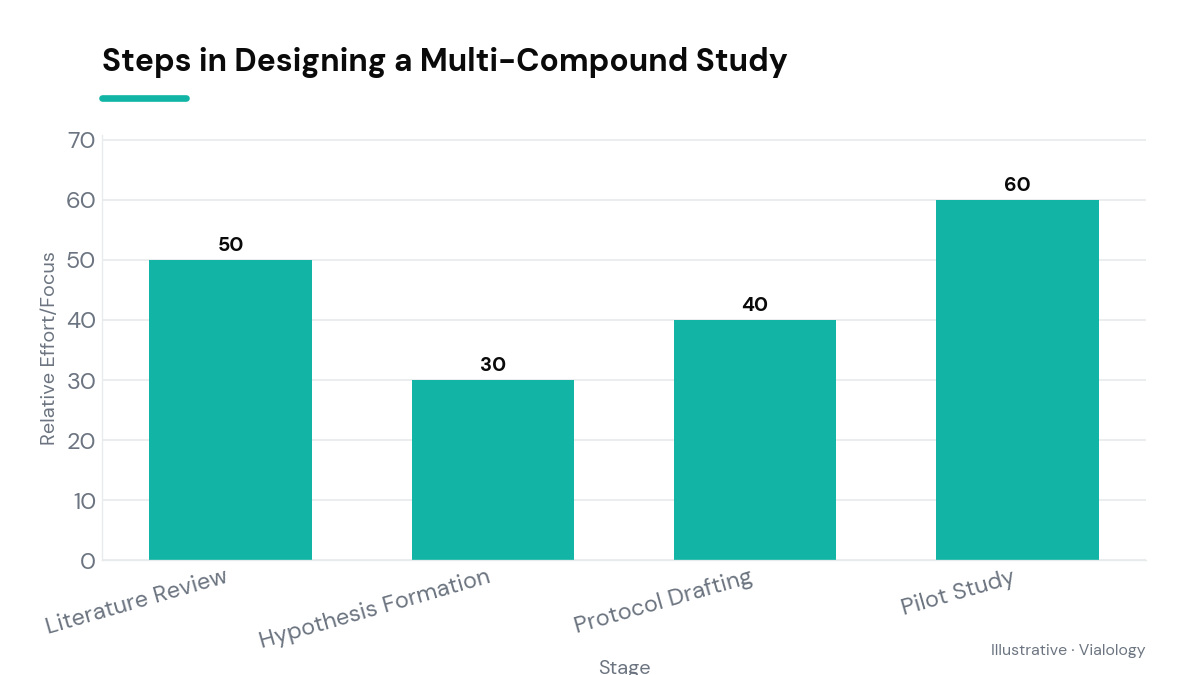
Setting up a multi-compound study using research grade peptides requires methodical planning rather than guesswork. When investigators design laboratory models to observe biochemical synergy, they rely on established scientific literature to guide their experimental parameters. This guide explores the core principles of structuring systematic multi-compound protocols to ensure reproducibility and scientific accuracy.
The Science of Synergistic Co-Administration
In peptide research, investigating a single compound in isolation often provides only a partial view of complex physiological pathways. Increasingly, preclinical researchers are exploring multi-compound designs to study potential synergistic relationships—where the combined effect of two or more substances is greater than the sum of their individual actions. For example, in cellular and animal models, researchers frequently study growth hormone secretagogues alongside growth hormone-releasing hormones to observe how they interact at different receptor sites to influence endogenous secretion. Understanding these pathways requires meticulous tracking of how each molecular structure behaves in tandem.
Designing these dual-action studies requires a deep dive into receptor affinity and half-life dynamics. If two compounds compete for the same cellular receptor, co-administration may lead to competitive antagonism, rendering the experiment ineffective. Conversely, targeting complementary pathways can yield valuable data on cellular signaling cascades. A 2019 review of peptide pharmacokinetics highlighted that mapping these interactions beforehand is critical to avoiding confounding outcomes, ensuring that observed cellular responses are truly a result of synergy rather than receptor saturation.
Establishing Baselines with Research Grade Peptides
The integrity of any multi-compound study hinges entirely on the quality of the starting materials. Utilizing highly purified research grade peptides is essential to eliminating compounding variables that could compromise biological assays. In a lab setting, even minor impurities or residual solvents can trigger off-target cellular responses, making it impossible to determine whether the observed effect was caused by the target compounds or the contaminants. Therefore, researchers prioritize analytical verification, such as High-Performance Liquid Chromatography (HPLC) and Mass Spectrometry (MS), to verify identity and purity before beginning any trial.
Once the purity of the compounds is verified, researchers establish a rigorous control baseline. This involves testing each peptide individually within the specific biological model before combining them. By documenting the isolated effects of each agent first, investigators create a reliable reference point. This stepwise methodology allows for precise comparative analysis once the multi-compound phase begins, ensuring that any unique synergistic effects can be clearly distinguished from baseline activities.

Designing the Experimental Framework Without Guesswork
A common hurdle in complex laboratory designs is determining the appropriate ratio and timing for each agent. Rather than relying on guesswork, researchers utilize established mathematical models and peer-reviewed literature to calculate concentrations. Allometric scaling is frequently employed to translate concentrations used in previous in vitro studies into appropriate in vivo laboratory models, adjusting for metabolic rates and surface area differences. Researchers mapping these complex pathways often consult a structured multi-compound protocol guide to systematically align their variables and ensure consistent experimental conditions.
Furthermore, protocol structure must account for the half-life of each compound to prevent premature clearance or cumulative toxicity. Designing a timeline that specifies exact intervals between administrations—or utilizing simultaneous perfusion in in vitro models—helps maintain the targeted steady-state concentration. Documenting these parameters in a highly structured log allows other laboratory teams to replicate the study, which is the ultimate test of any scientific hypothesis.
Mitigating Confounding Variables in Laboratory Protocols
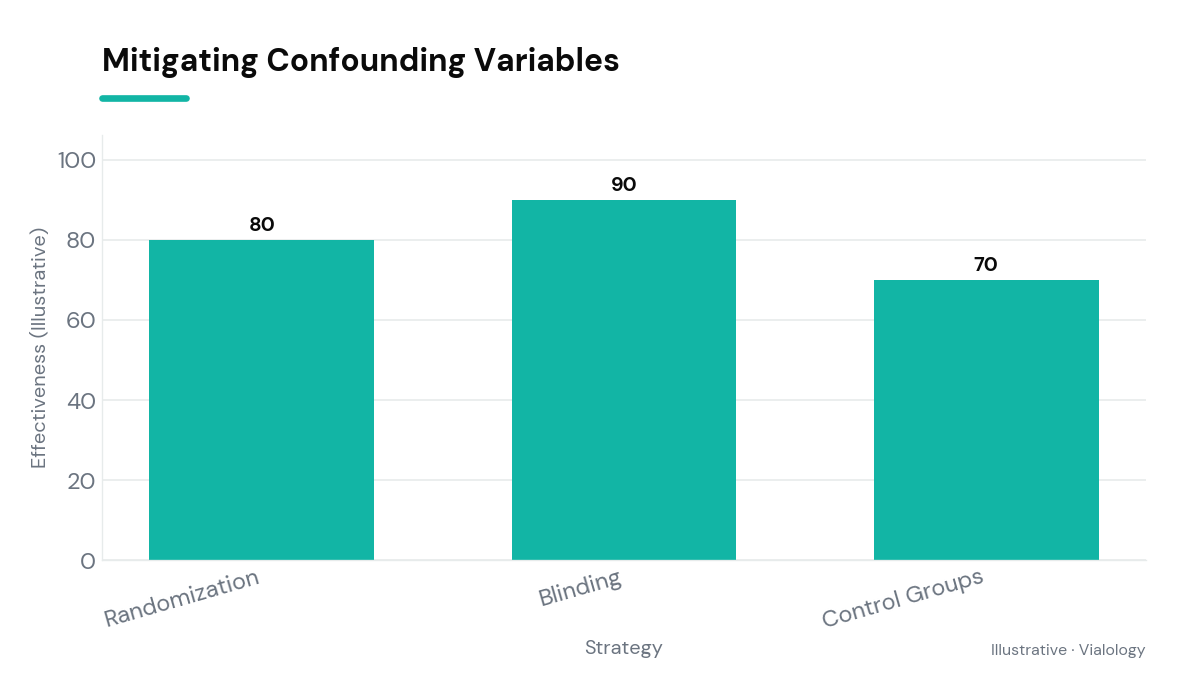
Beyond dosage and timing, environmental and preparation variables can significantly influence the outcome of a multi-compound study. Factors such as the type of reconstitution solvent—whether bacteriostatic water, sterile saline, or acetic acid—must be carefully selected based on each peptide’s unique solubility and stability profile. Mixing different dry powders prior to reconstitution is generally avoided in laboratory settings, as it can lead to unpredictable chemical reactions or degradation before the compounds even enter the test system.
Temperature control and storage conditions represent additional critical variables. Many research peptides are highly sensitive to thermal degradation and shear stress, requiring gentle handling and precise refrigeration. By controlling these physical parameters alongside the chemical variables, researchers can confidently attribute their findings to the biological interactions of the compounds under investigation, advancing our collective understanding of peptide synergy.
Related on Vialology
Frequently asked questions
Why do researchers study peptide combinations instead of single compounds?
Investigating combined compounds allows researchers to observe potential synergistic mechanisms that single agents may not trigger individually, reflecting more complex biological systems.
How are concentrations determined in preclinical peptide studies?
Investigators analyze peer-reviewed literature and utilize mathematical formulas, such as allometric scaling, to translate concentrations from prior in vitro or animal models rather than relying on speculation.
What is the risk of using low-purity peptides in a multi-compound study?
Impurities introduce confounding variables that can interfere with cellular assays, making it impossible to determine which compound or contaminant caused the observed biological response.
Educational use only. Vialology publishes journalistic and educational content about peptide science. Nothing here is medical advice, diagnosis, or treatment, and nothing should be taken as an endorsement to use any substance. Many peptides discussed are experimental and are not approved by the FDA for human use. Always consult a licensed healthcare professional before making any health decision.