
When exploring the science of nighttime recovery, “Ipamorelin and Sleep Quality Research: What Growth-Hormone Peptide Studies Show” represents a major area of curiosity for biohackers and longevity researchers alike. As a selective growth hormone secretagogue receptor agonist, this peptide has drawn attention for its ability to stimulate growth hormone release without significantly affecting cortisol or prolactin levels. Understanding how these hormonal pathways intersect with circadian biology is key to evaluating the compound’s actual physiological potential.
Understanding the Mechanism: How Ipamorelin Interacts with Growth Hormone
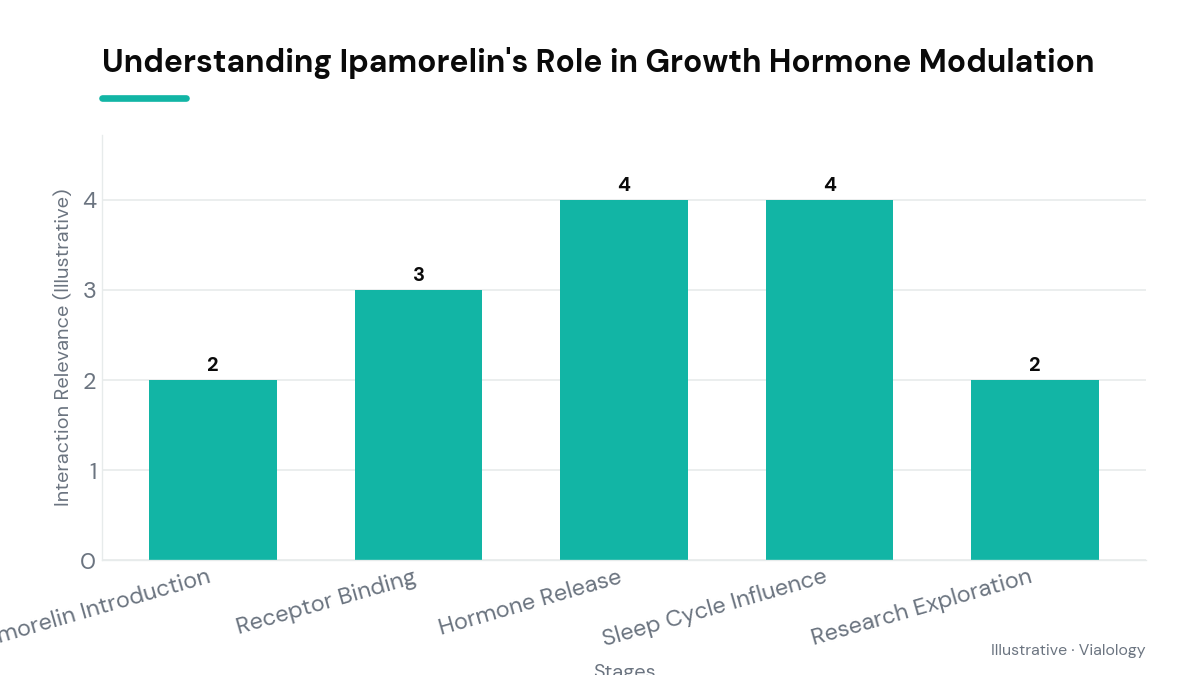
Ipamorelin belongs to a class of compounds known as growth hormone secretagogues (GHSs). Developed in the late 1990s, it mimics the action of ghrelin—the primary hunger hormone—by binding to the ghrelin receptor in the pituitary gland. This binding triggers a pulsatile release of growth hormone (GH), which in turn signals the liver to produce insulin-like growth factor 1 (IGF-1). Unlike older peptide secretagogues, research indicates that Ipamorelin is highly selective, meaning it stimulates growth hormone without causing a concurrent spike in adrenocorticotropic hormone (ACTH), cortisol, or prolactin.
By preserving the body’s natural pulsatile rhythm of GH release, researchers study Ipamorelin to observe how external secretagogues might influence metabolic pathways. Because natural GH pulses peak during the early stages of deep sleep, the temporal relationship between growth hormone secretagogues and sleep architecture has become a primary focal point of laboratory inquiry.
Ipamorelin and Sleep Quality Research: What Growth-Hormone Peptide Studies Show
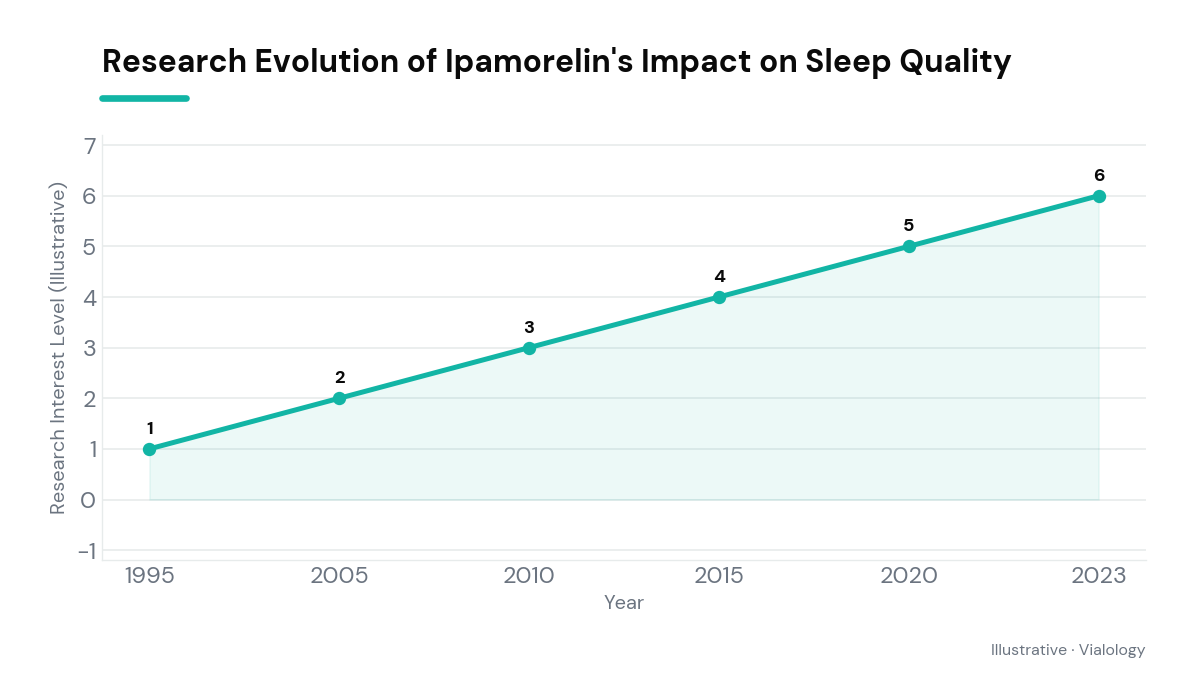
While many anecdotal reports online link peptide use to deeper rest, clinical data specifically investigating Ipamorelin and sleep quality remains limited and preliminary. Most of what scientists know about GHS-induced sleep enhancement comes from broader class-specific studies. For example, animal models evaluating ghrelin receptor agonists often note changes in slow-wave sleep (SWS) and rapid eye movement (REM) cycles, though human trials specifically validating these effects for Ipamorelin are lacking. To better understand the landscape of current data, looking at synthesized datasets like Omnix’s Ipamorelin research can clarify what has been proven in vivo versus what remains speculative.
In these laboratory models, researchers hypothesize that the stimulation of the GH/IGF-1 axis plays a feedback role in modulating the central nervous system’s sleep-wake regulatory centers. Because GH secretion and slow-wave sleep are deeply intertwined, any agent that alters GH pulsatility theoretically has the potential to influence sleep depth, though rigorous, placebo-controlled human trials are still required to prove a direct, therapeutic sleep benefit.
The Science of Deep Sleep and Growth Hormone Pulses
Deep sleep, or stage 3 non-rapid eye movement (NREM) sleep, is the period when the human body undergoes its most intense physical repair and recovery. It is during this phase that the pituitary gland releases its largest daily pulse of growth hormone. This nightly surge is vital for tissue regeneration, immune function, and protein synthesis throughout the body. Consequently, disruptions in sleep quality are frequently associated with accelerated signs of aging and compromised metabolic health.
Investigating how synthetic compounds interact with this biological clock is a frontier in longevity science. Because Ipamorelin does not induce the severe appetite stimulation or cortisol elevation associated with other ghrelin mimetics, researchers favor it in laboratory settings to isolate the specific effects of elevated GH on sleep architecture without confounding variables like stress-response activation.
Current Research Limitations and Regulatory Status
It is critical to emphasize that despite the growing body of academic literature around growth hormone secretagogues, Ipamorelin is not approved by the U.S. Food and Drug Administration (FDA) for human use, treatment, or medical therapy. The vast majority of peer-reviewed data on this compound stems from cell cultures and animal models, with human clinical trials primarily restricted to early-phase safety evaluations for specific gastrointestinal motility conditions rather than sleep optimization.
Because long-term safety profiles, potential side effects, and exact pharmacological interactions are not fully characterized in large-scale human studies, scientific consensus urges caution. Current investigations remain strictly confined to laboratory research, aimed at decoding the complex neuroendocrine pathways that govern sleep, recovery, and aging.
Related on Vialology
Frequently asked questions
Is Ipamorelin FDA-approved to improve sleep?
No, Ipamorelin is not approved by the FDA for any human use, including sleep improvement or hormone replacement therapy.
How does growth hormone affect sleep quality?
Growth hormone is naturally released in large pulses during deep, slow-wave sleep, and research suggests a bi-directional relationship where GH secretagogues may influence sleep-wake cycles.
Does Ipamorelin cause the same side effects as other GH secretagogues?
Unlike some other secretagogues, laboratory studies suggest Ipamorelin is highly selective and does not significantly elevate cortisol or prolactin, though long-term human safety data remains limited.
Educational use only. Vialology publishes journalistic and educational content about peptide science. Nothing here is medical advice, diagnosis, or treatment, and nothing should be taken as an endorsement to use any substance. Many peptides discussed are experimental and are not approved by the FDA for human use. Always consult a licensed healthcare professional before making any health decision.