
For decades, modern peptide crafters have worked behind the scenes of biomedical science, transforming raw amino acids into highly precise molecular tools. By replicating and modifying the body’s natural signaling molecules, these researchers design compounds that can unlock complex biological pathways in laboratory settings. Understanding how these chains are assembled and optimized offers a fascinating glimpse into the molecular architecture shaping the future of medicine.
The Blueprint of Solid-Phase Peptide Synthesis (SPPS)
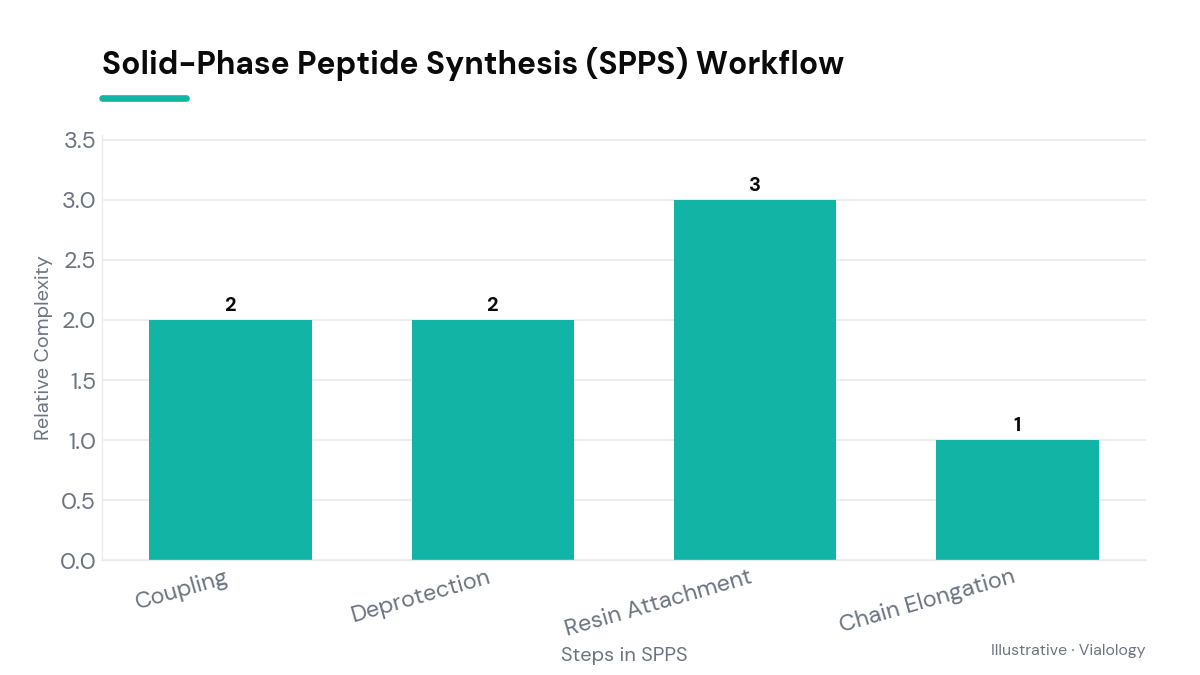
The cornerstone of modern peptide fabrication is Solid-Phase Peptide Synthesis (SPPS), a revolutionary technique pioneered by Robert Bruce Merrifield in 1963. In this method, peptide crafters anchor the first amino acid of a desired chain to an insoluble polymeric resin. From there, subsequent amino acids are added one by one in a highly controlled, stepwise fashion. This solid support allows researchers to wash away excess reagents and byproducts after each reaction cycle, drastically improving both yield and speed compared to older solution-based methods.
To prevent unwanted side reactions during this assembly line process, temporary protecting groups—such as Fmoc or Boc—are strategically attached to the reactive sites of the amino acids. Once the entire chain is constructed, a final chemical cleavage cocktail removes these protecting groups and detaches the finished peptide from the solid resin, leaving behind a highly specific sequence ready for analytical purification.
Purification and the Quest for Molecular Purity
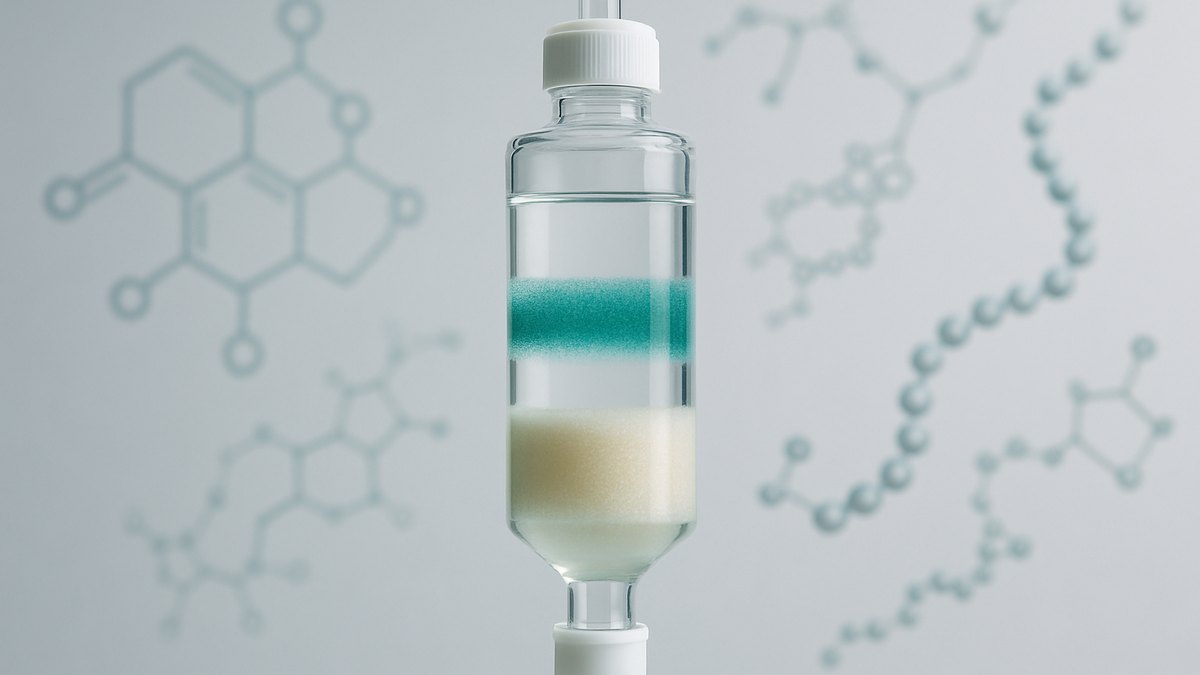
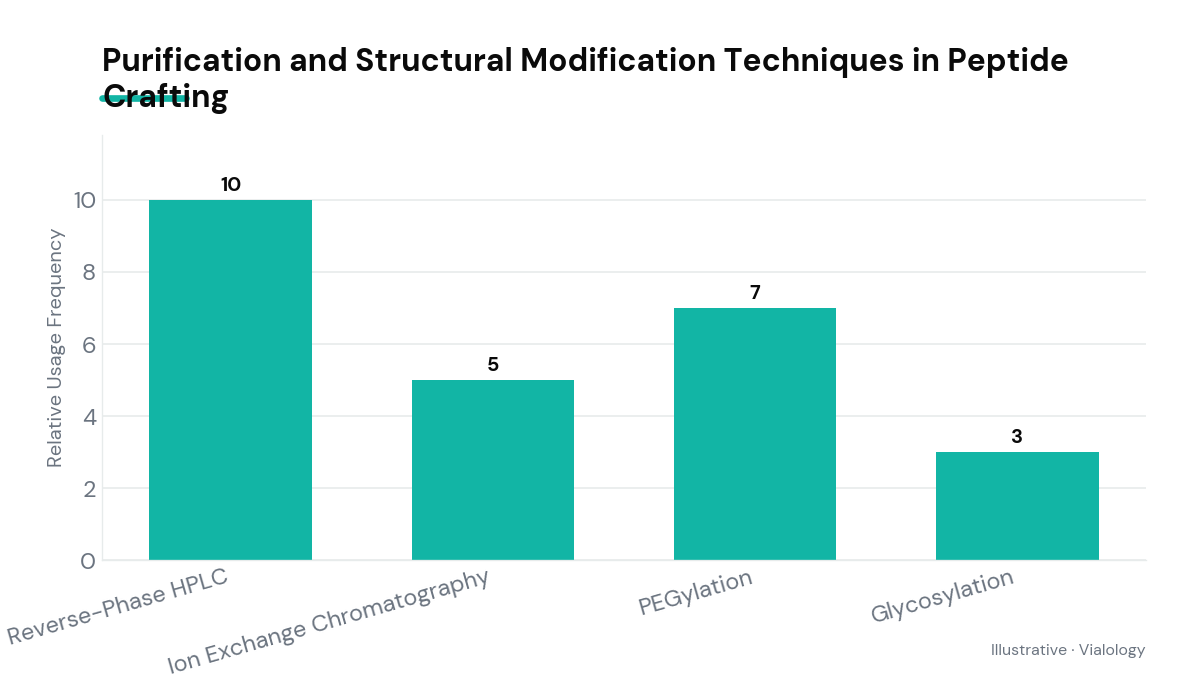
Once synthesized, the crude peptide mixture is far from ready for the lab bench, as it often contains incomplete chains, deleted sequences, and leftover chemical reagents. To resolve this, researchers rely on High-Performance Liquid Chromatography (HPLC), particularly reverse-phase HPLC, to separate the target peptide from impurities based on hydrophobic differences. By pumping the mixture through a specialized column under high pressure, scientists can isolate the exact molecule with extraordinary precision, frequently achieving purity levels exceeding 98 percent.
High purity is not merely a preference; it is a fundamental requirement for scientific accuracy. In cellular assays and animal models, even minute traces of chemical contaminants or truncated peptide fragments can trigger off-target effects or produce false positives. Analytical techniques like Mass Spectrometry are subsequently employed to verify that the molecular weight of the synthesized peptide matches its theoretical blueprint exactly, ensuring experimental reproducibility.
Structural Modifications by Peptide Crafters for Enhanced Stability
In their natural state, endogenous peptides are notoriously fragile, often broken down within minutes by enzymes called peptidases. To overcome this limitation, laboratory peptide crafters employ clever biochemical workarounds to reinforce these delicate molecular structures. One common modification is cyclization, which links the ends of the peptide chain or forms internal disulfide bridges, transforming a flexible, vulnerable string into a rigid, enzyme-resistant loop.
Other modification strategies include replacing standard L-amino acids with their synthetic D-isomers, which enzymes do not easily recognize, or modifying the peptide backbone directly. For instance, PEGylation—the attachment of polyethylene glycol chains—can shield the peptide from enzymatic degradation and slow down clearance in biological models. These sophisticated alterations allow researchers to study peptide actions over extended periods, providing a more accurate picture of their biological mechanics.
Optimizing for Target Affinity and Specificity
Beyond durability, a key focus of peptide engineering is optimizing how a molecule interacts with its biological target. Researchers often conduct alanine scanning, a systematic process where each amino acid in a sequence is sequentially replaced with the simple amino acid alanine. By observing how these individual changes affect binding affinity, scientists can pinpoint the exact active core of the peptide responsible for triggering receptor activity.
Armed with this structural data, engineers can perform rational design to substitute specific residues, increasing the peptide’s electrostatic or hydrophobic fit with its target receptor. These highly optimized chains serve as invaluable probes in laboratory settings, allowing researchers to map complex cellular pathways and investigate cellular signaling with unprecedented resolution.
Related on Vialology
Frequently asked questions
What methods do peptide crafters use to synthesize sequences?
Peptide crafters primarily utilize Solid-Phase Peptide Synthesis (SPPS) for standard sequences, alongside liquid-phase synthesis for shorter chains or large-scale production. They also employ recombinant DNA technology in engineered cells for highly complex or longer proteins.
Why is peptide synthesis purity crucial in laboratory research?
High purity ensures that experimental results are driven solely by the target peptide rather than residual chemical impurities, truncated sequences, or solvents. This prevents off-target toxicity and ensures biological data is highly reproducible across different studies.
What is the difference between solid-phase and liquid-phase synthesis?
Solid-phase synthesis builds the peptide chain step-by-step while anchored to an insoluble resin, making purification between steps simple through washing. Liquid-phase synthesis occurs entirely in solution, which is harder to purify mid-process but is highly scalable and cost-effective for shorter chains.
How do researchers modify peptide structures to improve stability?
Researchers improve stability by modifying the peptide’s structure through techniques like cyclization, which loops the chain, or by substituting natural L-amino acids with synthetic D-isomers. They also utilize chemical additions, such as PEGylation or lipid conjugation, to protect the molecule from rapid enzymatic breakdown.
Educational use only. Vialology publishes journalistic and educational content about peptide science. Nothing here is medical advice, diagnosis, or treatment, and nothing should be taken as an endorsement to use any substance. Many peptides discussed are experimental and are not approved by the FDA for human use. Always consult a licensed healthcare professional before making any health decision.