
First identified in human plasma, ghk cu is a naturally occurring copper-binding tripeptide that has generated decades of scientific interest for its unique role in tissue repair and cellular signaling. Composed of the amino acids glycyl-L-histidyl-L-lysine bound to a copper ion, this molecule circulates in human blood and declines significantly with age. Researchers have spent over fifty years studying how this small complex influences gene expression, collagen synthesis, and systemic tissue regeneration.
The Discovery and Molecular Architecture of GHK-Cu
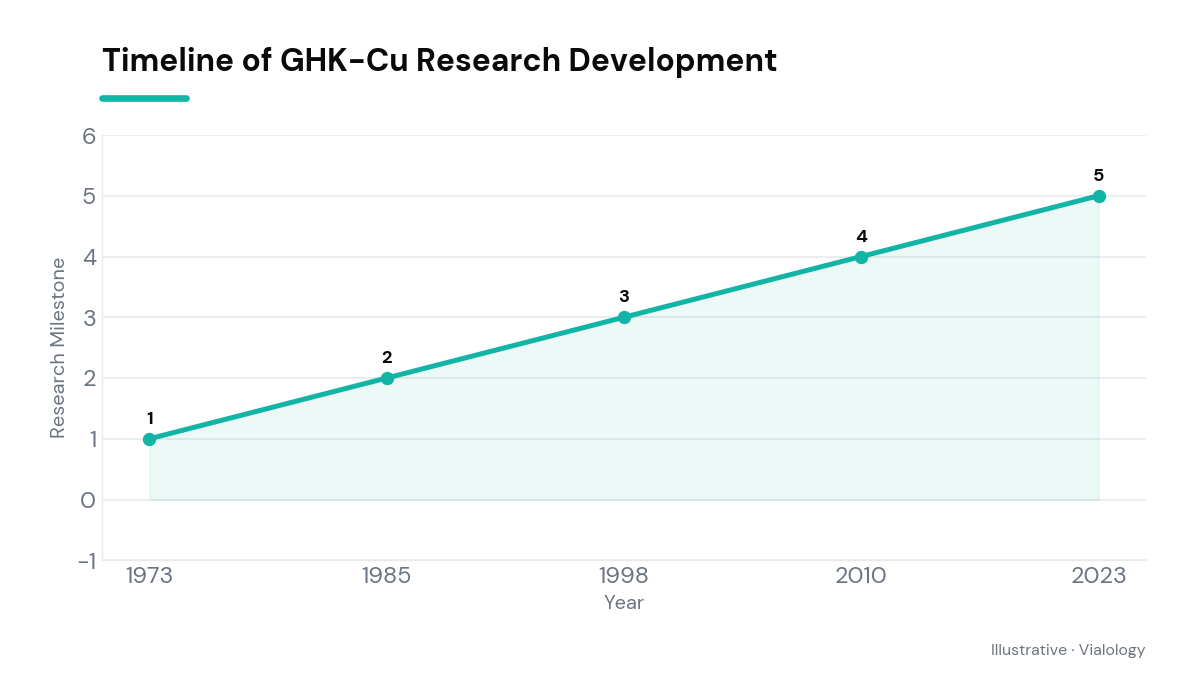
The story of GHK-Cu began in 1973 when biochemist Dr. Loren Pickart isolated a peptide from human blood plasma that caused old liver tissue to synthesize proteins at rates typical of younger tissue. Subsequent structural analysis revealed a tripeptide—glycyl-L-histidyl-L-lysine—with a remarkably high binding affinity for copper(II) ions. Copper is an essential trace mineral required for critical enzymatic functions, including cellular respiration and antioxidant defense. By binding to copper, the GHK peptide acts as a biological delivery vehicle, chaperoning the mineral directly to targeted cells and modulating its local availability.
What makes GHK-Cu particularly notable in biochemical research is its concentration profile over a human lifespan. At age 20, the tripeptide is present in plasma at roughly 200 nanograms per milliliter, but by age 60, levels drop to approximately 80 nanograms per milliliter. This age-dependent decline led early researchers to hypothesize that falling GHK-Cu levels might correspond directly with a reduced capacity for tissue repair, wound healing, and cellular maintenance in older organisms.
Mechanisms of Action: Gene Expression and Tissue Remodeling
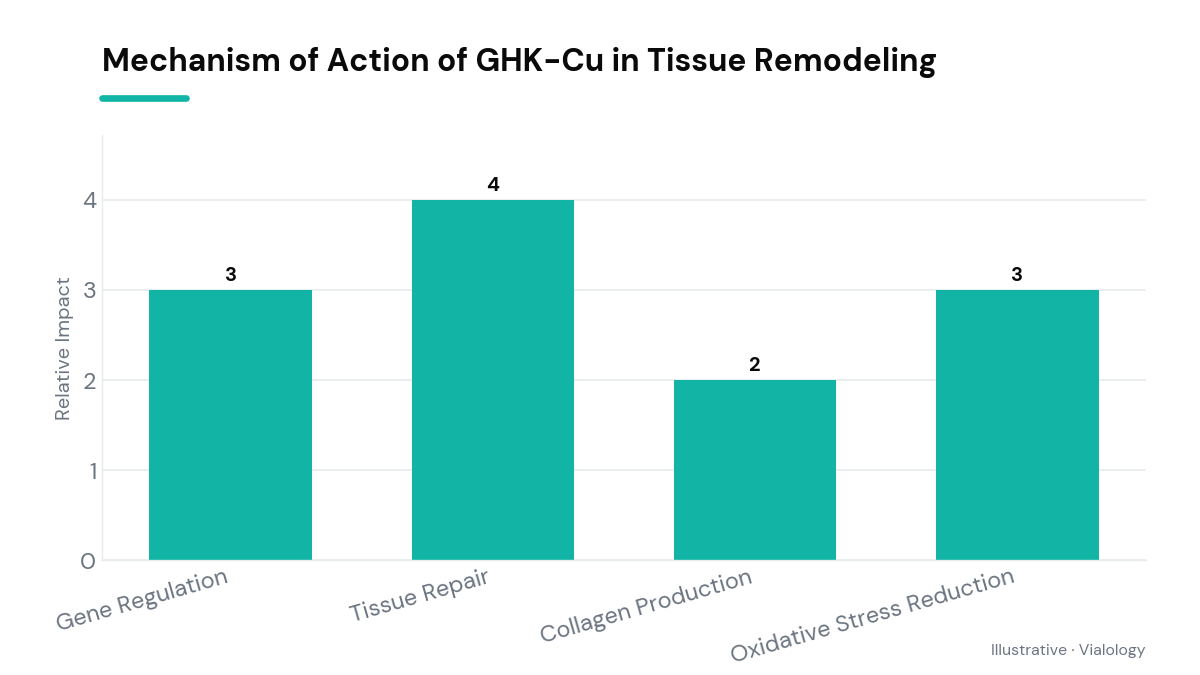
Far beyond acting merely as a mineral transporter, GHK-Cu functions as a powerful regulator of genomic activity. Broad gene expression profiling studies suggest that the peptide can alter the transcription of thousands of human genes, upregulating pathways associated with tissue repair while downregulating genes linked to chronic inflammation and cellular degradation. In vitro research demonstrates that GHK-Cu stimulates the synthesis of collagen, elastin, and glycosaminoglycans, which form the primary extracellular matrix of connective tissue and skin.
In addition to promoting structural protein synthesis, the peptide plays a dual role by regulating matrix metalloproteinases (MMPs) and their inhibitors. MMPs are enzymes responsible for breaking down damaged proteins during injury recovery. By balancing the synthesis of new structural proteins with the controlled clearance of damaged matrix components, GHK-Cu facilitates structured tissue remodeling rather than chaotic scar formation. Animal models of dermal, nerve, and gastrointestinal wounds have repeatedly demonstrated accelerated healing times when treated with the peptide complex.
Investigating ghk cu in Regenerative and Anti-Aging Research
Due to its broad physiological effects, ghk cu has become a central molecule of interest in dermatological, cosmetic, and regenerative science. Early clinical trials investigating topical applications revealed that the peptide complex increased skin density, improved elasticity, and reduced visual signs of aging by stimulating dermal fibroblast activity. Beyond skin biology, pre-clinical studies have explored its potential in pulmonary models, where GHK-Cu appeared to suppress inflammatory tissue damage and restore gene expression patterns altered by chronic obstructive pulmonary disease.
Researchers are also investigating the peptide’s neuroprotective and anti-inflammatory properties across various organ systems. In rodent models, GHK-Cu administration demonstrated antioxidant activity by neutralizing free radicals and boosting endogenous protective enzymes like superoxide dismutase. Furthermore, studies examining hair follicle biology indicate that the complex promotes follicle enlargement and microvascular circulation in the scalp. While these wide-ranging findings highlight the tripeptide’s biological versatility, scientists emphasize that much of the mechanistic data relies on cell cultures and animal models, requiring further human clinical validation.
Current Regulatory Status and Science-First Perspectives
Despite its long history in biochemical literature and cosmetic formulations, GHK-Cu occupies a nuanced space in global healthcare regulations. Topical preparations containing low concentrations of the copper tripeptide are widely available in cosmetic skincare products across many jurisdictions. However, systemic or injectable forms of GHK-Cu are not FDA-approved for medical treatment or therapeutic disease management in humans. Regulatory agencies evaluate systemic peptides under strict pharmaceutical frameworks requiring rigorous phase I-III clinical trial data for specific disease indications.
As longevity research advances, the peptide remains a valuable laboratory tool for understanding cellular repair networks. Scientists continue to map its interaction with genomic pathways, seeking to clarify how low-molecular-weight peptides coordinate complex repair signals across different organ systems. For researchers and readers navigating the evolving field of peptide science, GHK-Cu stands as one of the most thoroughly documented naturally occurring signaling molecules in human biology.
Related on Vialology
Frequently asked questions
What is GHK-Cu and how was it discovered?
GHK-Cu is a naturally occurring tripeptide bound to copper that was discovered in 1973 by Dr. Loren Pickart during research on age-dependent factors in human blood plasma.
What does research suggest about GHK-Cu and skin regeneration?
Research indicates that GHK-Cu stimulates collagen and elastin synthesis, regulates extracellular matrix remodeling, and promotes dermal fibroblast activity in wound healing models.
How does GHK-Cu interact with copper in the body?
The GHK tripeptide has a high affinity for copper ions, acting as a transport mechanism that safely delivers copper to cells for vital enzymatic and antioxidant processes.
Is GHK-Cu FDA-approved for therapeutic use in humans?
While GHK-Cu is commonly included in topical cosmetic formulations, it is not FDA-approved as a prescription pharmaceutical or injectable therapy for treating human disease.
Educational use only. Vialology publishes journalistic and educational content about peptide science. Nothing here is medical advice, diagnosis, or treatment, and nothing should be taken as an endorsement to use any substance. Many peptides discussed are experimental and are not approved by the FDA for human use. Always consult a licensed healthcare professional before making any health decision.