
When designing a preclinical research protocol, choosing the right administration route is a critical decision that influences both bioavailability and experimental outcomes. Understanding the differences between Peptide Capsules vs. Vials: Which Delivery Format Fits Your Study Design? is essential for researchers aiming to isolate specific physiological pathways. While liquid injections have historically dominated laboratory settings, oral encapsulation technology continues to evolve rapidly as an alternative vector.
The Bioavailability Equation: Injection vs. Oral Administration
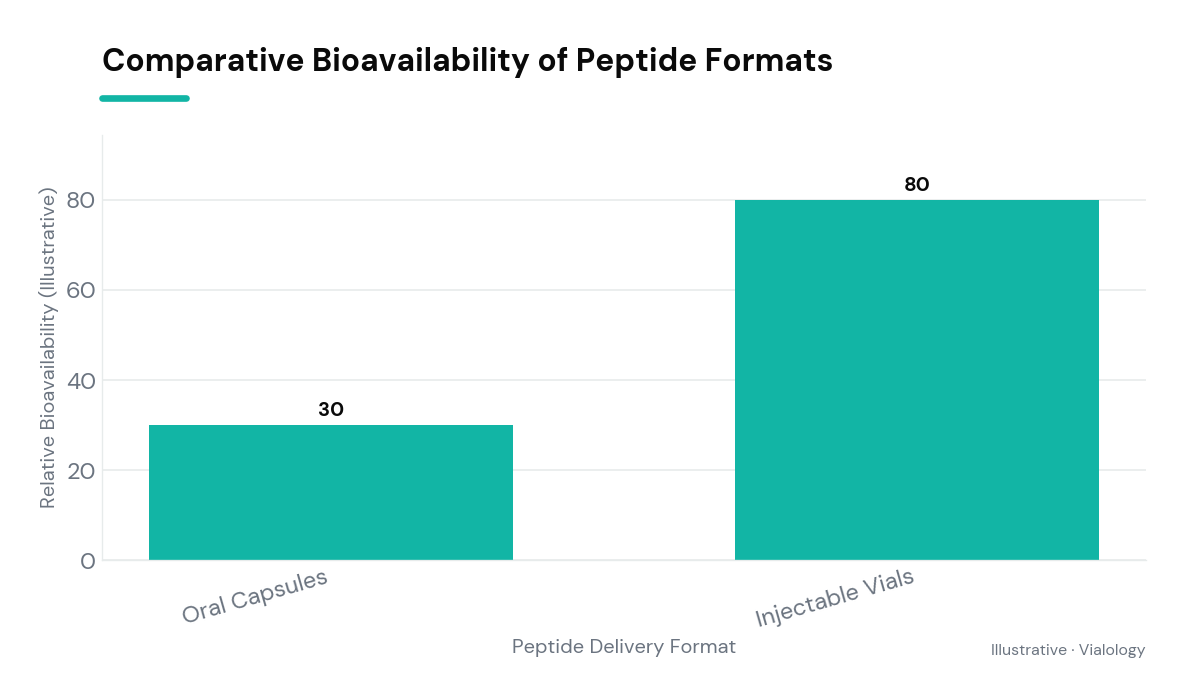
Liquid vials typically require parenteral administration, such as subcutaneous or intramuscular injection. This pathway bypasses the destructive environment of the gastrointestinal tract, ensuring near-immediate systemic availability. In laboratory models, this rapid absorption profile is highly valued for mapping acute biological responses, though it introduces variables like injection-site irritation and rapid clearance rates.
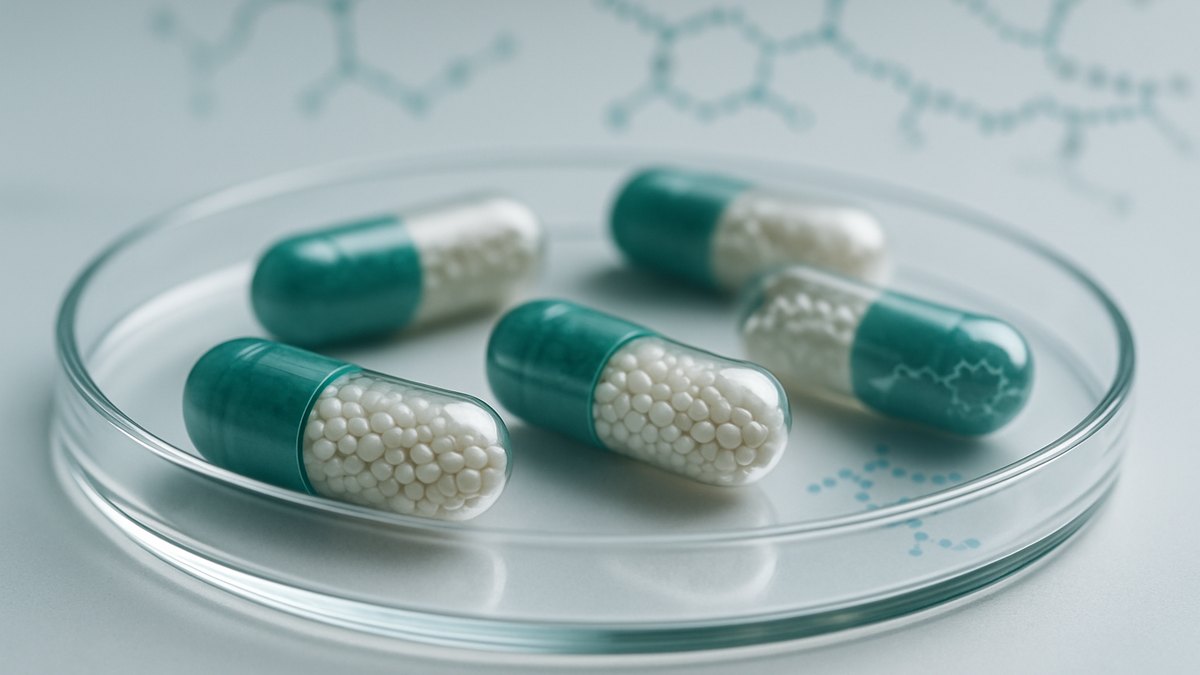
Conversely, oral capsules must navigate gastric acid, enzymatic degradation, and the first-pass metabolism of the liver. Historically, this meant most peptide molecules were destroyed before reaching circulation. However, modern enteric coatings and chemical permeation enhancers have begun to reshape this landscape, allowing specific peptides to survive stomach acid and achieve localized action in the gut or limited systemic absorption.
Practicality and Compliance in Longitudinal Animal Models
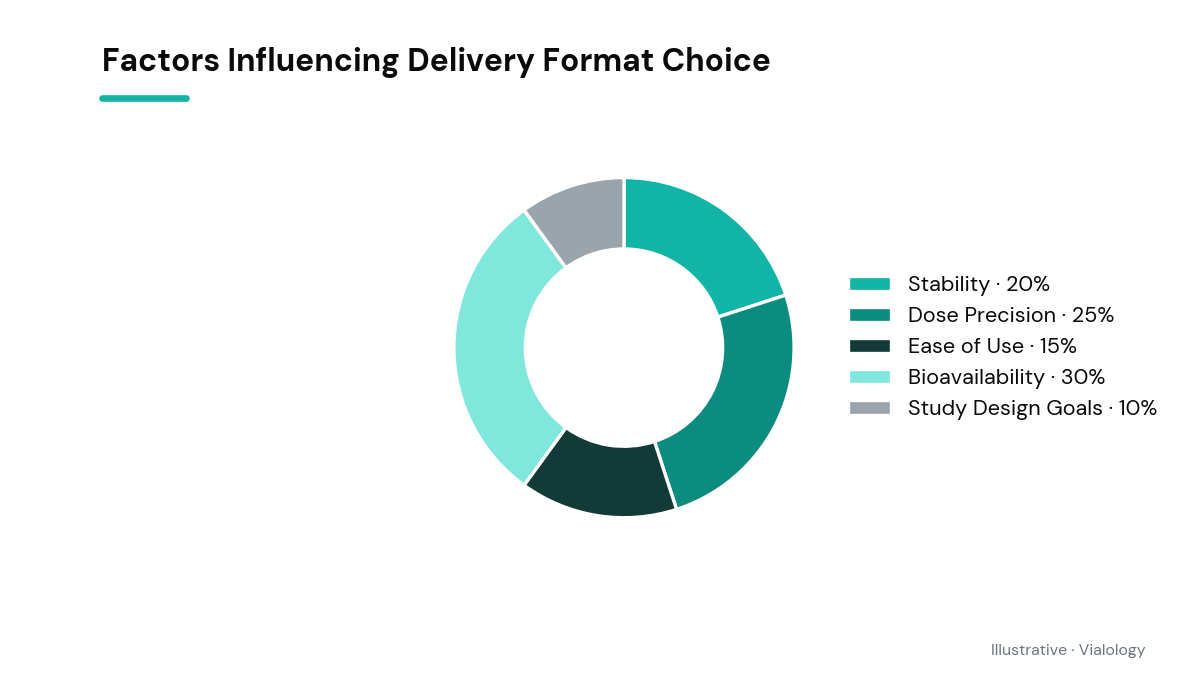
The physical format of a peptide also dictates the complexity of the study’s daily operations. For long-term animal studies, administering daily subcutaneous injections from reconstituted vials requires significant manual handling and increases stress levels in subjects, which can alter baseline metabolic and cortisol markers. Oral administration via capsules or food-admixed delivery offers a non-invasive alternative that minimizes stress-induced confounding variables.
Furthermore, stability is a key differentiator. Reconstituted peptide vials must be kept strictly refrigerated and used within a short timeframe to prevent degradation and bacterial contamination. Capsules, on the other hand, are often highly stable at room temperature, simplifying storage logistics and reducing the risk of experimental error due to compromised solution integrity.
Peptide Capsules vs. Vials: Matching Formats to Study Objectives
Deciding on the optimal vehicle depends heavily on the tissue target. For research focused on systemic, rapid-onset pathways—such as growth hormone secretagogue activity or cellular signaling cascade tracking—vials remain the standard due to their high systemic bioavailability. For scientists evaluating these formats, a detailed capsules vs vials comparison highlights how each delivery system alters the pharmacokinetics of the target compound.
On the other hand, projects studying localized gastrointestinal repair, gut-brain axis signaling, or metabolic pathways that benefit from sustained, gradual release are increasingly turning to oral formulations. By selecting the format that matches the target organ, researchers can improve the validity and translation potential of their findings.
Related on Vialology
Frequently asked questions
Why are peptide vials typically preferred for systemic bioavailability?
Peptide vials allow for parenteral delivery, which bypasses the enzymatic degradation of the digestive system and ensures the full dose enters systemic circulation.
Can all peptides be formulated into oral capsules?
No, many peptides are too large or fragile to survive gastric acid and cross the intestinal barrier, meaning only specific sequences with protective enteric coatings or permeation enhancers can be effectively delivered via capsules.
How does the choice between capsules and vials affect study stability?
Reconstituted peptide vials are highly susceptible to rapid thermal and mechanical degradation, whereas dry powder capsules generally exhibit superior shelf-life and thermal stability.
Educational use only. Vialology publishes journalistic and educational content about peptide science. Nothing here is medical advice, diagnosis, or treatment, and nothing should be taken as an endorsement to use any substance. Many peptides discussed are experimental and are not approved by the FDA for human use. Always consult a licensed healthcare professional before making any health decision.