
Formulations such as the ordinary multi-peptide serum for hair density have popularized the application of cellular signal molecules to support hair follicle function and scalp vitality. By leveraging targeted bio-active complexes, these topical solutions aim to address the complex biological cascades that dictate hair growth cycles. Rather than relying on traditional pharmaceuticals, research into these multi-peptide blends explores how precise amino acid sequences interact directly with the dermal papilla and surrounding microenvironment.
The Molecular Architecture of Modern Hair Peptide Complexes
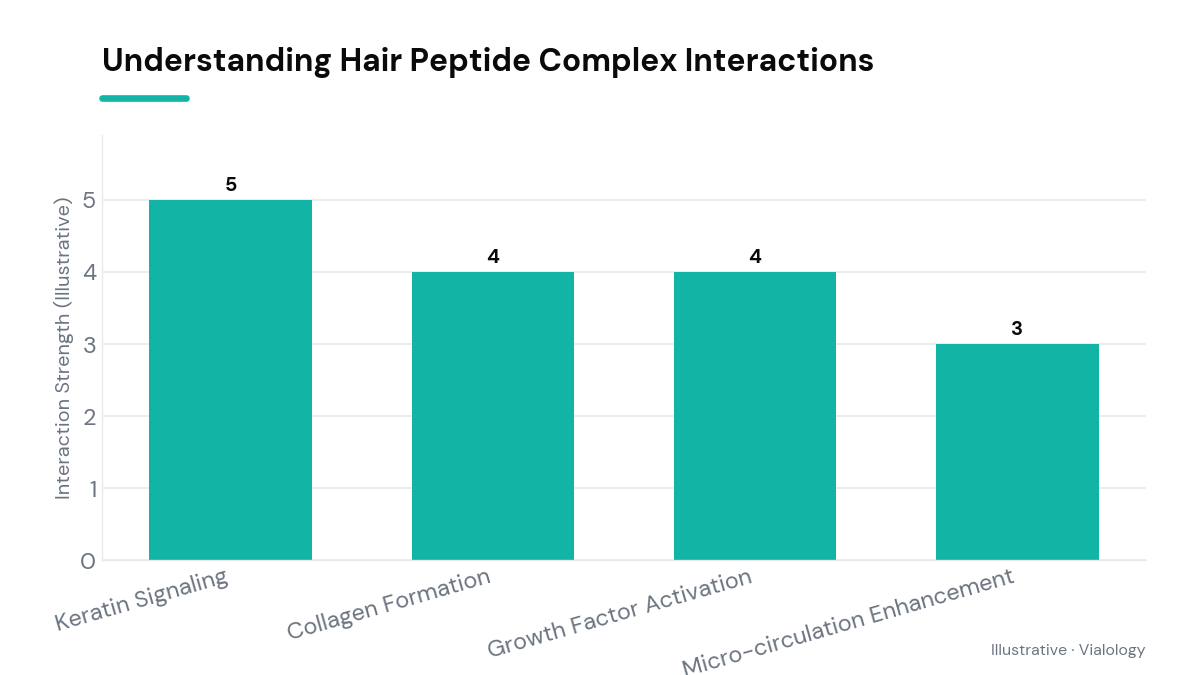
Peptide-based scalp formulations generally combine several distinct bio-engineered complexes designed to target different aspects of follicle biology. Among the most frequently studied ingredients is Acetyl Tetrapeptide-3, a biomimetic peptide derived from signal molecules that stimulate extracellular matrix proteins. In vitro studies demonstrate that Acetyl Tetrapeptide-3 promotes the synthesis of type III collagen and laminins, essential structural components that anchor the hair follicle to the dermal matrix. When combined with Trifolium Pratense (red clover) extract, rich in the isoflavone Biochanin A, this complex works to modulate local inflammation and inhibit 5-alpha reductase activity, the enzyme responsible for converting testosterone into dihydrotestosterone (DHT).
Another prominent constituent is Biotinoyl Tripeptide-1, a specialized complex that links vitamin H (biotin) with a tripeptide sequence (GHK). Research published in dermatological literature indicates that Biotinoyl Tripeptide-1 helps strengthen follicle adhesion by increasing the expression of cell adhesion proteins such as laminin-5 and collagen IV. Concurrently, Copper Tripeptide-1 (GHK-Cu) is frequently integrated for its well-documented tissue-remodeling properties. Human dermal papilla cell cultures treated with GHK-Cu show increased proliferation and upregulated production of vascular endothelial growth factor (VEGF), a key signaling protein responsible for maintaining adequate nutrient delivery through microvascular networks.
Mechanisms Behind the Ordinary Multi-Peptide Serum for Hair Density
To understand how the ordinary multi-peptide serum for hair density and similar topical solutions function, researchers focus on the hair follicle growth cycle—specifically the transition between the anagen (active growth), catagen (regression), and telogen (resting) phases. The primary objective of peptide intervention is to extend the duration of the anagen phase while delaying entry into telogen. Specialized complexes like REDENSYL, which consists of dihydroquercetin-glucoside (DHQG) and epigallocatechin gallate-glucoside (EGCG2), target the stem cell niches located within the hair follicle bulge.
In a 2019 ex vivo study on human hair follicles, investigators observed that targeting these stem cells stimulated cell division and enhanced metabolic activity without inducing inflammatory stress. Furthermore, the combination of peptide signaling with solubilized polyphenol glucoside molecules encourages the activation of dermal papilla fibroblasts. These specialized cells dictate follicle size and fiber diameter. By maintaining dermal papilla activity, peptide complexes help counteract the miniaturization process typically driven by hormonal and oxidative factors, thereby supporting the appearance of thicker and denser hair strands across the scalp microenvironment.

Modulating Scalp Microcirculation and Extracellular Matrix Integrity
The scalp microenvironment relies on a dense network of capillaries to transport essential amino acids, oxygen, and micronutrients to the hair bulb. Peptide complexes like Procapil—which blends Biotinoyl Tripeptide-1 with oleanolic acid and apigenin—target both mechanical anchoring and vascular dynamics. Apigenin, a natural flavonoid, acts as a vasodilator, enhancing local blood circulation to the follicle root. Meanwhile, oleanolic acid inhibits the 5-alpha reductase enzyme types 1 and 2, reducing localized androgen activity without altering systemic hormone levels in preliminary clinical observations.
Extracellular matrix (ECM) integrity is equally critical for sustained follicle survival. As the scalp ages, pericarpic collagen stiffens and degrades, leading to perifollicular fibrosis—a state where hardened connective tissue starves the follicle of oxygen and physical space. Bio-active peptides act as matrikines, signaling molecules capable of regulating cell activity and extracellular matrix renewal. By signaling dermal fibroblasts to synthesize fresh collagen fibers and glycosaminoglycans, peptide technology helps maintain a flexible, well-hydrated matrix that accommodates healthy follicle expansion and anchorage.
Clinical Evidence, Study Limitations, and Cosmetic Classification
While the molecular mechanisms of topical peptides are supported by robust in vitro and ex vivo data, clinical trials in human subjects provide a more nuanced picture. A 2020 randomized double-blind study evaluating a topical multi-peptide complex over 84 days demonstrated a statistically significant increase in the ratio of anagen-to-telogen hair fibers compared to placebo controls. Participants exhibited an average increase in total hair density of approximately 8% to 10%. However, researchers emphasize that these clinical trials were conducted on individuals experiencing mild to moderate hair thinning rather than advanced androgenetic alopecia.
It is crucial to distinguish between cosmetic multi-peptide formulations and pharmaceutical hair loss treatments. Topical peptides are classified as cosmetic ingredients; they are not approved by regulatory bodies like the FDA to treat, cure, or prevent medical conditions such as alopecia. Furthermore, human evidence remains largely driven by manufacturer-sponsored trials with relatively small sample sizes, typically ranging from 30 to 100 subjects. While the findings are promising for improving hair texture, density, and scalp comfort, long-term independent studies are needed to fully establish their efficacy relative to standard clinical interventions.
Related on Vialology
Frequently asked questions
What specific peptide complexes are analyzed in hair density research?
Hair density research frequently evaluates complexes such as Acetyl Tetrapeptide-3, Biotinoyl Tripeptide-1, Copper Tripeptide-1 (GHK-Cu), Procapil, CAPIXYL, and REDENSYL. These synthetic and biomimetic peptide blends are designed to target extracellular matrix synthesis, cellular anchoring, and microvascular support in the scalp.
How do topical peptides interact with the scalp microenvironment?
Topical peptides serve as cellular signaling agents that bind to specific cell surface receptors within the dermal papilla and hair follicle bulge. Through these interactions, they stimulate collagen production, upregulate growth factors like VEGF, enhance local blood flow, and protect against oxidative stress.
What does clinical literature say about peptide-based hair formulations?
Clinical literature indicates that topical peptide formulations can increase the ratio of growing (anagen) to resting (telogen) hair strands over a 3- to 4-month period in individuals with mild hair thinning. However, researchers note that most trials involve small sample sizes and evaluate cosmetic hair density improvements rather than permanent medical cures for severe hair loss.
Are the cosmetic effects of topical hair peptides considered permanent?
No, the cosmetic effects observed from topical peptide application are contingent upon continued use to maintain cellular signaling within the scalp microenvironment. Discontinuing the application typically causes the follicle activity and hair growth cycles to gradually return to their baseline physiological state over time.
Educational use only. Vialology publishes journalistic and educational content about peptide science. Nothing here is medical advice, diagnosis, or treatment, and nothing should be taken as an endorsement to use any substance. Many peptides discussed are experimental and are not approved by the FDA for human use. Always consult a licensed healthcare professional before making any health decision.