
The copper tripeptide GHK-Cu is one of the most thoroughly researched molecules in the history of cosmetic science and regenerative biology. Discovered in human plasma in the 1970s, this naturally occurring compound has since captured the attention of biochemists, dermatologists, and longevity researchers alike. Today, it serves as a cornerstone for studying cellular repair, tissue remodeling, and the complex pathways of skin aging.
The Discovery and Science of GHK-Cu
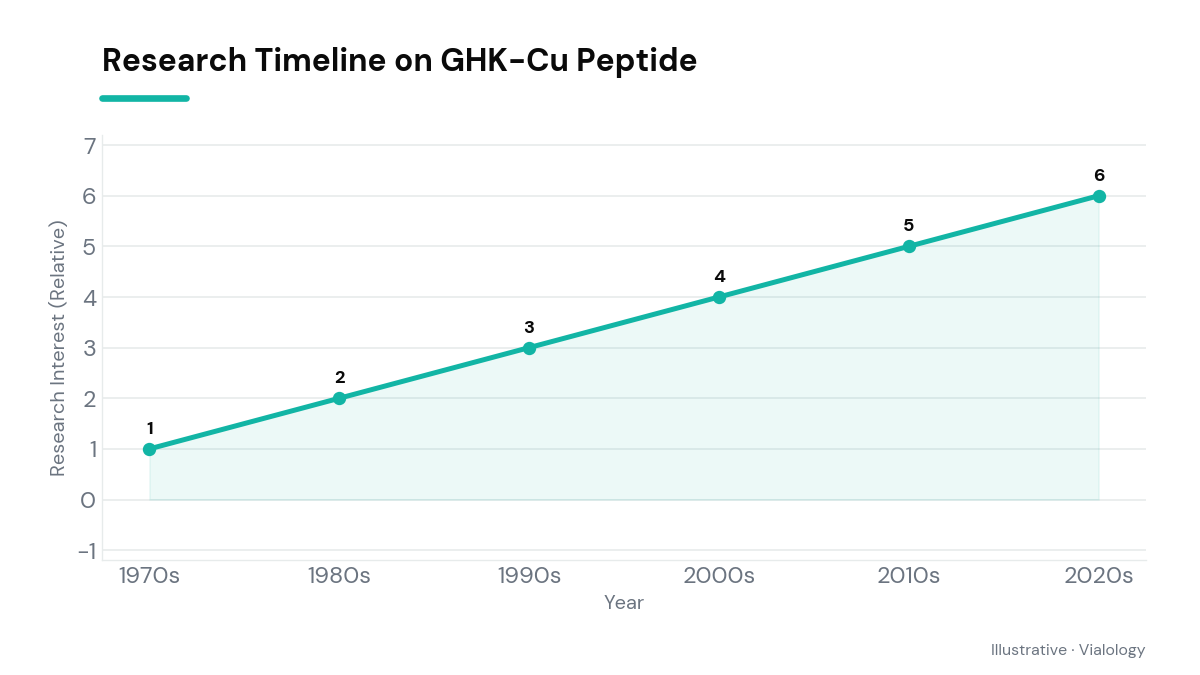
In 1973, biochemist Dr. Loren Pickart isolated a specific tripeptide—a chain of three amino acids consisting of glycine, histidine, and lysine—from human albumin while studying the differences between young and old liver tissue. He observed that this small peptide sequence, which had a high affinity for copper ions, could restore youthful function to older liver cells in laboratory cultures. This landmark discovery laid the foundation for decades of research into how the complex, known as GHK-Cu, operates as a signaling molecule in human tissue.
In biological systems, GHK-Cu naturally declines with age. It is found in concentrations of about 200 nanograms per milliliter in the plasma of young, healthy individuals, but drops to approximately 80 nanograms per milliliter by age 60. This physiological decline has led researchers to investigate whether replenishing the peptide could support the body’s natural regenerative processes, particularly in tissues characterized by high cellular turnover.
How GHK-Cu Influences Cellular Repair
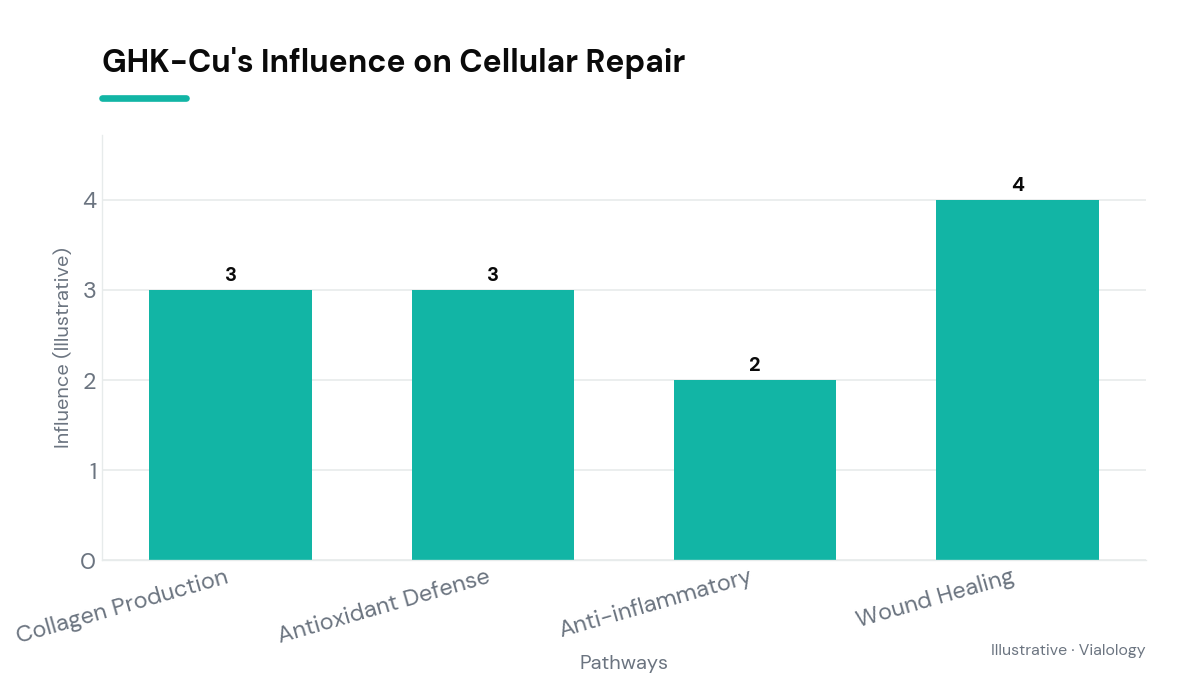
At the cellular level, research suggests that GHK-Cu acts as an optimizer for tissue remodeling. Studies indicate that it helps regulate the expression of a broad spectrum of genes, particularly those involved in wound healing, antioxidant defense, and anti-inflammatory pathways. By modulating the production of metalloproteinases—enzymes that break down damaged extracellular matrix proteins—and their inhibitors, the peptide appears to promote a balanced cycle of tissue breakdown and reconstruction.
Furthermore, GHK-Cu has been shown in laboratory models to stimulate the synthesis of key structural proteins, including collagen, elastin, and glycosaminoglycans. A 2015 review highlighted its ability to attract immune cells to injured sites and stimulate blood vessel growth, a process known as angiogenesis. These multi-faceted interactions suggest that the peptide’s primary role is not merely structural, but regulatory, acting as a biochemical coordinator for cellular recovery.
The Shift to Cosmetic Chemistry
The transition of GHK-Cu from laboratory bench to cosmetic formulations began in the late 1980s and early 1990s. Because of its small molecular weight and documented role in collagen synthesis, cosmetic chemists recognized its potential for topical application. Unlike many larger proteins that struggle to penetrate the skin’s outer barrier, this tripeptide can be formulated to bypass the stratum corneum, allowing it to interact directly with epidermal and dermal cells.
Clinical studies on topical copper peptides have yielded encouraging data. For instance, a 1998 study comparing GHK-Cu to vitamin C and retinoic acid found that the peptide demonstrated a significant capacity to stimulate collagen production in mild to moderately photodamaged skin. Today, it remains a highly regarded ingredient in serums and creams aimed at improving skin elasticity, reducing the appearance of fine lines, and evening out skin tone, all without the irritation often associated with stronger retinoids.
Current Evidence and Scientific Outlook
While GHK-Cu has a robust profile in dermatological research, its broader therapeutic potential is still undergoing active scientific debate. Researchers are exploring its implications in wound healing, pulmonary tissue repair, and even cognitive preservation. However, it is important to distinguish between topical cosmetic applications, which are widely accepted and commercially available, and systemic or subcutaneous applications, which have not been approved by the FDA for therapeutic use in humans.
Most of the systemic data on GHK-Cu comes from cell cultures, animal models, or preliminary clinical trials. While these early studies point to a promising safety profile and diverse biological activities, more rigorous, large-scale human clinical trials are necessary to fully map its systemic effects and establish standardized protocols. For now, the scientific community views GHK-Cu as a fascinating window into how small peptides can influence complex physiological pathways.
Frequently asked questions
What is GHK-Cu?
GHK-Cu is a naturally occurring copper complex consisting of a three-amino-acid peptide (glycine-histidine-lysine) bound to a copper molecule, recognized for its role in cellular repair and tissue regeneration.
Why is GHK-Cu called a copper peptide?
It is called a copper peptide because the tripeptide GHK has a strong chemical affinity for copper, allowing it to bind readily with copper ions to perform biological functions.
What research exists on GHK-Cu?
There are several decades of research on GHK-Cu, including cell culture studies, animal models, and clinical trials examining its effects on skin remodeling, wound healing, gene expression, and collagen synthesis.
Is GHK-Cu used in skincare products?
Yes, GHK-Cu is widely utilized in the cosmetics industry as an active ingredient in topical anti-aging serums and creams designed to improve skin elasticity, firmness, and overall texture.
Educational use only. Vialology publishes journalistic and educational content about peptide science. Nothing here is medical advice, diagnosis, or treatment, and nothing should be taken as an endorsement to use any substance. Many peptides discussed are experimental and are not approved by the FDA for human use. Always consult a licensed healthcare professional before making any health decision.