
The synthetic peptide BPC-157 has gained significant attention in recent years for its potential regenerative properties, particularly in the realms of tissue repair and gut health. Derived from a protective protein naturally found in human gastric juice, this laboratory-synthesized compound has become a major focus of preclinical scientific curiosity worldwide. While its early laboratory findings are highly intriguing to researchers, understanding the distinction between preliminary animal data and verified human evidence is crucial for evaluating its true therapeutic potential.
The Origins and Biological Mechanisms of BPC-157
BPC-157, short for Body Protection Compound-157, is a synthetic pentadecapeptide consisting of a chain of 15 amino acids. It is sequence-derived from a larger, naturally occurring protein discovered in human gastric juice, where it plays a fundamental biological role in maintaining mucosal integrity and defending the stomach lining. Researchers initially isolated this specific peptide sequence to determine whether its protective and regenerative properties could be replicated synthetically and applied to other tissues outside the gastrointestinal tract, paving the way for decades of preclinical scientific investigation.
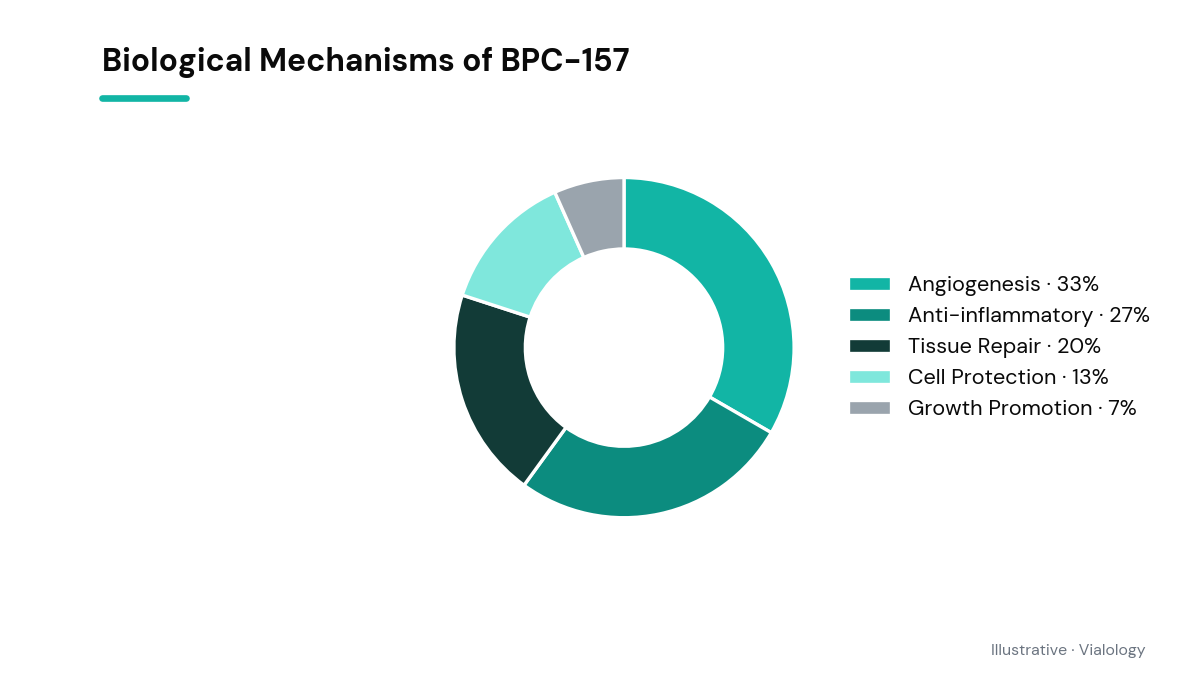
In laboratory models, scientists have closely examined how the compound interacts with cellular signaling pathways. A primary focus of this biological research is angiogenesis, the physiological process through which new blood vessels form from pre-existing ones to support tissue repair. Early cell culture studies, such as a 2014 in vitro study published in the journal PLOS ONE, suggest that the peptide may influence the expression of vascular endothelial growth factor (VEGF), a key signaling protein that stimulates the growth of blood vessels to deliver oxygen and essential nutrients to healing tissues.
What the Animal Research on BPC-157 Shows
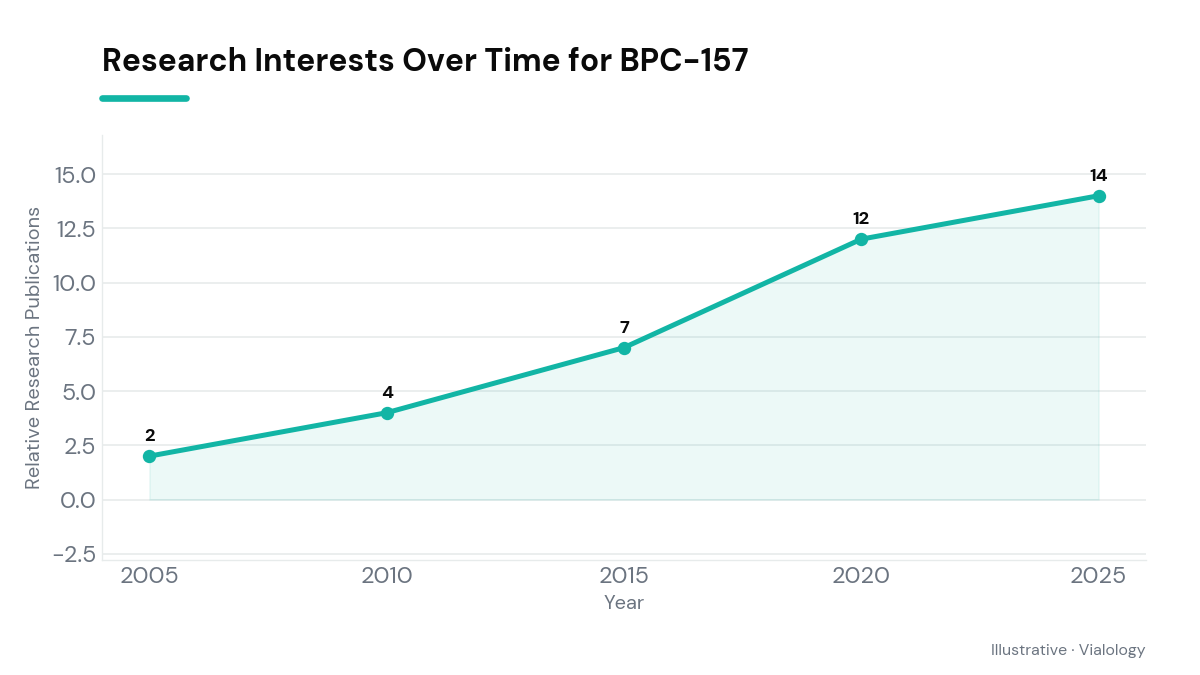
The vast majority of the scientific literature surrounding BPC-157 currently consists of animal models and in vitro experiments, with little to no human clinical data. Over the past three decades, numerous rodent studies have evaluated the compound’s effects on soft tissue injuries, such as Achilles tendon tears, ligament damage, and deep muscle lacerations. For instance, a landmark 2010 study published in the Journal of Orthopaedic Research observed accelerated tendon-to-bone healing in rats treated with the peptide, prompting further preclinical investigation into its potential applications in musculoskeletal recovery.
Beyond orthopedics and wound healing, researchers have also explored the compound’s potential protective effects on the central nervous system and the gastrointestinal tract. Animal models of inflammatory bowel disease (IBD) and gastric ulcers have shown promising results, with studies indicating that the peptide may help stabilize the gut barrier, promote mucosal defense, and regulate inflammatory pathways. However, while these preclinical observations in rodents are encouraging, the physiological differences between rodents and humans mean that these outcomes cannot be assumed to translate directly to human clinical efficacy.
Regulatory Status and Human Clinical Gaps
Despite its widespread popularity in wellness communities, BPC-157 is not approved by the U.S. Food and Drug Administration (FDA) for human use, clinical prescription, or dietary supplementation. In late 2023, the FDA placed the peptide on its Category 2 bulk drug substances list, citing potential safety concerns, chemical instability, and a lack of robust clinical safety data regarding its use in humans. Additionally, the World Anti-Doping Agency (WADA) officially added the compound to its prohibited list in 2022 under the category of non-approved substances, making its use banned for competitive athletes.
The primary scientific hurdle for BPC-157 remains the near-total absence of randomized, double-blind, placebo-controlled human clinical trials, which represent the gold standard of modern medical research. Without rigorous human data, researchers remain uncertain about its precise pharmacokinetics, optimal administration pathways, potential drug-drug interactions, and long-term systemic side effects. As a result, the global scientific community continues to view the compound as an experimental research chemical rather than a validated therapeutic option, emphasizing the critical need for structured human clinical trials before any definitive safety or efficacy claims can be made.
Frequently asked questions
What is BPC-157?
BPC-157 is a synthetic peptide consisting of 15 amino acids, derived from a protective protein naturally found in human gastric juice.
What has research examined BPC-157 for?
Researchers have investigated BPC-157 primarily in animal models for its potential roles in tissue healing, blood vessel growth, and gastrointestinal protection.
Is BPC-157 approved by the FDA?
No, BPC-157 is not approved by the FDA for human clinical use, and it is classified as an unapproved research chemical with potential regulatory restrictions.
Is the evidence for BPC-157 mostly from animal studies?
Yes, nearly all available scientific evidence for BPC-157 comes from laboratory cell cultures and rodent models, with a critical lack of robust human clinical trials.
Educational use only. Vialology publishes journalistic and educational content about peptide science. Nothing here is medical advice, diagnosis, or treatment, and nothing should be taken as an endorsement to use any substance. Many peptides discussed are experimental and are not approved by the FDA for human use. Always consult a licensed healthcare professional before making any health decision.