
While researchers have long studied Insulin-like Growth Factor-1 for its role in cellular growth, understanding the specific igf-1 lr3 benefits requires examining how this modified peptide behaves in laboratory settings. As an analog of human IGF-1, Long Arginine 3 IGF-1 (IGF-1 LR3) features a structural modification designed to bypass natural binding proteins, significantly extending its half-life in biological systems. This guide explores what peer-reviewed science actually reveals about this potent research compound’s mechanisms, cellular effects, and limitations.
Understanding the Modification: What is IGF-1 LR3?
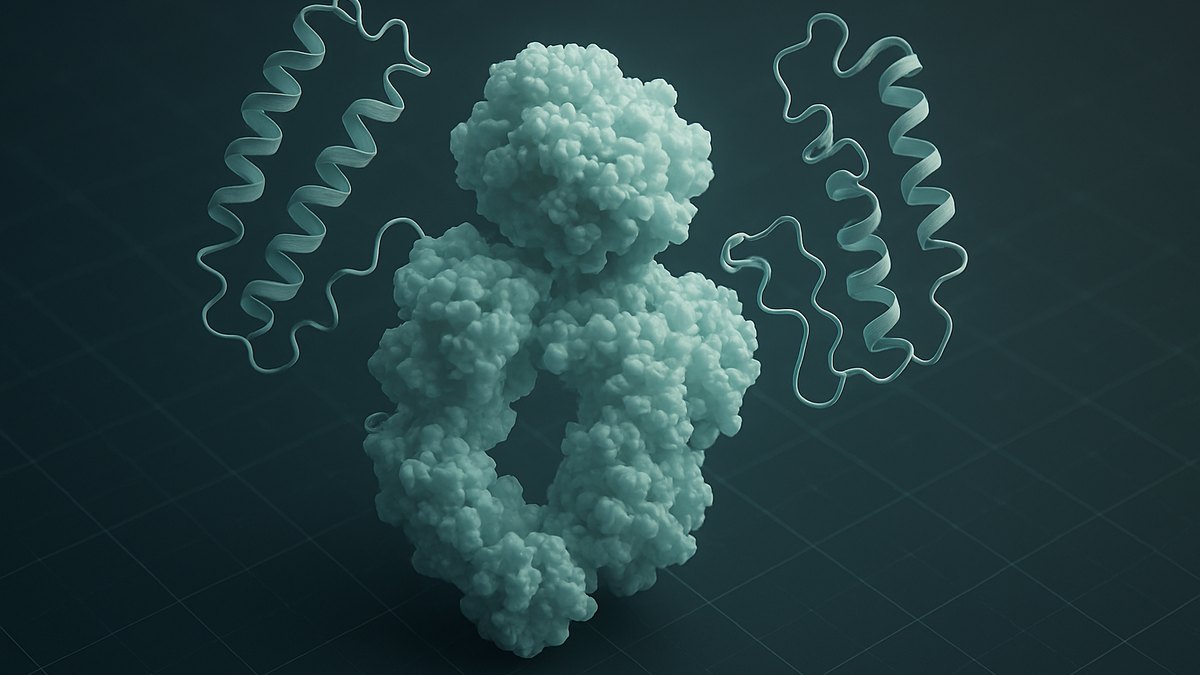
In its native state, Insulin-like Growth Factor-1 is a highly regulated hormone produced primarily in the liver in response to growth hormone stimulation. In vivo, native IGF-1 binds tightly to IGF-binding proteins (IGFBP), which rapidly neutralize its activity and limit its biological half-life to under ten minutes. To overcome this limitation, researchers engineered IGF-1 LR3 by replacing a single glutamic acid with an arginine at position three (hence ‘R3’) and appending a 13-amino-acid extension at the N-terminus. This structural change radically alters how the peptide behaves in scientific assays.
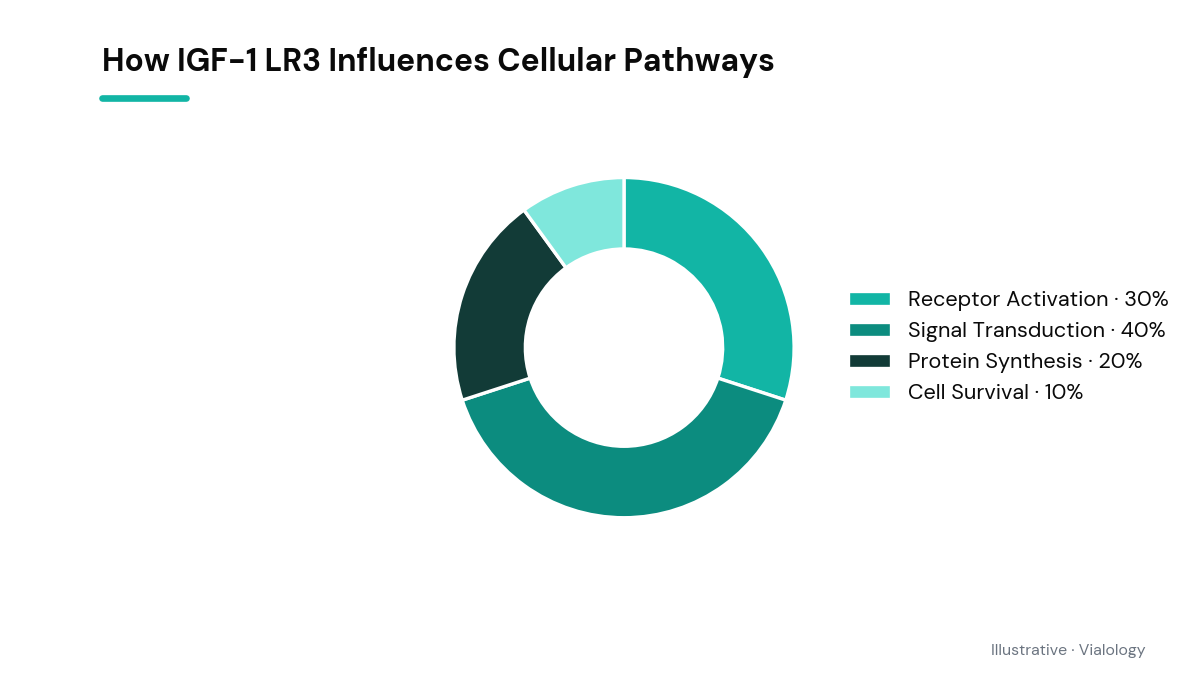
Because of these structural adjustments, IGF-1 LR3 exhibits a dramatically reduced affinity for binding proteins, allowing it to remain active in the bloodstream for up to 20 hours. In vitro research suggests that by remaining free and unbound, the peptide can continuously interact with the IGF-1 receptor, magnifying its cellular signaling cascade and making it a primary subject for studying tissue regeneration.
Core IGF-1 LR3 Benefits Under Investigation
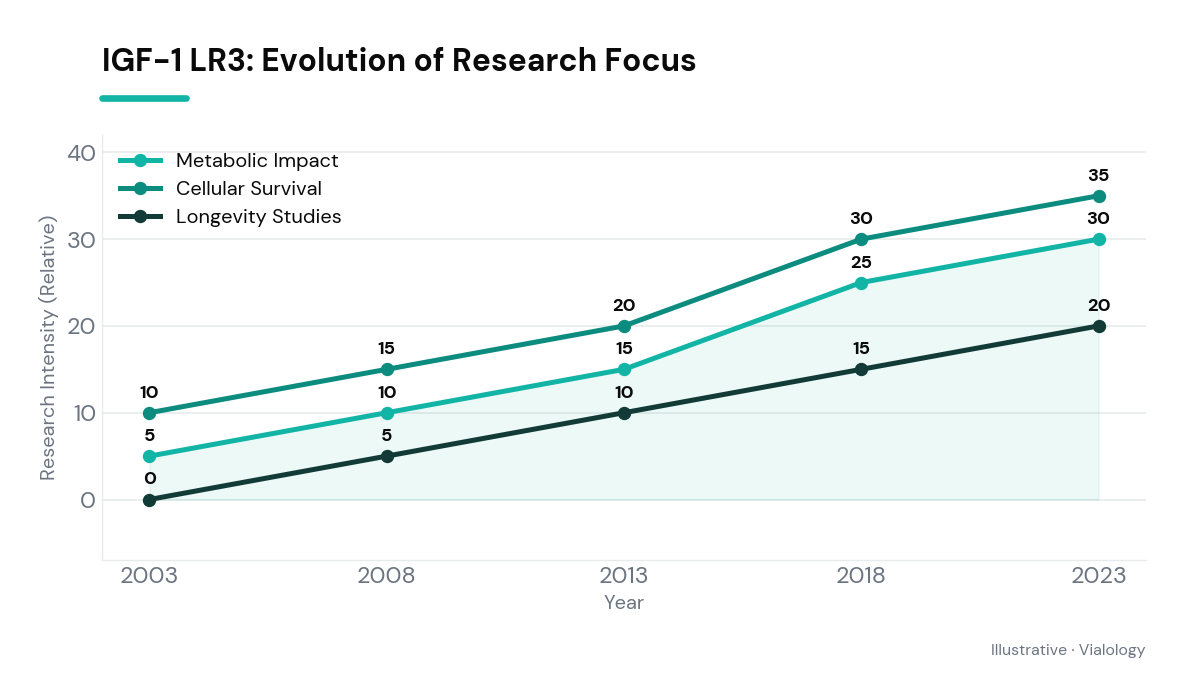
The primary area of interest surrounding this compound lies in its potential to influence protein synthesis and cellular proliferation. In cell cultures and animal models, researchers observe that IGF-1 LR3 stimulates the proliferation of satellite cells—the precursor cells responsible for muscle growth and repair. By activating the AKT/mTOR pathway, the peptide appears to accelerate the rate of muscle hypertrophy and hyperplasia in test subjects, offering crucial insights into how organisms recover from structural trauma.
Beyond muscle tissue, laboratory models indicate that IGF-1 LR3 may play a pivotal role in promoting connective tissue healing and bone mineralization. To explore these cellular pathways further, researchers often consult databases tracking growth-factor research benefits to trace how modified peptides influence fibroblasts and osteoblasts during wound healing cycles. This prolonged activation makes the analog a valuable tool for understanding tissue degradation, although human clinical trials remain scarce.
Metabolic Impact and Cellular Survival
In addition to tissue repair, IGF-1 LR3 exhibits strong insulin-like effects on nutrient shuttling. Studies on animal metabolism show that the peptide facilitates glucose uptake into skeletal muscle cells while simultaneously promoting amino acid transport. This dual metabolic action mimics the anabolic effects of insulin without triggering the same lipogenic pathways, allowing scientists to study how cellular energy expenditure can be optimized during periods of metabolic stress.
Furthermore, the compound has shown anti-apoptotic properties in laboratory environments. By inhibiting programmed cell death pathways, IGF-1 LR3 helps preserve cellular integrity under hypoxic or nutrient-deprived conditions. This survival-promoting quality has made it a candidate of interest for research involving neurodegenerative models and cardiac tissue recovery following ischemic events.
The Current State of Scientific Research
Despite the compelling cellular data, it is critical to note that IGF-1 LR3 is not approved by the FDA for human use, diagnosis, or treatment. Virtually all existing data on the compound’s safety, efficacy, and biological profile come from in vitro cell cultures and animal models. Because the peptide avoids natural binding proteins so effectively, its potency also carries elevated risks, including potential hypoglycemia, organ megaly, and the accelerated growth of existing abnormal cells or tumors.
For this reason, scientific consensus emphasizes that the compound must remain strictly within regulated laboratory environments. Future clinical trials would need to carefully map its systemic safety profile before any therapeutic applications could be considered for human patients.
Related on Vialology
Frequently asked questions
Is IGF-1 LR3 the same as natural IGF-1?
No, IGF-1 LR3 is a synthetic analog of natural IGF-1 that has been structurally modified with a 13-amino-acid extension and an amino acid substitution to prevent binding to regulatory proteins.
How does the half-life of IGF-1 LR3 compare to standard IGF-1?
While native IGF-1 has a half-life of less than ten minutes in the bloodstream, the structural modifications of IGF-1 LR3 extend its active half-life to approximately 20 hours.
Has the FDA approved IGF-1 LR3 for human therapy?
No, IGF-1 LR3 is classified as a research chemical and is not FDA-approved for human consumption, prescription, or clinical treatment.
Educational use only. Vialology publishes journalistic and educational content about peptide science. Nothing here is medical advice, diagnosis, or treatment, and nothing should be taken as an endorsement to use any substance. Many peptides discussed are experimental and are not approved by the FDA for human use. Always consult a licensed healthcare professional before making any health decision.