
Exploring PT-141 and the Melanocortin-4 Receptor: A Primer for Sexual Health Peptide Research offers a fascinating window into how the central nervous system influences physiological intimacy. Unlike traditional options that target the vascular system, this synthetic peptide operates directly on neural pathways in the brain. Researchers are increasingly analyzing how these neurochemical interactions might unlock new paradigms for addressing sexual dysfunction in both men and women.
The Mechanism: How PT-141 Interacts with Melanocortin Receptors
PT-141, chemically known as bremelanotide, is a synthetic peptide derived from melanotan II. While its parent compound was originally investigated for its skin-tanning properties, researchers quickly observed a distinct secondary effect: a significant increase in sexual arousal. This led to a shift in focus toward its unique mechanism of action. Unlike phosphodiesterase-5 (PDE5) inhibitors such as sildenafil, which facilitate erections by relaxing smooth muscle tissue and increasing local blood flow, PT-141 acts directly within the central nervous system.
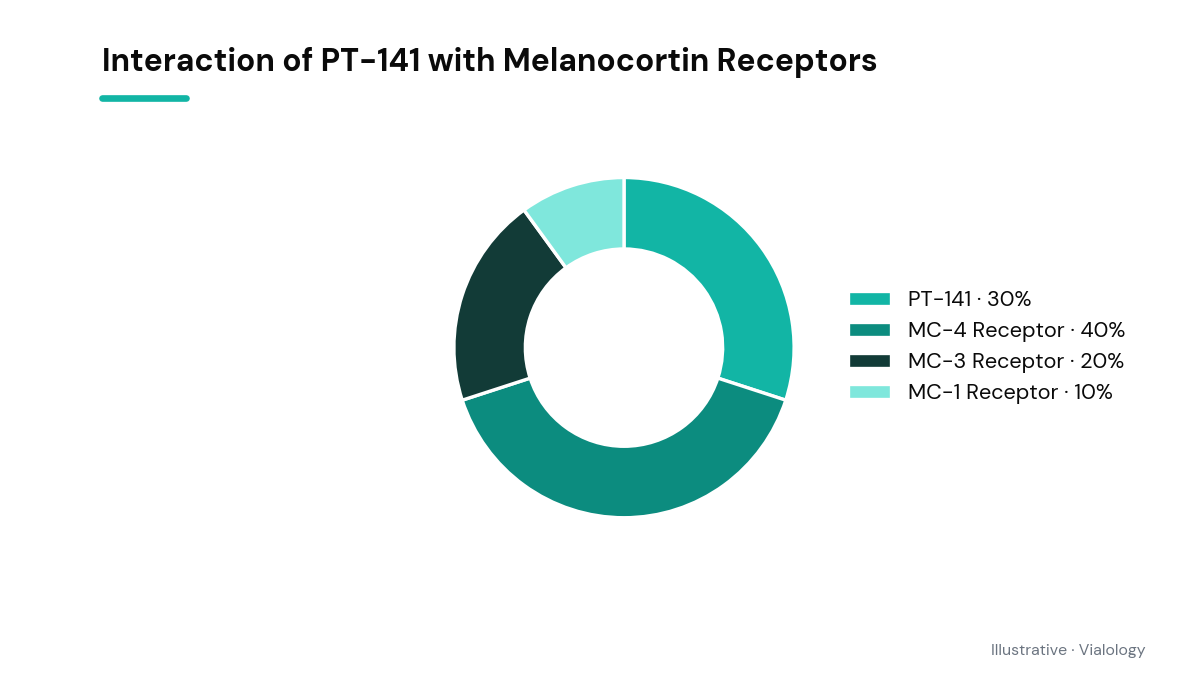
The peptide functions as a non-selective agonist of the melanocortin receptors, showing particularly high affinity for the melanocortin-4 receptor (MC4R) and melanocortin-3 receptor (MC3R). By binding to these receptors in the hypothalamus—a brain region critical for regulating metabolic processes and autonomic nervous system activity—PT-141 triggers a cascade of neural signals. This pathway activates downstream dopaminergic pathways, which are deeply involved in sexual motivation, desire, and physiological response, establishing a novel neurological approach to sexual health research.
PT-141 and the Melanocortin-4 Receptor: A Primer for Sexual Health Peptide Research Framework
To understand the potential of this peptide, one must examine the specific role of the melanocortin-4 receptor (MC4R). Widely distributed throughout the central nervous system, MC4R is a G-protein-coupled receptor heavily involved in energy homeostasis, appetite regulation, and sexual behavior. Preclinical studies on rodents have shown that stimulating the MC4R pathway in the medial preoptic area of the hypothalamus reliably induces erectile responses and appetitive sexual behaviors, pointing to its fundamental role in sexual function.
For those diving deeper into peer-reviewed literature, examining PT-141 melanocortin research reveals how these receptor dynamics differ significantly from vascular-focused compounds. While vascular solutions require external stimulation to be effective, MC4R agonists appear to initiate the neurological drive itself. This distinction is vital for understanding why PT-141 has become a primary subject of study for hypoactive sexual desire disorder (HSDD) in women and certain treatment-resistant forms of erectile dysfunction in men.

What the Clinical Trial Data Reveals
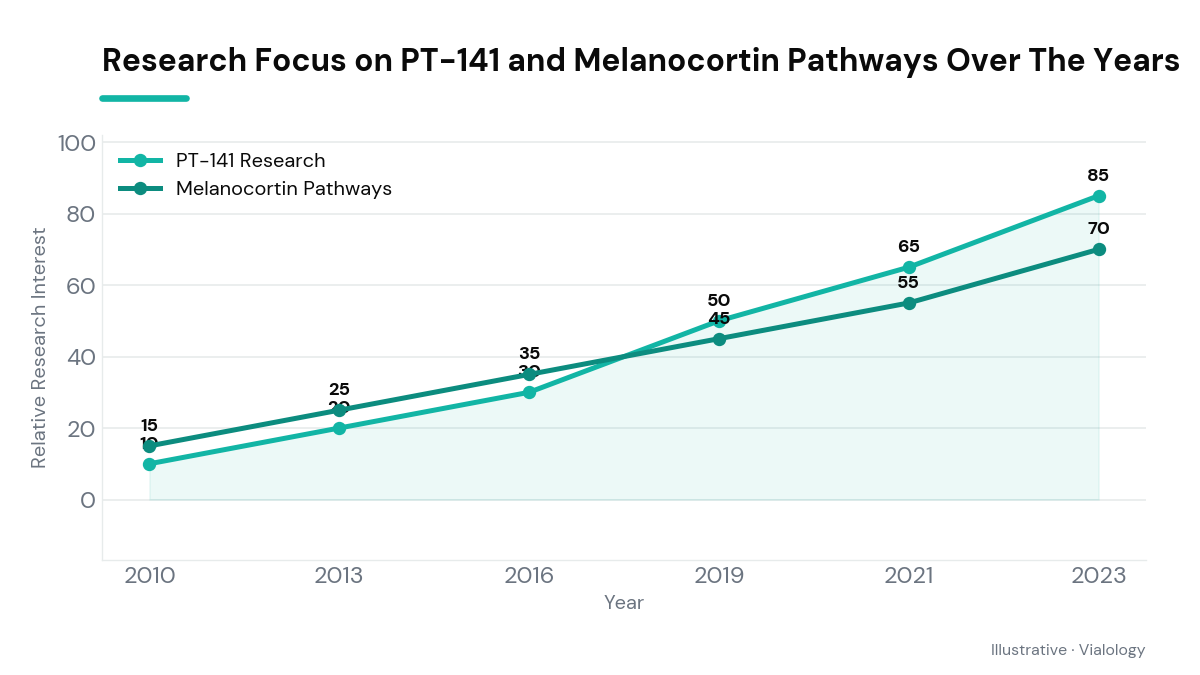
The scientific interest in PT-141 is supported by several large-scale clinical trials. In 2019, the U.S. Food and Drug Administration (FDA) approved a specific injectable formulation of bremelanotide for the treatment of generalized, acquired hypoactive sexual desire disorder (HSDD) in premenopausal women. This landmark approval was based on two Phase 3 clinical trials, wherein participants receiving the peptide reported statistically significant increases in sexual desire scores and a reduction in distress related to low sexual desire compared to the placebo group.
However, the peptide is not without its limitations and side effects, which researchers must carefully monitor. Clinical data indicates that the most common adverse events include transient nausea, flushing, headache, and a temporary increase in blood pressure. Because of these cardiovascular effects, particularly the acute rise in blood pressure after administration, the compound requires careful evaluation, and researchers continue to study its long-term safety profile and interactions with other pharmacological agents.
Related on Vialology
Frequently asked questions
Is PT-141 the same as Melanotan II?
No, while PT-141 is a synthetic metabolite of Melanotan II, it lacks the amide group responsible for the skin-tanning effects of its predecessor, focusing instead on melanocortin receptors associated with sexual function.
How does PT-141 differ from traditional erectile dysfunction medications?
Traditional medications like sildenafil target blood vessels locally to improve blood flow, whereas PT-141 operates neurologically by activating melanocortin receptors in the brain to stimulate desire and physiological response.
Is PT-141 approved for medical use?
Yes, under the generic name bremelanotide, a specific formulation is FDA-approved for treating acquired, generalized hypoactive sexual desire disorder (HSDD) in premenopausal women, though its use for other purposes remains experimental.
Educational use only. Vialology publishes journalistic and educational content about peptide science. Nothing here is medical advice, diagnosis, or treatment, and nothing should be taken as an endorsement to use any substance. Many peptides discussed are experimental and are not approved by the FDA for human use. Always consult a licensed healthcare professional before making any health decision.