
The BPC-157 + TB-500 Blend: Why Researchers Co-Administer These Two Recovery Peptides has emerged as a central topic of interest in preclinical regenerative medicine. While both compounds are synthetic peptides designed to mimic natural biological processes, they target distinct pathways within the body’s healing cascade. Investigating their combined effects allows scientists to explore potential synergistic mechanisms that could accelerate tissue repair beyond what either peptide achieves in isolation.
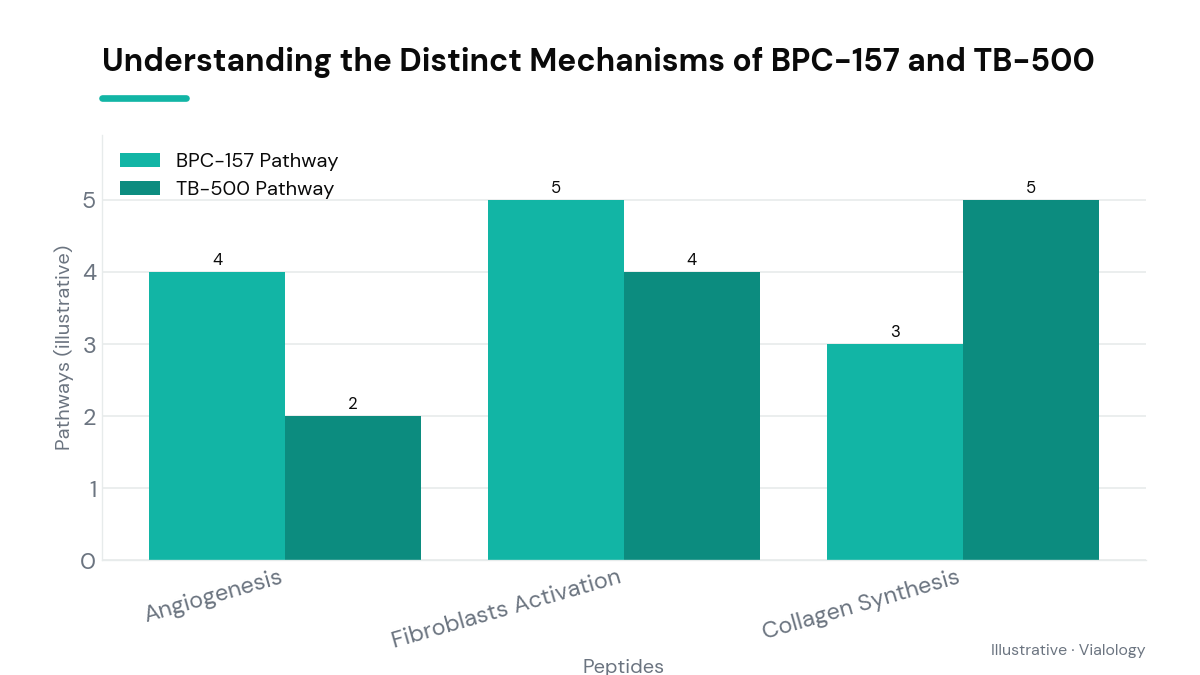
Understanding the Distinct Mechanisms of BPC-157 and TB-500
BPC-157, or Body Protection Compound 157, is a pentadecapeptide derived from a protein found in human gastric juice. In animal models, researchers have observed its capacity to promote angiogenesis—the formation of new blood vessels—and upregulate growth factors like VEGF (vascular endothelial growth factor). These localized actions are thought to accelerate the healing of tendons, ligaments, and the gastrointestinal tract, though clinical data in humans remains extremely limited.
In contrast, TB-500 is a synthetic peptide representing the active domain of Thymosin Beta-4, a naturally occurring protein found in high concentrations in blood platelets. TB-500 primarily works by sequestering actin, a key cellular protein, thereby promoting cell migration and systemic healing. Understanding these divergent pathways helps clarify why co-administer BPC-157 and TB-500 in experimental designs, as the localized support of BPC-157 may complement the systemic cellular mobility of TB-500.
The BPC-157 + TB-500 Blend: Why Researchers Co-Administer These Two Recovery Peptides in Laboratory Settings
In preclinical research, the primary rationale for co-administration lies in the concept of physiological synergy. Because BPC-157 focuses heavily on organizing the extracellular matrix and promoting local microvessel growth, while TB-500 drives the migration of cells to the site of injury, scientists hypothesize that combining them provides a multi-phase approach to tissue repair. This dual-action pathway has been studied in rodent models of musculoskeletal injuries to observe whether joint recovery occurs more rapidly.
It is crucial to note that while these mechanism-based hypotheses are compelling, neither BPC-157 nor TB-500 is currently approved by the US Food and Drug Administration (FDA) for human use. The vast majority of published literature relies on in vitro experiments and animal models, meaning that safe, effective clinical protocols for humans have not yet been established. Researchers continue to study the blend to map out precise biochemical pathways without extrapolating these experimental outcomes to human self-administration.
Current Evidence and Future Directions in Peptide Research
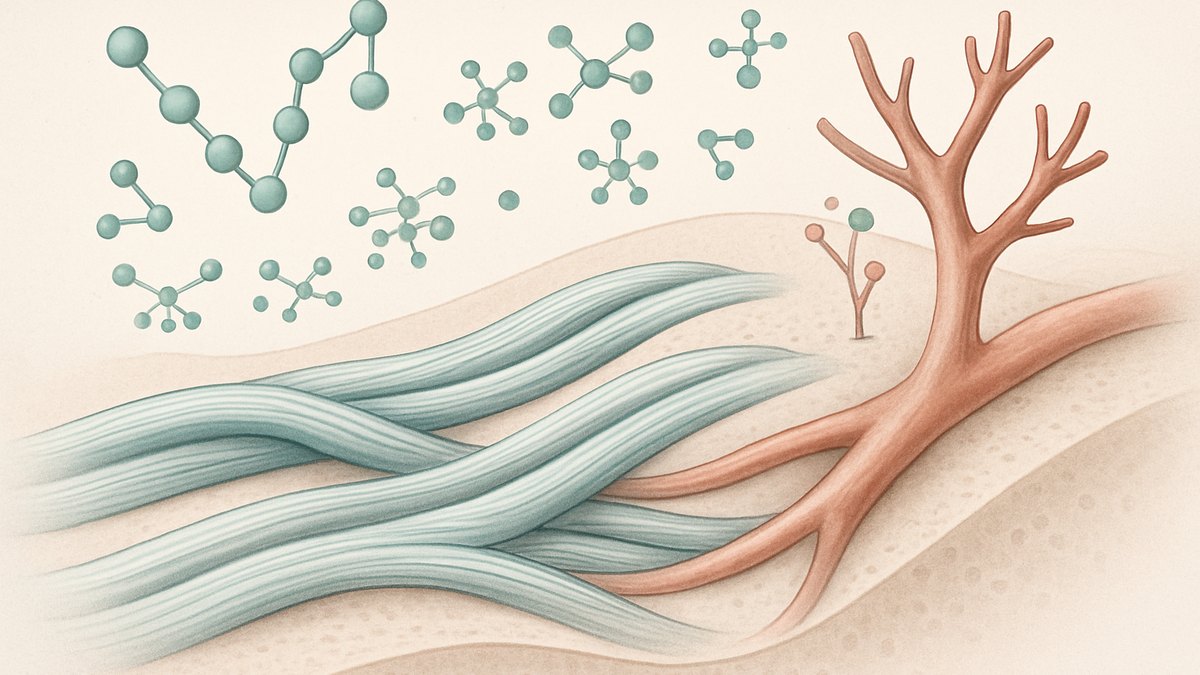
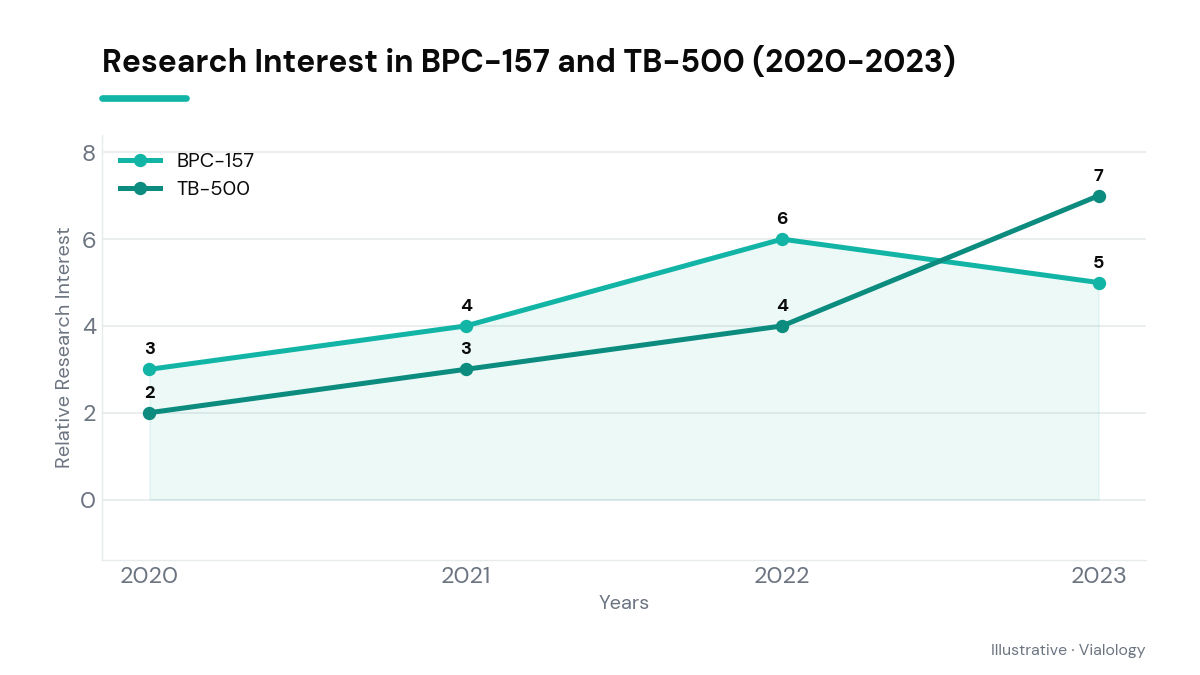
Academic studies dating back to the early 2000s have documented the individual properties of these compounds. For instance, a 2010 study published in the Journal of Orthopaedic Research highlighted BPC-157’s role in healing systemic tendon-to-bone defects in rats. Concurrently, research on Thymosin Beta-4 (the parent molecule of TB-500) has demonstrated its ability to support dermal wound healing and cardioprotection in various mammalian models, leading researchers to wonder how a combined therapy might optimize multi-tissue recovery.
Future scientific inquiries are expected to focus on characterizing the pharmacokinetic profiles of the two peptides when administered simultaneously. Investigating whether they interfere with each other’s receptor binding or enhance overall bio-availability is a necessary step before any human clinical trials can be safely proposed. Until then, the scientific community treats the combination strictly as a compelling subject of basic research.
Regulatory and Safety Landscape
Both peptides are classified as research chemicals and are banned by major athletic organizations, including the World Anti-Doping Agency (WADA), due to their potential performance-enhancing qualities. This regulatory status underscores the importance of maintaining a strictly academic focus when discussing their properties. Because manufacturing standards for research-grade peptides differ from pharmaceutical-grade drugs, the purity and stability of combined blends remain key variables in laboratory testing.
Laboratory researchers studying these compounds must carefully control for variables such as degradation rates, as both peptides are highly sensitive to environmental factors. By investigating the blend in controlled laboratory environments, scientists hope to unlock deeper insights into cellular regeneration and wound healing kinetics, paving the way for potential future therapeutic innovations.
Related on Vialology
Frequently asked questions
Are BPC-157 and TB-500 approved for human use?
No, neither BPC-157 nor TB-500 is approved by the FDA for human use, and they are classified strictly as research compounds.
How do the mechanisms of BPC-157 and TB-500 differ?
BPC-157 acts locally to promote angiogenesis and organize the extracellular matrix, whereas TB-500 works systemically to facilitate actin-mediated cell migration.
Why do researchers study them in combination?
They are co-administered to explore potential synergistic effects, combining localized microvessel formation with systemic cellular movement for comprehensive tissue repair.
Educational use only. Vialology publishes journalistic and educational content about peptide science. Nothing here is medical advice, diagnosis, or treatment, and nothing should be taken as an endorsement to use any substance. Many peptides discussed are experimental and are not approved by the FDA for human use. Always consult a licensed healthcare professional before making any health decision.