
In the landscape of experimental biology, research into Recovery Peptide Stacks: When Researchers Combine BPC-157, TB-500, and GHK-Cu has gathered significant scientific interest. While these compounds are widely studied individually for their tissue-repair and cellular signaling properties, researchers are now looking at how they might act synergistically. By exploring these distinct chemical pathways simultaneously, preclinical models aim to uncover whether combined administration yields a more comprehensive physiological response than single-agent protocols.
The Biological Synergy Behind Recovery Peptide Stacks: BPC-157, TB-500, and GHK-Cu
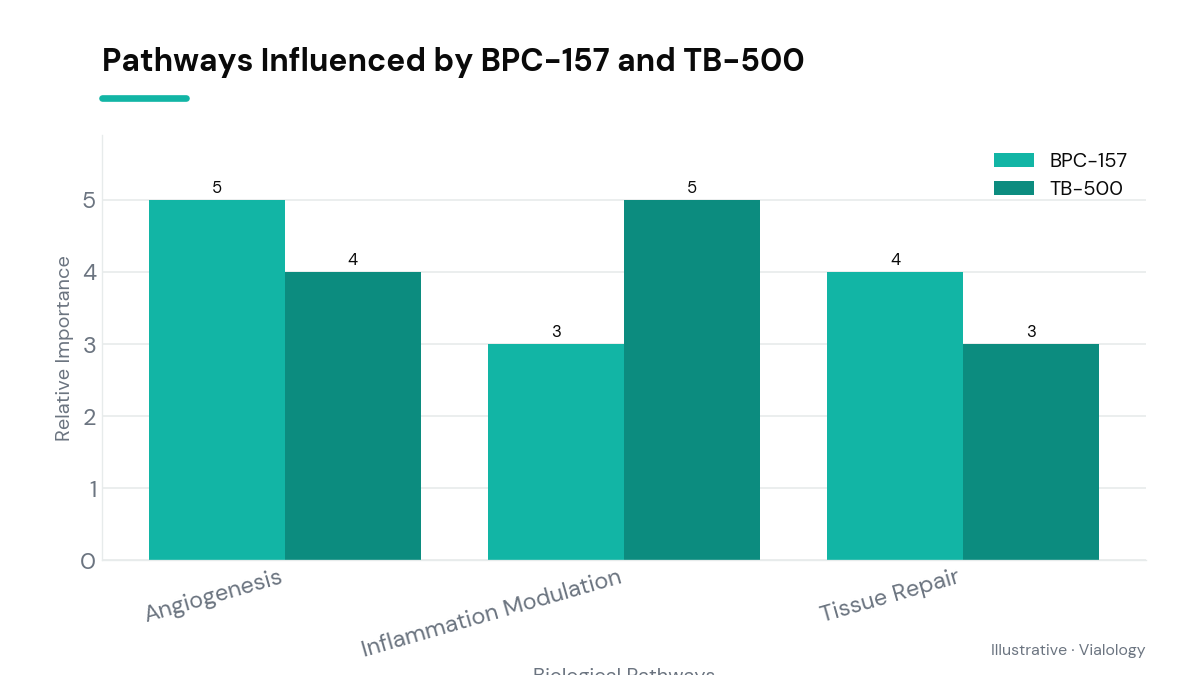
To understand why researchers are interested in combining these specific compounds, one must look at their individual mechanisms of action. Body Protection Compound 157 (BPC-157) is a pentadecapeptide derived from human gastric juice, heavily researched for its potential to promote angiogenic repair and accelerate tendon-to-bone healing in rodent models. Thymosin Beta-4 (or its synthetic fragment, TB-500) works primarily by upregulating actin, a cell-building protein critical for cell migration, wound healing, and tissue regeneration. Meanwhile, GHK-Cu (glycyl-L-histidyl-L-lysine copper peptide) is a naturally occurring copper complex known for its role in collagen synthesis, remodeling blood vessels, and modulating inflammatory pathways. None of these compounds are currently approved by the US Food and Drug Administration (FDA) for human therapeutic use, yet they remain highly active areas of clinical investigation.
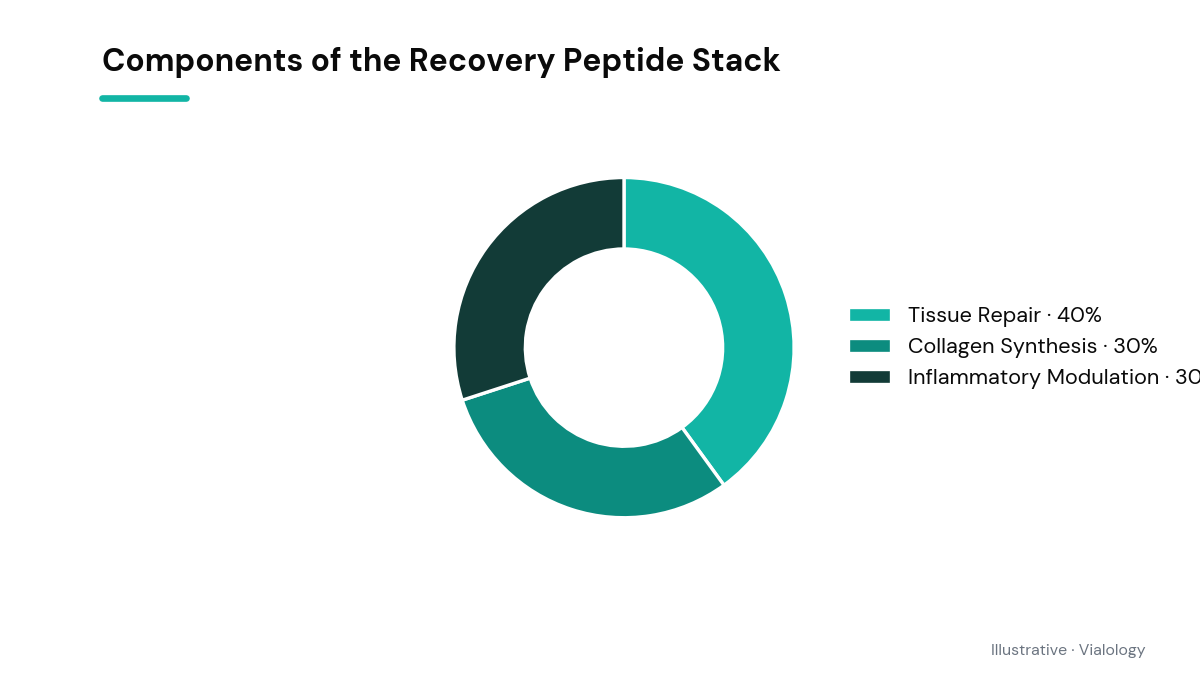
When combined, these three agents theoretically target different stages and pathways of cellular repair. While BPC-157 focuses on organizing the extracellular matrix and stimulating growth hormone receptors, TB-500 mobilizes cells to the site of injury, and GHK-Cu supports the structural synthesis of new collagen and skin tissue. In laboratory settings, this multi-faceted approach is studied to see if it reduces the time required for structural remodeling. Investigating these overlapping mechanisms helps clarify the theoretical framework behind recovery peptide stacking, allowing researchers to map out how multiple cellular signals interact in real-time.
The Intersecting Pathways of BPC-157 and TB-500
A significant portion of literature surrounding recovery stacks focuses on the pairing of BPC-157 and TB-500. A study published in 2010 highlighted BPC-157’s ability to promote tendon healing by accelerating the outgrowth of tendon fibroblasts, while historical research on Thymosin Beta-4 demonstrates its unique ability to promote cardiac cell migration and muscle repair following injury. Because muscle and tendon injuries involve different cell types—namely fibroblasts and myoblasts—scientists hypothesize that running these two compounds concurrently may address both tendon-to-bone junctions and skeletal muscle fibers simultaneously. This dual-action approach is particularly interesting in sports medicine models, where soft-tissue injuries often involve a complex mix of both muscle tears and ligament damage.
Despite promising data from animal models, it is crucial to note that clinical data in humans remains extremely limited. BPC-157 research has predominantly been conducted in vivo on rodents, where it showed remarkable efficacy in healing transected Achilles tendons and systemic inflammatory damage, but large-scale, double-blind human clinical trials are virtually non-existent. Similarly, while TB-500 has been evaluated in phase II trials for ophthalmic and dermal wound healing, its safety and efficacy profiles for systemic athletic recovery or musculoskeletal regeneration in humans have not been established by regulatory bodies.
Integrating GHK-Cu for Collagen Synthesis and Skin Repair
The third element of this recovery stack, GHK-Cu, introduces a distinct biochemical advantage: copper-mediated tissue remodeling. Originally isolated from human plasma in 1973, GHK-Cu has been shown in various in vitro studies to stimulate metalloproteinases, which are enzymes responsible for removing damaged proteins from the extracellular matrix. By clearing away degraded tissue and simultaneously stimulating the synthesis of new collagen and elastin, GHK-Cu acts as a molecular reset switch for damaged dermal and connective tissues. Scientists often include this peptide in recovery research protocols to assess whether it can improve the cosmetic and structural quality of scar tissue during the final phases of wound healing.
Furthermore, GHK-Cu exhibits notable anti-inflammatory and antioxidant properties by modulating cytokine levels and reducing oxidative stress markers like lipid peroxides. In tissue regeneration models, chronic inflammation often stalls the healing process, leading to weak, disorganized fibrotic tissue. Researchers hypothesize that combining the anti-inflammatory action of GHK-Cu with the angiogenic properties of BPC-157 and the cell-migratory signals of TB-500 creates an optimized microenvironment that prevents chronic scarring and supports functional tissue recovery. However, translating these cell-culture observations to living human systems remains a primary challenge for contemporary peptide science.
Safety, Non-FDA Status, and the Scientific Outlook
While the theoretical synergy of combining BPC-157, TB-500, and GHK-Cu is compelling, the scientific community maintains a cautious stance. Because none of these peptides are FDA-approved for systemic performance enhancement or injury recovery, their long-term safety profile when administered together is largely unknown. Combining multiple experimental agents increases the risk of unpredictable pharmacokinetic interactions, where one peptide might alter the absorption, distribution, metabolism, or excretion of another. This lack of standardized human data is why mainstream medical institutions do not recommend or prescribe these stacks for patient use, keeping them strictly within the realm of laboratory and animal research.
Looking forward, future clinical trials must focus on isolating the pharmacokinetics of these combinations to determine precise safety margins and side-effect profiles. Potential risks of unregulated peptide use include local irritation at injection sites, systemic immune responses, and theoretical concerns regarding accelerated angiogenesis in the presence of occult malignancies. Until rigorous human trials are conducted and published in peer-reviewed journals, the concept of stacking these peptides remains an intriguing but unproven hypothesis in the field of regenerative medicine.
Related on Vialology
Frequently asked questions
Are BPC-157, TB-500, and GHK-Cu approved by the FDA for human recovery?
No, these peptides are not approved by the FDA for human therapeutic use or recovery, and they are classified as research chemicals.
What is the main theory behind stacking these three peptides?
The theory suggests that BPC-157 promotes blood vessel growth, TB-500 aids cell migration to injury sites, and GHK-Cu facilitates collagen remodeling, potentially covering multiple phases of tissue repair.
Are there human clinical trials evaluating this specific peptide stack?
Currently, there are no peer-reviewed human clinical trials examining the safety, efficacy, or interactions of combining BPC-157, TB-500, and GHK-Cu.
Educational use only. Vialology publishes journalistic and educational content about peptide science. Nothing here is medical advice, diagnosis, or treatment, and nothing should be taken as an endorsement to use any substance. Many peptides discussed are experimental and are not approved by the FDA for human use. Always consult a licensed healthcare professional before making any health decision.