
In the evolving landscape of regenerative medicine, The BPC-157 + TB-500 Blend: Why Researchers Co-Administer These Two Recovery Peptides has emerged as a key subject of investigation. Both compounds are synthetic peptides designed to mimic natural healing pathways, though they operate through distinct physiological mechanisms. By examining how these pathways interact, laboratory researchers are exploring whether combining them yields a synergistic effect on tissue repair.
Understanding the Dual Pathways of BPC-157 and TB-500
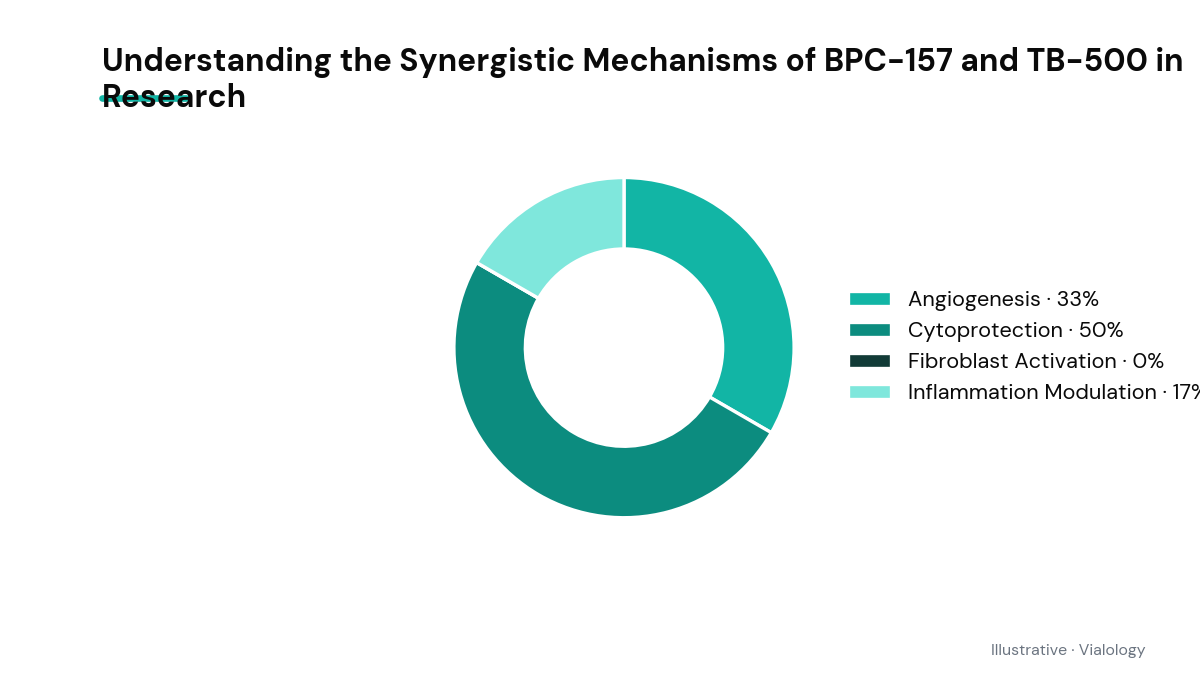
To understand why these two compounds are frequently studied together, it is necessary to examine their individual roles. BPC-157, or Body Protection Compound 157, is a pentadecapeptide derived from a human gastric protein. In animal models, researchers have observed that BPC-157 accelerates the healing of various tissues, including tendons, muscles, and ligaments, primarily by upregulating growth factors and promoting angiogenesis—the formation of new blood vessels. In contrast, TB-500 is a synthetic version of the active domain of Thymosin Beta-4, a naturally occurring peptide found in high concentrations in blood platelets. TB-500’s primary mechanism involves binding to actin, a major cellular protein, which promotes cell migration, survival, and tissue remodeling.
While both compounds facilitate tissue recovery, they target different stages of the physiological healing cascade. BPC-157 acts locally to stabilize the extracellular matrix and enhance blood supply to damaged areas, while TB-500 acts systemically to encourage cells to migrate directly to the site of injury. Consequently, combining the two allows researchers to target both localized vascular growth and cellular mobilization simultaneously, representing a comprehensive approach to investigating soft tissue repair in experimental models.
The Scientific Rationale: Why Co-Administer BPC-157 and TB-500?
The concept of synergy is central to modern pharmacology, where two compounds with complementary mechanisms produce an effect greater than the sum of their individual actions. When scientists look at why co-administer BPC-157 and TB-500, the primary hypothesis centers on this dual-action pathway. For instance, in a hypothetical tendon rupture model, BPC-157 might work to rapidly stimulate local growth factor receptors and rebuild the vascular network, while TB-500 recruits the necessary progenitor cells to the newly vascularized area to begin structural reconstruction. This theoretical division of labor has led to a growing number of preclinical studies utilizing a blended formulation.
Moreover, the structural proteins targeted by each peptide do not overlap. BPC-157 influences collagen synthesis, which provides tensile strength to tendons and ligaments, whereas TB-500 targets actin, which is critical for cell motility and early-stage tissue remodeling. By addressing both collagen deposition and actin-mediated cell movement, the combination theoretically addresses the two most critical components of physical recovery. Preclinical literature suggests that this multi-pronged approach may prevent the formation of rigid scar tissue, promoting instead the development of functional, pliable fibers.
Evaluating the Preclinical Evidence and Limitations
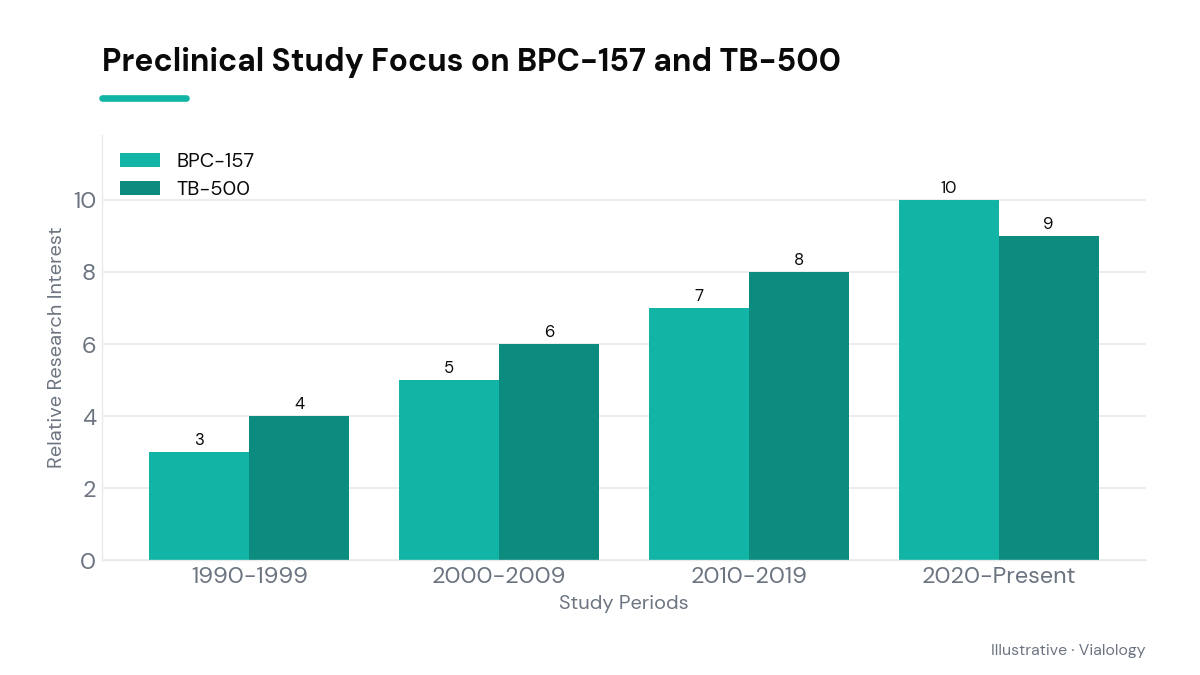
Despite the theoretical promise of the BPC-157 + TB-500 blend, it is critical to emphasize that the vast majority of existing data comes from in vitro and in vivo studies. For example, animal research dating back to the early 2000s has demonstrated BPC-157’s ability to promote tendon-to-bone healing in rats, while parallel studies on Thymosin Beta-4 showed accelerated dermal healing in mice. However, robust, large-scale human clinical trials examining the co-administration of these peptides remain virtually non-existent. Neither BPC-157 nor TB-500 has received approval from the FDA for human clinical use, and both remain classified as research chemicals.
Furthermore, regulatory bodies and sports organizations, such as the World Anti-Doping Agency (WADA), have placed strict bans on these substances due to their potential to alter performance and accelerate recovery through artificial means. Researchers conducting preclinical studies must navigate these regulatory landscapes carefully, focusing purely on the physiological mechanics of cell signaling. Understanding these boundaries is essential for maintaining an objective, evidence-based view of what these peptides can actually do versus what is claimed in informal online forums.
Next Steps in The BPC-157 + TB-500 Blend: Why Researchers Co-Administer These Two Recovery Peptides
As biotechnology advances, the focus of peptide research is shifting toward optimizing delivery methods and understanding long-term safety profiles. While early studies utilized direct localized injections in animal subjects, modern research is exploring the stability of these peptides in liquid blends and stable oral formulations. Investigating how these compounds behave when paired in a single solution is crucial, as researchers must ensure that the molecules do not degrade or negatively interfere with one another’s bioavailability.
The ultimate goal of ongoing preclinical investigation is to map the precise molecular pathways involved in this combination. By defining how BPC-157 and TB-500 interact with cellular receptors over extended periods, scientists hope to compile a comprehensive safety profile. This foundational data is required before any standardized human clinical trials can be safely designed, keeping the scientific community focused on rigorous validation rather than anecdotal speculation.
Related on Vialology
Frequently asked questions
Are BPC-157 and TB-500 approved for human use?
No, neither BPC-157 nor TB-500 has been approved by the FDA for human clinical use, and they remain classified strictly as research chemicals.
What is the main difference between BPC-157 and TB-500?
BPC-157 primarily promotes localized angiogenesis and collagen synthesis, while TB-500 interacts with actin to facilitate cellular migration and tissue remodeling throughout the body.
Why are these two peptides studied as a blend?
Researchers study them together because their complementary mechanisms are hypothesized to target different stages of the tissue healing process, potentially offering a synergistic effect on recovery.
Educational use only. Vialology publishes journalistic and educational content about peptide science. Nothing here is medical advice, diagnosis, or treatment, and nothing should be taken as an endorsement to use any substance. Many peptides discussed are experimental and are not approved by the FDA for human use. Always consult a licensed healthcare professional before making any health decision.