
Exploring the frontier of cellular regeneration, Skin & Recovery Peptide Capsules: GHK-Cu and Beyond represents a significant shift in how researchers approach tissue repair and dermatological aging from the inside out. Traditionally administered via topical formulations or subcutaneous injections, therapeutic peptides are increasingly being studied in oral formats to evaluate their systemic absorption. As science unpacks the mechanisms of these short-chain amino acids, the focus has expanded to how oral administration might influence systemic collagen synthesis and wound healing.
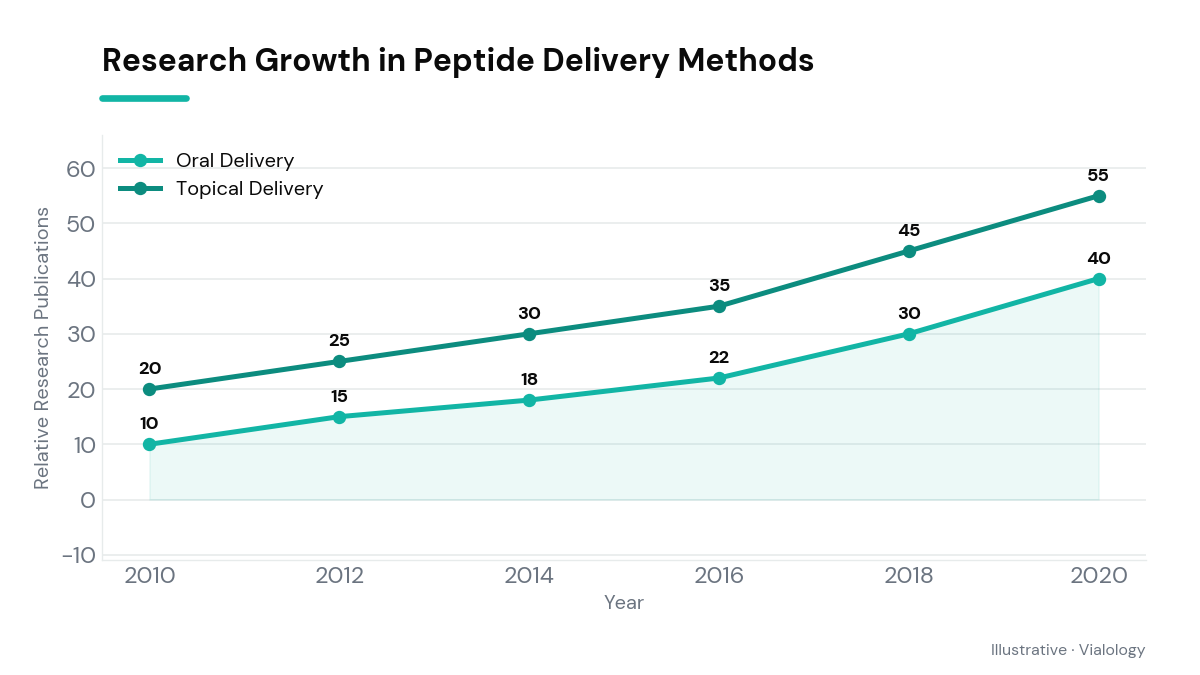
The Science of Oral Peptide Delivery
For decades, the primary challenge of utilizing peptides like GHK-Cu orally has been the harsh environment of the human digestive tract. Enzymes in the stomach and small intestine typically break down peptide bonds before they can enter the bloodstream, rendering them inactive. However, recent advances in molecular encapsulation and chemical modifications have sparked interest in oral formulations, leading researchers to investigate how these barrier-bypassing techniques might preserve therapeutic integrity.
In preclinical models, novel oral delivery systems—including permeation enhancers and protective enteric coatings—have shown promise in shielding delicate peptide chains from enzymatic degradation. This evolving landscape is detailed in a comprehensive capsule research roundup highlighting how structural modifications can successfully facilitate systemic absorption without losing biological activity.
GHK-Cu and the Mechanisms of Dermal Repair
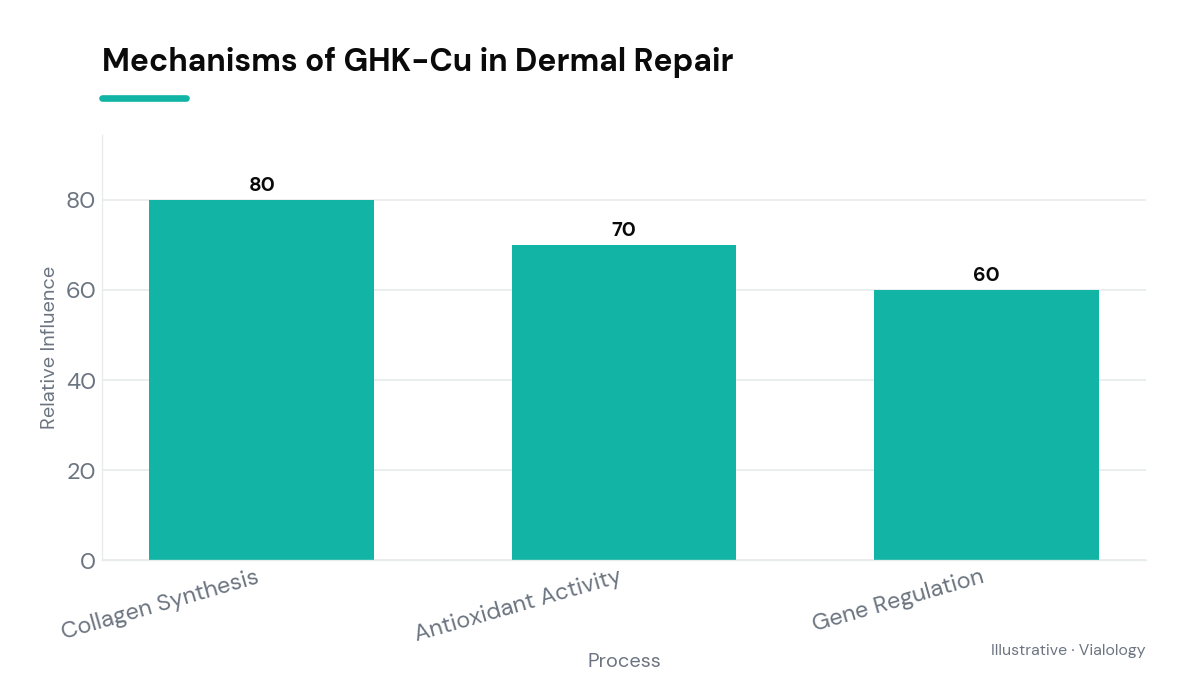
Copper tripeptide-1, commonly known as GHK-Cu, is a naturally occurring tripeptide first isolated from human plasma in 1973. It has garnered significant scientific interest due to its high affinity for copper ions, which play a crucial role in vascularization, collagen synthesis, and inflammatory modulation. While topical GHK-Cu has been widely studied for its ability to improve skin elasticity and reduce fine lines, researchers are now looking at systemic administration to observe its potential effects on deep-tissue recovery.
In vitro studies suggest that GHK-Cu works by upregulating genes responsible for collagen, elastin, and proteoglycan production, while simultaneously downregulating pro-inflammatory cytokines. This dual mechanism makes it a key subject of interest for wound healing studies, where accelerated tissue remodeling is the primary goal. However, most clinical data currently originates from topical applications, meaning human trials on oral GHK-Cu remain in the preliminary stages.
Expanding the Horizon: Skin & Recovery Peptide Capsules: GHK-Cu and Beyond
While GHK-Cu remains a cornerstone of regenerative research, scientists are exploring other compounds to complement its effects in oral capsule formats. Peptides such as BPC-157 and collagen-derived bioactives are frequently examined alongside copper peptides for their synergistic potential. Researchers hypothesize that combining multiple cellular signaling agents could address different pathways of the recovery cascade, from mucosal lining repair to musculoskeletal healing.
For instance, animal models evaluating BPC-157 have demonstrated accelerated healing of tendons, muscles, and ligaments, which has led researchers to investigate its synergy with collagen-boosting peptides. By examining these compounds in tandem, scientists hope to map out a comprehensive understanding of how multi-peptide oral therapies might support systematic tissue recovery, even though these formulations are not currently approved by the FDA for human therapeutic use.
Navigating the Current State of Clinical Evidence
It is essential to distinguish between promising laboratory findings and established clinical reality. Although the cellular pathways targeted by these peptides are well-documented, the majority of robust human trials have focused on localized topical or injectable applications rather than oral ingestion. The rate of oral absorption in humans is highly variable, and scientific consensus has not yet established standard bioequivalence models for oral peptide capsules.
As research progresses, independent laboratories continue to publish pharmacokinetic data to clarify how much of an oral dose actually reaches target tissues. Until large-scale, placebo-controlled human trials are completed, these oral formulations remain primarily in the realm of investigative science, representing an exciting but unproven frontier in dermatological and regenerative medicine.
Related on Vialology
Frequently asked questions
What is GHK-Cu and how does it work in the body?
GHK-Cu is a naturally occurring copper peptide that plays a key role in regulating inflammation, stimulating collagen production, and promoting blood vessel growth during tissue regeneration.
Are peptide capsules as effective as topical or injectable peptides?
Clinical research on oral peptide capsules is still emerging, as scientists work to overcome the digestive enzymes that typically break down peptides before they can reach the bloodstream.
Are these skin and recovery peptides approved by the FDA?
Most regenerative peptides, including GHK-Cu and BPC-157 in oral forms, are currently classified as research chemicals and are not approved by the FDA for human consumption or medical treatment.
What other peptides are studied alongside GHK-Cu for recovery?
Researchers often study GHK-Cu in combination with peptides like BPC-157, collagen fragments, and other growth-factor mimetics to explore their combined effects on tissue and wound healing.
Educational use only. Vialology publishes journalistic and educational content about peptide science. Nothing here is medical advice, diagnosis, or treatment, and nothing should be taken as an endorsement to use any substance. Many peptides discussed are experimental and are not approved by the FDA for human use. Always consult a licensed healthcare professional before making any health decision.