
When exploring the mechanics of modern biotechnology, understanding Peptide Capsule Manufacturing: How Encapsulation Differs From Vial Lyophilization is essential for grasping how researchers stabilize delicate amino acid chains. While freeze-drying in glass vials has long been the gold standard for preserving research compounds, oral encapsulation technologies are emerging as a complex and highly engineered alternative. This guide dives into the structural, chemical, and manufacturing differences that define these two primary preservation methods.
The Traditional Gold Standard: Understanding Vial Lyophilization
For decades, the standard method of preserving fragile therapeutic peptides has been lyophilization, or freeze-drying, within glass vials. In this process, a liquid peptide solution is frozen, and then the surrounding pressure is reduced to allow the frozen water in the material to sublime directly from the solid phase to the gas phase. This leaves behind a dry, highly stable ‘cake’ of peptide powder that can withstand storage for extended periods before reconstitution with bacteriostatic water.
Lyophilization is highly favored in laboratory settings because it minimizes chemical degradation and thermal stress on the delicate peptide bonds. However, because lyophilized peptides are typically intended for subcutaneous or intramuscular injection in research settings, they require careful handling, cold storage, and sterile reconstitution protocols, which can introduce variables in a research environment.
The Mechanics of Peptide Capsule Manufacturing: How Encapsulation Differs From Vial Lyophilization
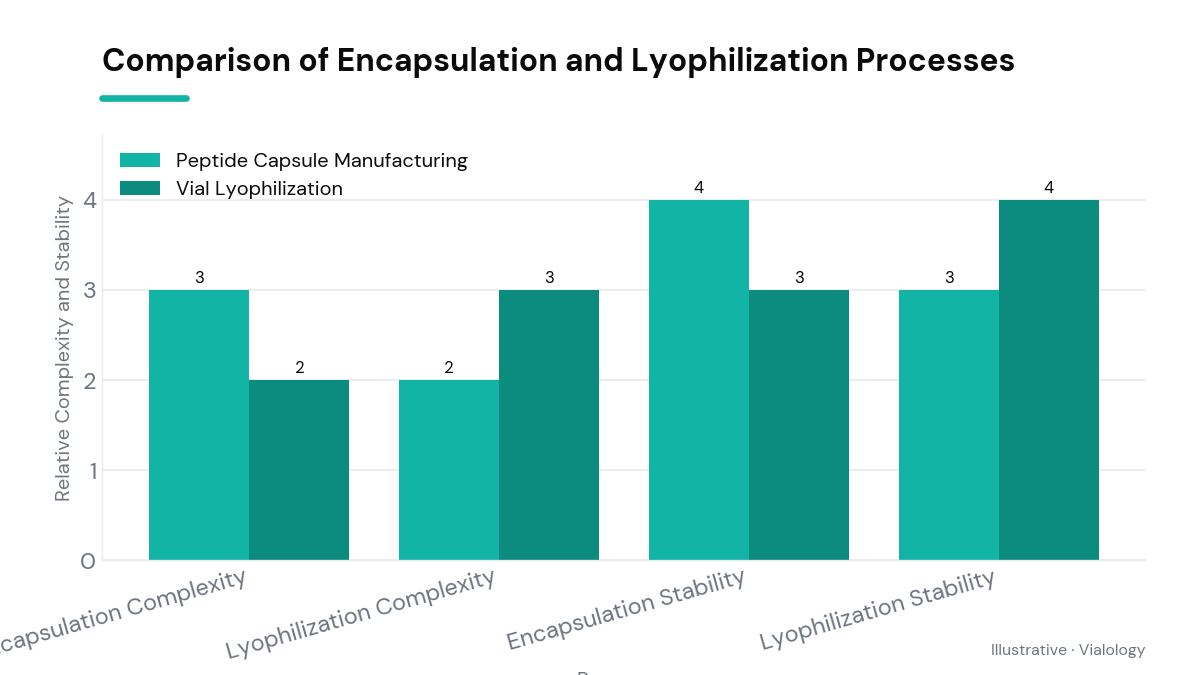
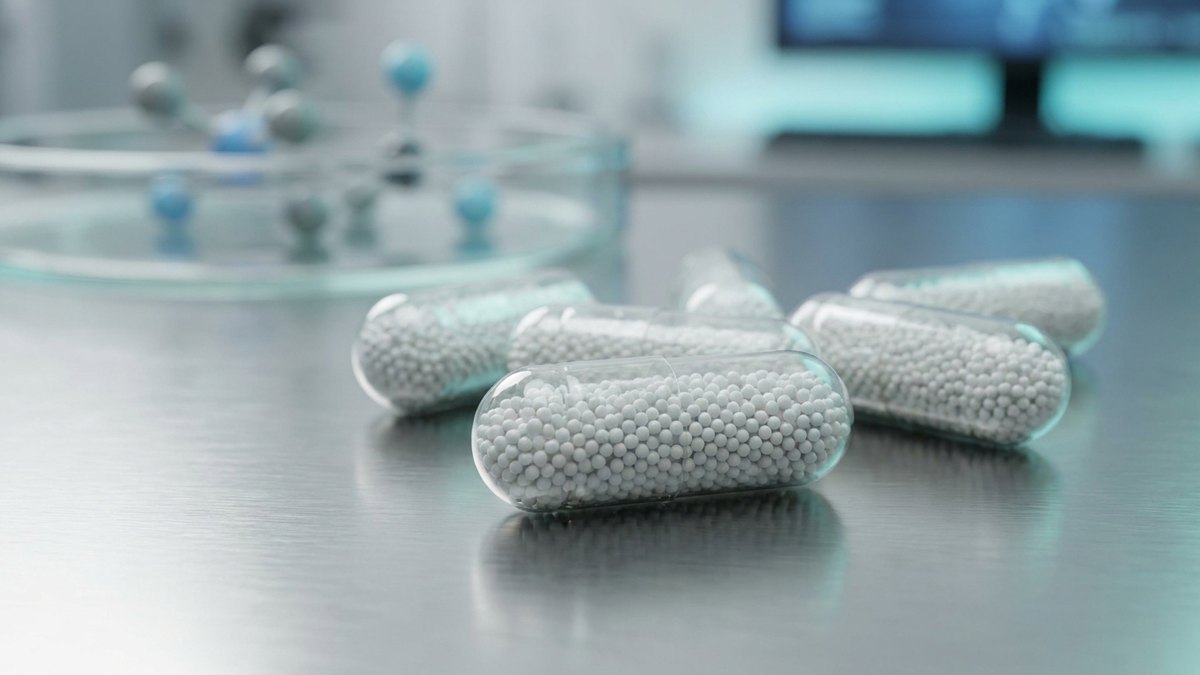
Transitioning these fragile compounds into oral formats requires an entirely different approach known as peptide encapsulation. Unlike lyophilization, which simply dehydrates a peptide to keep it stable in a vial, encapsulation vs lyophilization involves shielding the active molecule from the harsh, acidic environment of the gastrointestinal tract. Manufacturers must engineer specialized enteric coatings or lipid-based nanoparticles to ensure the peptide survives stomach acid and pepsin digestion.
In a 2020 review of oral delivery systems, researchers highlighted that peptide capsule manufacturing relies heavily on excipients like permeation enhancers, which temporarily open the tight junctions of the intestinal epithelium to allow the large peptide molecules to enter systemic circulation. This process is highly precise, demanding exact ratios of protective polymers to prevent premature degradation of the active pharmaceutical ingredient.
Stability, Bioavailability, and Processing Challenges
The choice between these two manufacturing pathways ultimately comes down to stability and bioavailability. Lyophilized vials offer near 100% bioavailability because they bypass the digestive tract entirely through direct injection. Conversely, oral capsules must overcome what is known as the ‘enzymatic barrier,’ often resulting in a significantly lower bioavailability—sometimes less than 1% to 5% without advanced formulation techniques.
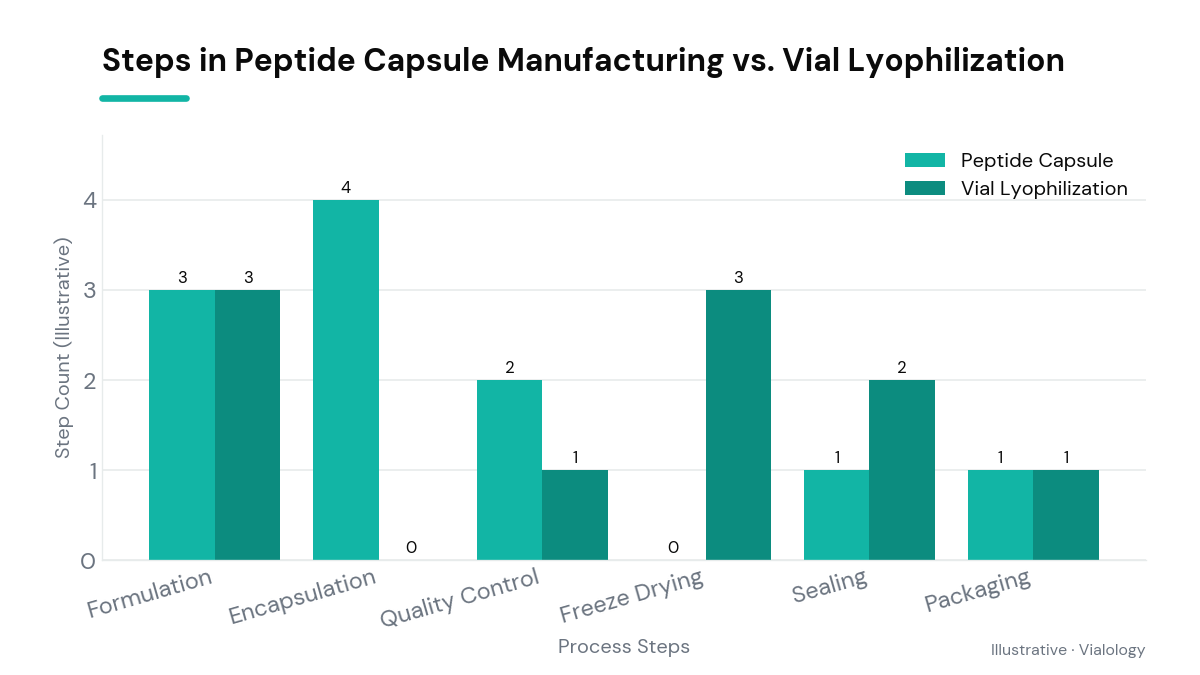
From a manufacturing standpoint, encapsulation requires sophisticated machinery to ensure uniform dosing across microscopic powder blends, whereas lyophilization relies on precise thermal cycles within vacuum chambers. As research into oral delivery systems accelerates, engineers are continuously testing novel polymers and co-solvents to bridge the gap between these two vastly different preservation technologies.
Related on Vialology
Frequently asked questions
Why are most research peptides lyophilized instead of encapsulated?
Lyophilization maintains the structural integrity of fragile peptides and allows for direct injection, which bypasses the digestive system to provide maximum bioavailability.
What is the main challenge in manufacturing oral peptide capsules?
The primary challenge is protecting the peptide from enzymatic degradation in the stomach and ensuring it can cross the intestinal barrier into the bloodstream.
Do encapsulated peptides have the same shelf life as lyophilized vials?
Generally, lyophilized vials stored in a controlled, cold environment have a superior shelf life, whereas capsules rely on specialized moisture-resistant blister packs and enteric shells to maintain stability over time.
Educational use only. Vialology publishes journalistic and educational content about peptide science. Nothing here is medical advice, diagnosis, or treatment, and nothing should be taken as an endorsement to use any substance. Many peptides discussed are experimental and are not approved by the FDA for human use. Always consult a licensed healthcare professional before making any health decision.