
While marketing campaigns often celebrate the elusive radiance of youthful skin, molecular biologists are increasingly focusing on a class of compounds known as the “glow peptide”—most notably GHK-Cu. First isolated in human plasma in 1973, this copper-binding tripeptide has emerged as a cornerstone of cellular research into tissue remodeling and wound healing. Understanding how these tiny amino acid chains interact with cellular pathways offers a fascinating look at the intersection of biochemistry and aesthetic science.
The Molecular Machinery of the Primary Glow Peptide: GHK-Cu
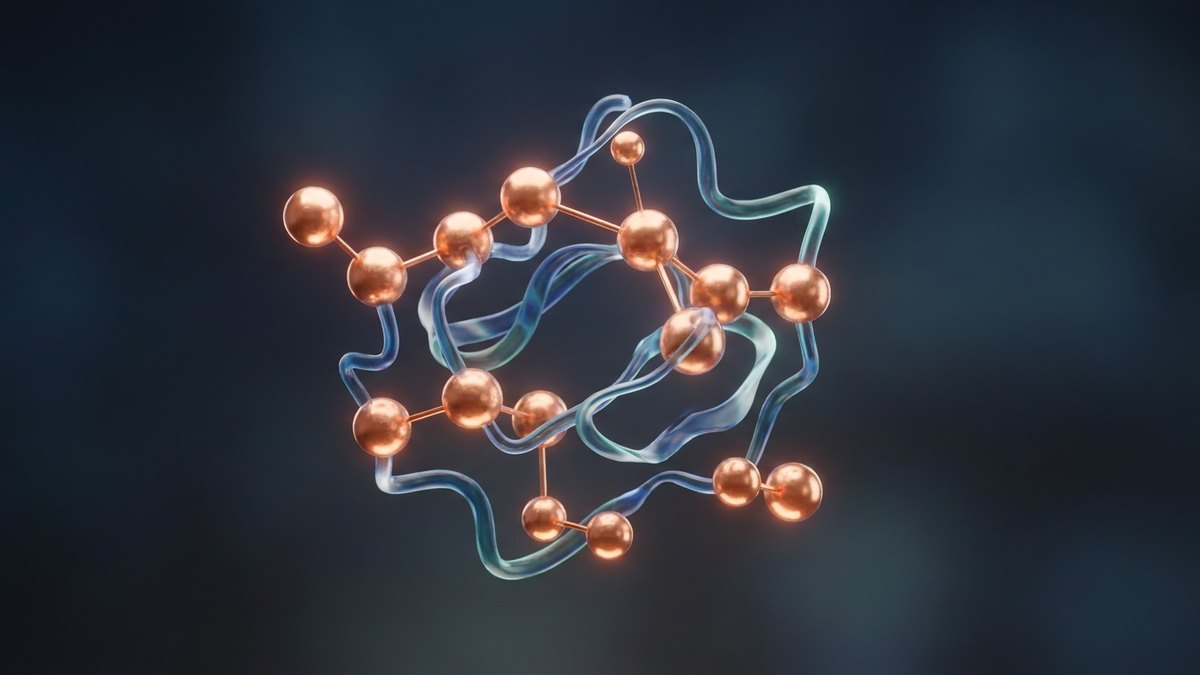
GHK-Cu, or glycyl-L-histidyl-L-lysine copper, is a naturally occurring tripeptide that possesses a high affinity for copper ions. Copper is a critical cofactor in several enzymatic processes, including the activation of lysyl oxidase, an enzyme essential for the cross-linking of collagen and elastin. In human physiology, plasma levels of GHK-Cu are highest in youth—averaging about 200 nanograms per milliliter at age 20—but decline steadily to approximately 80 nanograms per milliliter by age 60, prompting researchers to investigate whether replenishing this peptide could influence age-related cellular decline.
Scientific interest in GHK-Cu centers on its role as both a carrier peptide and a signal peptide. Researchers hypothesize that GHK-Cu acts as a cellular messenger, signaling the body to initiate tissue repair mechanisms, modulate inflammatory cytokines, and stimulate antioxidant enzymes like superoxide dismutase. This dual mechanism of delivering essential copper directly to cells while simultaneously activating transcription factors is why GHK-Cu remains the most thoroughly studied peptide in modern dermatological science.
How Glow Peptides Influence Collagen and Tissue Remodeling
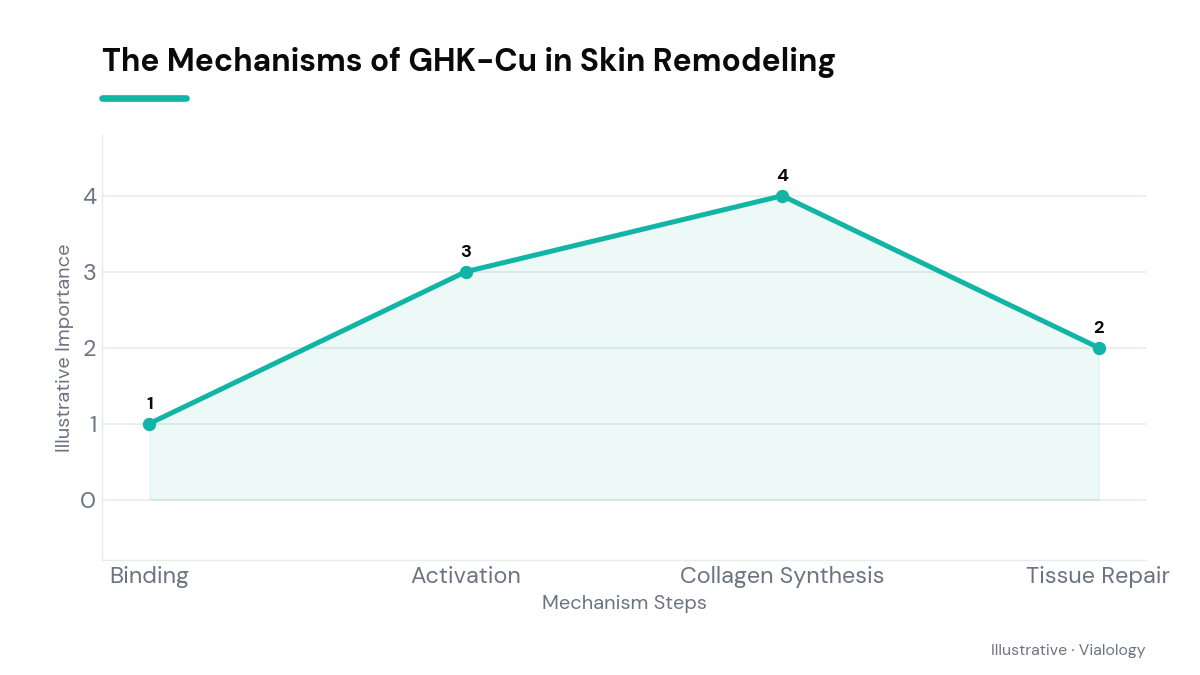
One of the primary pathways through which copper peptides are thought to improve skin texture is the regulation of metalloproteinases (MMPs) and their inhibitors. A 2015 review published in the International Journal of Molecular Sciences highlighted that GHK-Cu not only stimulates the synthesis of collagen and elastin but also balances the activity of MMPs, which are enzymes responsible for breaking down damaged extracellular matrix proteins. This balanced approach to synthesis and degradation prevents the accumulation of dysfunctional tissue, a common hallmark of photoaged skin.
Beyond GHK-Cu, researchers have also explored other aesthetic peptides, such as palmitoyl pentapeptide-4 and acetyl hexapeptide-8. While these compounds operate through distinct mechanisms—such as mimicking natural collagen fragments to stimulate synthesis or temporarily relaxing subcutaneous micro-muscles—they are often grouped under the same aesthetic umbrella. Clinical trials, including a 2018 double-blind study, suggest that topical applications of these peptide formulations can modestly improve skin density and barrier function, though researchers emphasize that results vary depending on formulation stability and molecular delivery systems.
Aesthetic vs. Therapeutic: What the Clinical Trial Data Shows
Clinical research evaluating the efficacy of copper peptides has largely focused on topical and in vitro models, rather than systemic administration. For instance, a landmark study in 2002 compared the effects of GHK-Cu, vitamin C, and retinoic acid on collagen synthesis in facial skin; the researchers reported that GHK-Cu produced a significant increase in collagen density in a majority of the participants, performing comparably to traditional retinoids with less localized irritation. Subsequent studies in 2007 and 2015 corroborated these findings, showing improvements in skin elasticity, clarity, and fine lines over 12-week periods.
Despite these promising cosmetic observations, researchers note that the therapeutic application of copper peptides is distinct from general anti-aging cosmetics. In the medical field, GHK-Cu has been studied for its potential to accelerate wound healing in diabetic ulcers, promote hair follicle microcirculation, and even exhibit protective effects on gastrointestinal lining in animal models. These broader systemic investigations are still in exploratory phases, and further large-scale human clinical trials are required to fully elucidate the peptide’s safety and efficacy profiles across different modes of delivery.
Regulatory Status and Safety Considerations
In the regulatory landscape, cosmetic-grade copper peptides are widely permitted in topical skincare formulations because they are classified as cosmetics rather than active pharmaceutical ingredients. This means they are subject to standard cosmetic safety evaluations but do not undergo the rigorous pre-market approval process required for prescription drugs. It is crucial to note that while topical application is generally considered safe and well-tolerated, other routes of administration—such as subcutaneous injections or intravenous infusions—are not FDA-approved for anti-aging purposes, and clinical data regarding their long-term safety in humans remains extremely limited.
Furthermore, researchers caution that excessive copper accumulation can theoretically lead to cellular toxicity, highlighting the importance of physiological balance. While GHK-Cu naturally sequesters copper to prevent oxidative stress, unregulated or high-dose exogenous administration bypassing the skin barrier bypasses the body’s natural filtering mechanisms. Consequently, the consensus within the scientific community is to approach these compounds as promising subjects of ongoing research, emphasizing that current evidence strongly favors topical cosmetic use over off-label systemic administration.
Frequently asked questions
What is the ‘glow peptide’ most commonly referred to in scientific literature?
In scientific literature, the term most frequently corresponds to GHK-Cu (glycyl-L-histidyl-L-lysine copper), a naturally occurring copper-binding tripeptide first isolated in 1973. It is widely studied for its ability to promote wound healing, tissue remodeling, and collagen synthesis.
How does research suggest GHK-Cu influences collagen production?
Research suggests that GHK-Cu stimulates collagen production by acting as a signaling molecule that upregulates collagen genes while simultaneously regulating metalloproteinases, the enzymes responsible for removing damaged extracellular matrix. Additionally, it delivers copper ions essential for the enzymatic activation of lysyl oxidase, which cross-links collagen and elastin.
What do clinical studies say about copper peptides and skin elasticity?
Clinical studies, including 12-week trials comparing GHK-Cu to retinoids and vitamin C, suggest that topical copper peptides can significantly improve skin elasticity, density, and thickness. These studies indicate that the peptide helps regenerate the dermal matrix with minimal localized irritation compared to traditional anti-aging compounds.
Are these aesthetic compounds approved by the FDA for anti-aging use?
No, copper peptides and similar aesthetic peptides are not FDA-approved as drugs for anti-aging or cosmetic enhancement. While they are permitted in over-the-counter topical cosmetics under standard cosmetic safety guidelines, they have not undergone the rigorous evaluation required for therapeutic pharmaceutical approval.
Educational use only. Vialology publishes journalistic and educational content about peptide science. Nothing here is medical advice, diagnosis, or treatment, and nothing should be taken as an endorsement to use any substance. Many peptides discussed are experimental and are not approved by the FDA for human use. Always consult a licensed healthcare professional before making any health decision.