

The development of a transdermal glp-1 patch could soon offer a painless, non-invasive alternative to the daily or weekly needles currently required for metabolic therapies. As GLP-1 receptor agonists like semaglutide and tirzepatide dominate clinical discussions, researchers are actively looking to material science to bypass the digestive tract without resorting to subcutaneous injections. By utilizing microscopic needles that penetrate only the outermost layer of skin, these experimental systems aim to deliver therapeutic macromolecules directly into the bloodstream with minimal discomfort.
How a GLP-1 Patch Penetrates the Skin Barrier
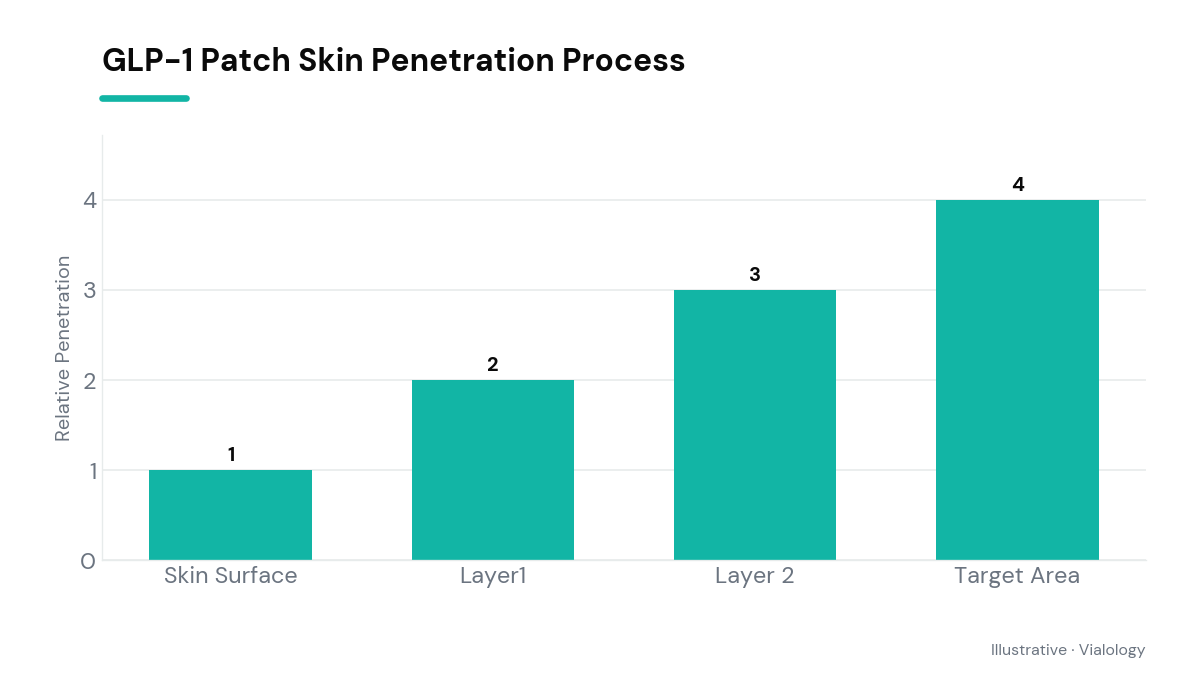
Traditional oral delivery of peptides is notoriously difficult because the harsh environment of the gastrointestinal tract rapidly degrades delicate amino acid chains before they can reach systemic circulation. While subcutaneous injections bypass this barrier, they present challenges regarding patient compliance, sterile disposal, and needle anxiety. To address these limitations, biomedical engineers are designing transdermal patches lined with hundreds of microscopic, biocompatible needles that gently breach the stratum corneum—the skin’s outermost protective layer—without reaching the deeper pain receptors.
Once applied to the skin, these microneedles either dissolve or swell to release their encapsulated peptide payload directly into the interstitial fluid. From there, the active GLP-1 molecules diffuse into the dermal capillary network, achieving systemic bioavailability. A 2020 study published in Advanced Functional Materials demonstrated that polymer-based microneedle arrays could successfully deliver macromolecular therapeutics across the skin barrier, maintaining stable plasma concentrations in animal models without causing significant localized inflammation or tissue damage.
Current Studies on Transdermal GLP-1 Formulations
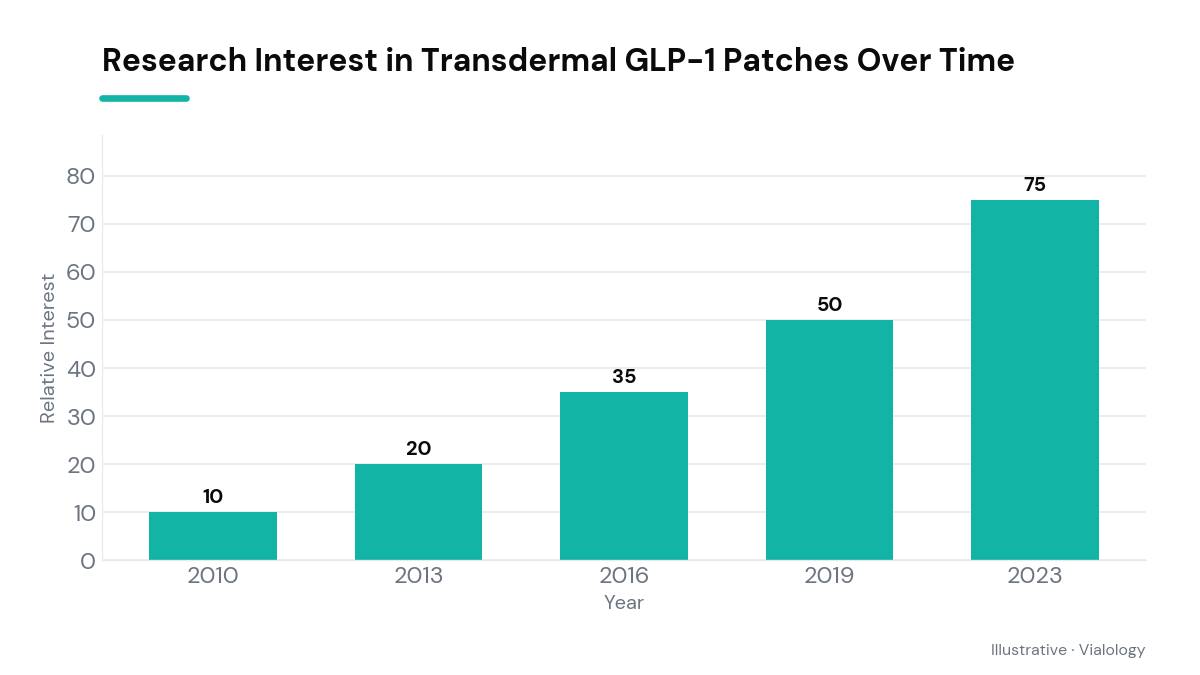
Early-stage preclinical research suggests that transdermal delivery of GLP-1 receptor agonists is not only feasible but may also offer unique pharmacokinetic advantages. In a 2021 animal study, researchers formulated a dissolvable microneedle patch loaded with exenatide, a first-generation GLP-1 receptor agonist. The results indicated that the patch achieved a steady, sustained release profile over several days, contrasting with the sharp peaks and rapid clearance typically observed with standard liquid injections. This steady release could theoretically translate to more stable therapeutic levels and a reduction in the gastrointestinal side effects often associated with rapid systemic absorption.
Further proof-of-concept studies have focused on scaling this technology for modern, longer-acting peptides like semaglutide. In 2023, bioengineers evaluated a high-density, dissolvable polymer patch designed to withstand the physical stresses of application while preserving the delicate tertiary structure of the peptide. While these early trials in rodent and porcine models show promising biological activity and blood-glucose regulation, researchers emphasize that large-scale human clinical trials are still required to determine whether transdermal delivery can match the high bioavailability achieved by conventional subcutaneous injections in humans.
Overcoming the Obstacles to a Commercial GLP-1 Patch
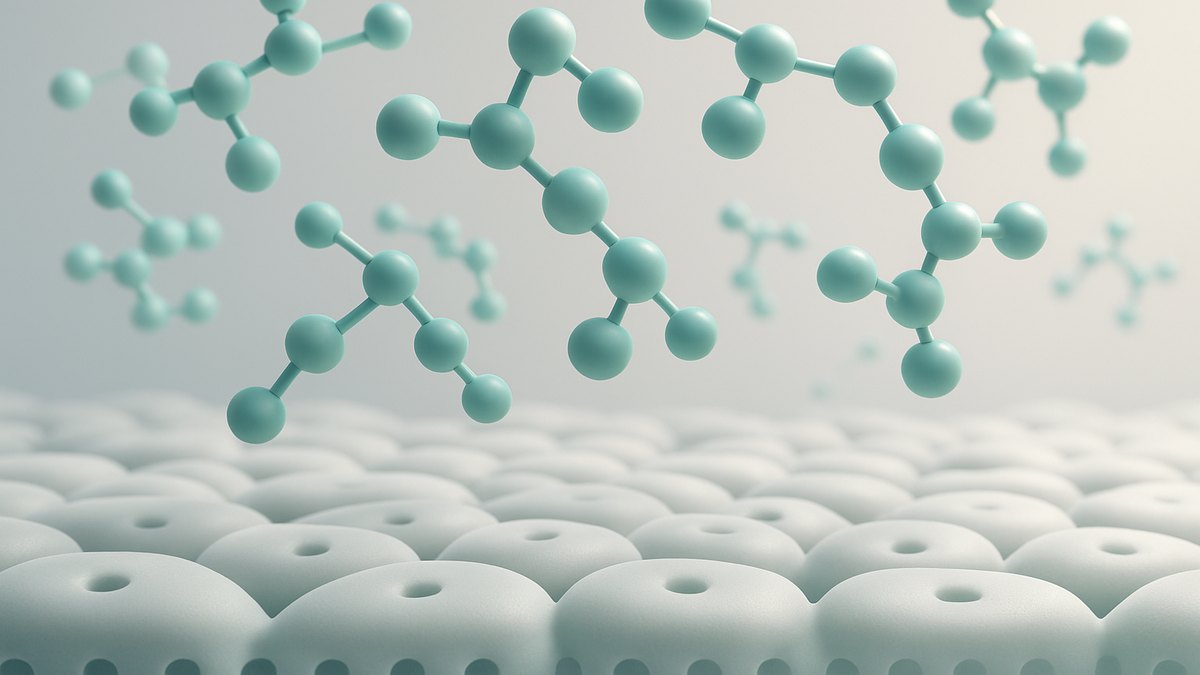
Transitioning from a laboratory prototype to a commercially viable GLP-1 patch presents several complex engineering and regulatory hurdles. Peptides are highly sensitive to environmental factors like heat, moisture, and physical stress, which are often encountered during the manufacturing of microneedle arrays. Ensuring that the peptide remains stable and biologically active within the polymer matrix over a standard shelf life is a primary focus of current material science research. Additionally, precise dosing control remains a challenge, as individual skin thickness and local blood flow variations can influence the rate of peptide absorption across different subjects.
From a regulatory standpoint, transdermal microneedles occupy a complex category as combination drug-device products. Agencies like the FDA require rigorous testing to ensure not only the safety and efficacy of the peptide formulation but also the physical integrity, sterility, and mechanical reliability of the patch itself. Although no transdermal GLP-1 patches have yet received regulatory approval for human use, ongoing collaborations between pharmaceutical companies and biotechnology firms suggest that clinical-stage human trials may represent the next critical frontier in metabolic drug delivery.
Related on Vialology
Frequently asked questions
What is a GLP-1 patch?
A GLP-1 patch is an experimental transdermal drug-delivery system that utilizes microscopic needle arrays to deliver GLP-1 receptor agonist peptides through the skin as a painless alternative to subcutaneous injections.
How does microneedle technology deliver peptides?
Microneedle technology works by using tiny, biocompatible needles to pierce only the outermost layer of the skin, allowing the encapsulated peptides to dissolve directly into the interstitial fluid and enter the bloodstream.
Is there an FDA-approved GLP-1 patch available?
No, there is currently no FDA-approved GLP-1 patch available on the market, as the technology remains in the preclinical and early clinical research phases.
What do early studies say about transdermal GLP-1 delivery?
Early animal studies indicate that transdermal GLP-1 delivery is highly feasible, showing sustained peptide release profiles, stable blood-sugar regulation, and a potential reduction in gastrointestinal side effects compared to traditional injections.
Educational use only. Vialology publishes journalistic and educational content about peptide science. Nothing here is medical advice, diagnosis, or treatment, and nothing should be taken as an endorsement to use any substance. Many peptides discussed are experimental and are not approved by the FDA for human use. Always consult a licensed healthcare professional before making any health decision.