
As commercial products like vital proteins collagen peptides have swept through the wellness market, interest in dietary collagen supplementation has reached an all-time high among health-conscious consumers and researchers alike. Collagen forms the primary structural scaffold for skin, cartilage, bone, and connective tissues, making its integrity central to musculoskeletal and dermatological health. This objective review examines the enzymatic breakdown of intact collagen into bioactive tripeptides and assesses what human clinical trials actually reveal about its systemic absorption and physiological impact.
The Biochemistry of Hydrolyzed Collagen Peptides
Native collagen is a robust, triple-helical protein with a high molecular weight around 300 kilodaltons, rendering intact native collagen largely insoluble and difficult for the human gastrointestinal tract to process efficiently. Enzymatic hydrolysis breaks down these long polypeptide chains into short-chain amino acid sequences, known as hydrolysates or hydrolyzed collagen peptides, typically ranging between 3 to 6 kilodaltons. These low-molecular-weight fractions contain high concentrations of specific amino acids—predominantly glycine, proline, and hydroxyproline—arranged in repeating tripeptide motifs such as Proline-Hydroxyproline (Pro-Hyp) and Glycine-Proline-Hydroxyproline (Gly-Pro-Hyp).
The structural advantage of enzymatic hydrolysis lies in digestive accessibility. Unlike intact proteins that undergo extensive degradation into single amino acids by gastric enzymes, specific dipeptides and tripeptides resist total enzymatic cleavage within the small intestine. Human pharmacokinetic studies demonstrate that intact Pro-Hyp and Gly-Pro-Hyp enter systemic circulation through dedicated peptide transporters, specifically PEPT1, appearing in blood plasma within hours of oral intake. This unique systemic availability distinguishes collagen hydrolysates from standard dietary proteins like whey or soy.
Analyzing Commercial Formulations: Vital Proteins Collagen Peptides in Context
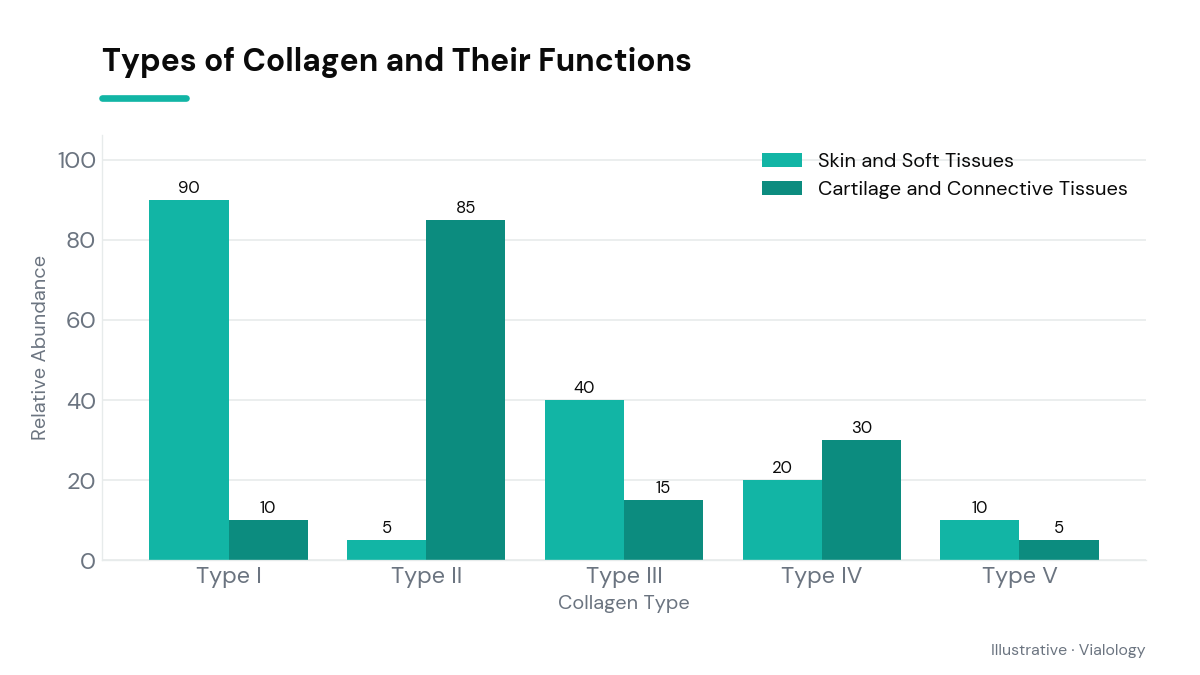
Popular market offerings, such as vital proteins collagen peptides, primarily utilize bovine or porcine hide hydrolysates rich in Type I and Type III collagen. Type I is the predominant structural component of human skin, tendons, and vascular walls, while Type III provides structural integrity to reticular fibers and internal organs. Commercial manufacturing involves rigorous thermal and enzymatic degradation to yield a soluble powder. While marketing narratives frequently frame these products as targeted solutions for youthful skin or joint repair, the underlying physiological mechanism relies on systemic distribution rather than direct targeted delivery.
Once absorbed, circulating collagen-derived tripeptides act as signaling molecules rather than mere structural building blocks. A 2018 human trial published in the Journal of Agricultural and Food Chemistry observed that elevated plasma levels of Pro-Hyp stimulated dermal fibroblasts in vitro, triggering extracellular matrix synthesis and hyaluronan production. However, comparative studies note that standard commercial hydrolysate powders share remarkably similar amino acid profiles across reputable brands. The primary differentiator between high-grade hydrolyzed collagen products and raw gelatin lies in molecular weight distribution and bioavailability rather than proprietary origin.
Clinical Evidence: Dermal Integrity and Skin Elasticity
Dermatological research represents one of the most robust areas of inquiry regarding oral collagen supplementation. A double-blind, placebo-controlled trial conducted in 2019 evaluated the effects of daily collagen hydrolysate intake in over 100 adult female participants across 12 weeks. Researchers recorded statistically significant improvements in skin elasticity, dermal hydration, and transepidermal water loss compared to the placebo group. Biopsy data and ultrasonic skin scans indicated an increase in collagen density within the dermis, suggesting that prolonged systemic exposure to bioactive peptides can upregulate endogenous collagen synthesis.
Despite these promising clinical markers, trial outcomes exhibit variability based on age, baseline nutritional status, and lifestyle factors. A comprehensive 2021 systematic review published in the International Journal of Dermatology synthesized data from 19 randomized controlled trials involving 1,125 subjects. The authors concluded that oral hydrolyzed collagen supplementation significantly improved skin moisture, elasticity, and hydration markers relative to control groups. Nevertheless, researchers emphasize that collagen peptides do not stop intrinsic biological aging, and observed structural benefits tend to diminish once oral administration ceases.
Impact on Joint Cartilage and Musculoskeletal Recovery
Beyond dermatological applications, scientists have investigated collagen peptides for structural joint support and exercise recovery. Cartilage tissue relies on Type II collagen to resist compressive forces, but joint degradation—such as in osteoarthritis—erodes this extracellular matrix over time. A 2016 double-blind clinical trial published in Applied Physiology, Nutrition, and Metabolism investigated young adults with activity-related joint discomfort. Participants receiving collagen hydrolysate daily for 12 weeks reported significant reductions in joint pain during physical activity compared to baseline and placebo controls.
Mechanistic studies shed light on how these peptides interact with chondrocytes—the specialized cells responsible for cartilage maintenance. In vitro investigations reveal that collagen tripeptides bind to specific cell surface receptors on chondrocytes, encouraging the expression of Type II collagen and proteoglycans while suppressing inflammatory cytokines like interleukin-1 beta. While current clinical data suggests meaningful functional improvements in physical mobility and joint comfort, researchers note that collagen hydrolysates cannot fully regenerate severely eroded cartilage tissue in end-stage degenerative conditions.
Related on Vialology
Frequently asked questions
What are hydrolyzed collagen peptides?
Hydrolyzed collagen peptides are short chains of amino acids produced by breaking down full-length native collagen proteins through enzymatic hydrolysis. This processing reduces their molecular weight, making them soluble in liquid and significantly easier for the body to digest and absorb.
How does the body absorb dietary collagen?
During digestion, hydrolyzed collagen is broken down into small dipeptides and tripeptides, such as proline-hydroxyproline, which are absorbed intact through the intestinal wall via specialized peptide transporters like PEPT1. Once absorbed into the bloodstream, these circulating molecules distribute to structural tissues like the skin, tendons, and cartilage.
What does clinical research suggest about collagen and skin elasticity?
Clinical studies and systematic reviews indicate that daily oral intake of collagen hydrolysates over 8 to 12 weeks can significantly improve skin hydration, elasticity, and dermal collagen density. Research suggests these bioactive peptides stimulate dermal fibroblasts to produce new endogenous extracellular matrix proteins.
Are there studies supporting collagen peptides for joint cartilage health?
Yes, clinical trials demonstrate that collagen peptide supplementation can reduce activity-related joint pain and improve functional mobility in both athletes and individuals with early-stage joint degradation. Laboratory research suggests these peptides encourage chondrocytes to synthesize Type II collagen and protective proteoglycans within cartilage tissue.
Educational use only. Vialology publishes journalistic and educational content about peptide science. Nothing here is medical advice, diagnosis, or treatment, and nothing should be taken as an endorsement to use any substance. Many peptides discussed are experimental and are not approved by the FDA for human use. Always consult a licensed healthcare professional before making any health decision.