
To understand how do peptides work, one must look at them not as medicines or supplements, but as the fundamental biological messengers of the human body. These short chains of amino acids act like molecular keys, navigating the complex cellular landscape to unlock specific physiological responses. By examining their chemical structure and receptor interactions, researchers are uncovering how these tiny molecules coordinate everything from tissue repair to metabolic homeostasis.
The Molecular Architecture: How Do Peptides Work as Signaling Keys?
Peptides are short chains of amino acids, typically consisting of 2 to 50 amino acid residues linked by peptide bonds. Unlike larger proteins, which have complex three-dimensional folding patterns, peptides are highly flexible and dynamic. This structural agility allows them to act as precise signaling molecules (ligands) within the endocrine, paracrine, and autocrine systems. In biological signaling, a cell secretes a peptide into the extracellular environment, where it travels to target cells, carrying instructions that influence cellular behavior without ever needing to enter the target cell itself.
This localized or systemic journey relies on biochemical specificity. Because each peptide possesses a unique sequence of amino acids, it carries a distinct electrostatic charge and spatial configuration. This specific arrangement determines exactly which cellular receptors the peptide can interact with. In essence, the peptide acts as a key that can only turn in highly compatible locks, ensuring that biological messages are delivered precisely to the intended tissues without causing chaotic cross-reactions in unrelated organ systems.
Receptor Binding and the Cascade of Cellular Responses
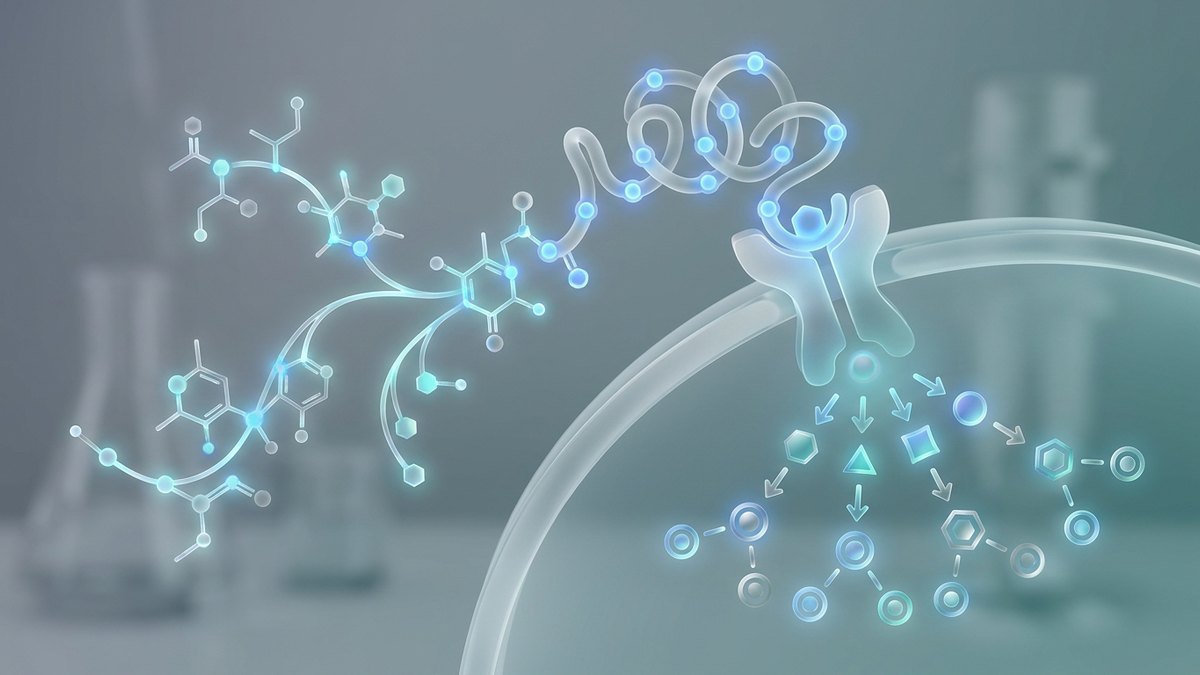
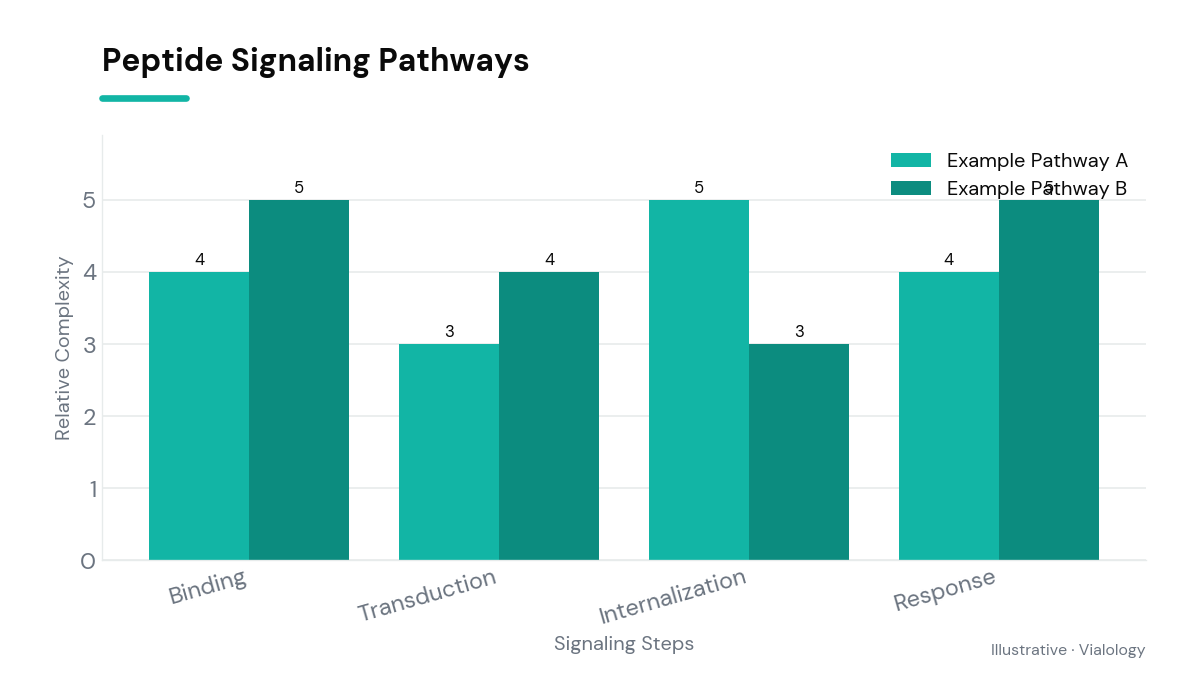
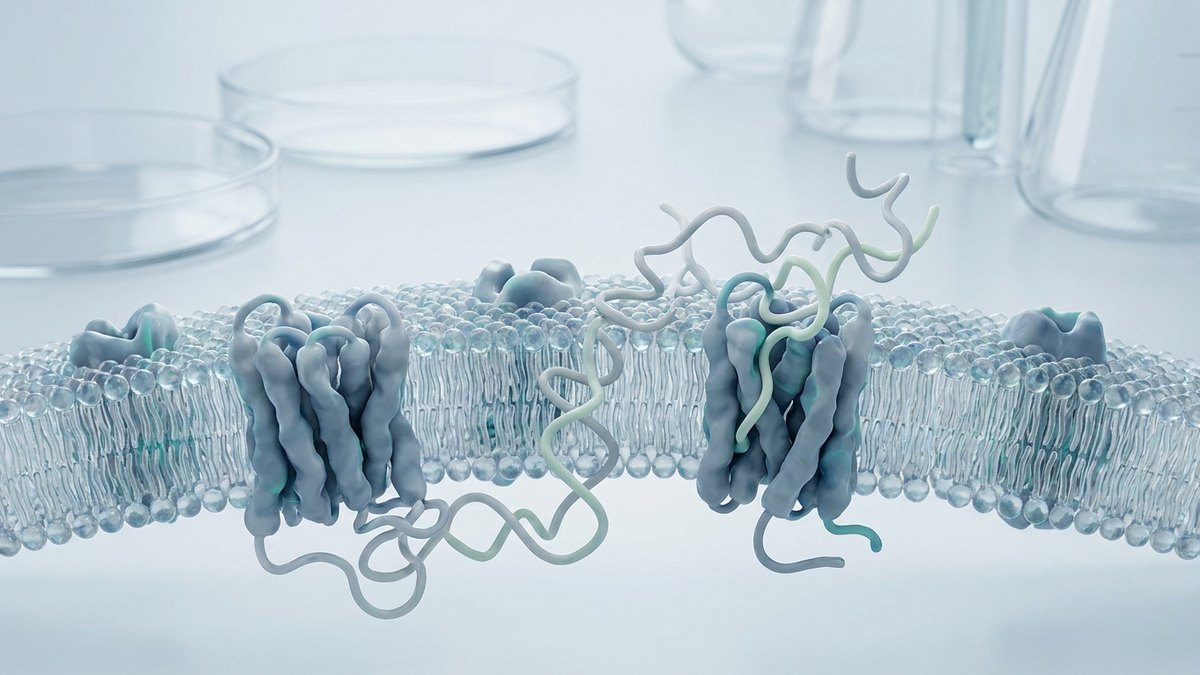
Once a peptide reaches its target cell, it must dock with a specific receptor embedded in the cell membrane. The vast majority of signaling peptides bind to G-protein coupled receptors (GPCRs), which are a class of transmembrane proteins that act like biological switches. When a peptide docks into the receptor’s binding pocket, it induces a conformational change—a physical shift in the receptor’s shape. A 2020 review on molecular endocrinology highlights that this structural change is the precise moment extracellular information is translated into intracellular action, triggering a cascade of secondary messengers like cyclic adenosine monophosphate (cAMP) or calcium ions.
This intracellular cascade acts as an amplifier. A single peptide binding to a receptor can trigger the release of thousands of secondary messenger molecules, leading to rapid changes in cellular function. Depending on the peptide and the receptor type, this signal transduction cascade can activate specific enzymes, alter gene expression, or open ion channels. For instance, in metabolic research, when a peptide like GLP-1 binds to its receptor on pancreatic beta cells, the resulting cascade enhances insulin secretion in response to glucose, showcasing how a microscopic binding event translates into systemic metabolic regulation.
Biological Roles and Diversity of Peptide Messengers
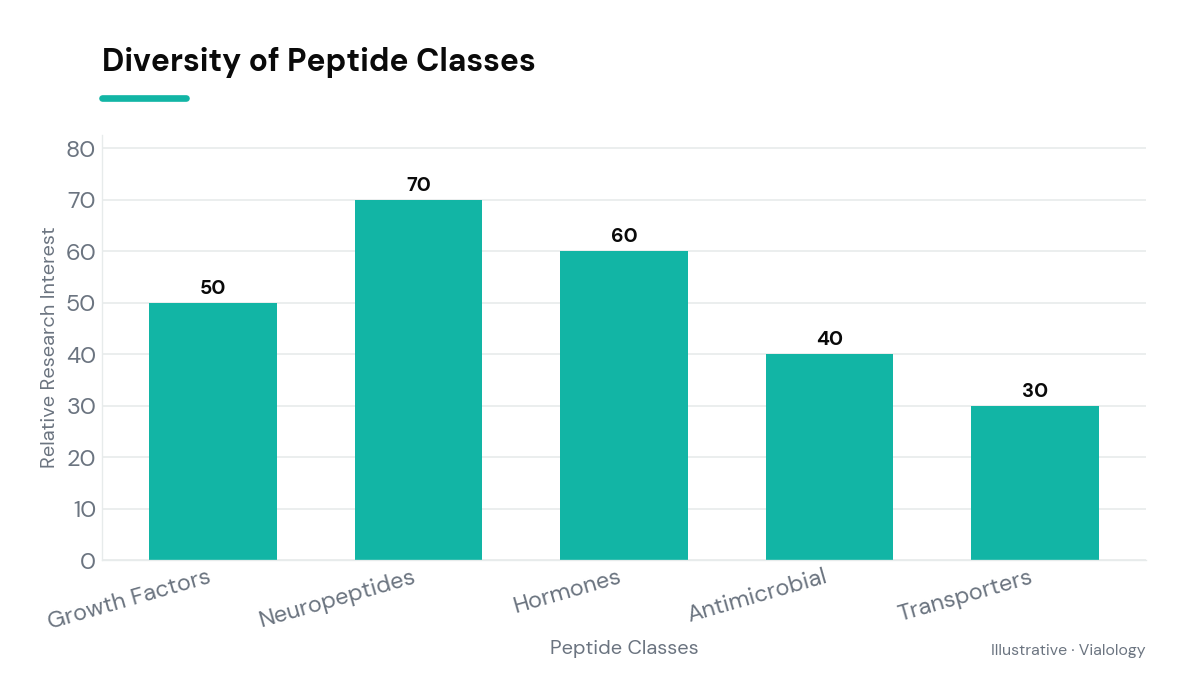
The diverse structural variations of peptides allow them to govern an astonishingly wide array of physiological functions. In the central nervous system, neuropeptides like endorphins and oxytocin modulate mood, pain perception, and social bonding by acting as neuromodulators. In peripheral tissues, peptide hormones such as insulin, glucagon, and growth hormone-releasing peptides coordinate systemic metabolism, growth, and tissue repair. Furthermore, research in wound healing has identified specialized matricines—peptides derived from the breakdown of extracellular matrix proteins—that signal dermal cells to initiate collagen synthesis and tissue remodeling.
Despite their potency, the biological roles of peptides are highly regulated by their transient nature. Most endogenous peptides have remarkably short half-lives, often lasting only minutes before being cleaved and inactivated by enzymes known as peptidases. This rapid degradation is a critical evolutionary feature, preventing signaling pathways from remaining permanently ‘on’ and ensuring that the body can fine-tune its physiological responses in real-time. Scientists studying synthetic analogs often modify these peptide structures to resist enzymatic degradation, allowing for longer-lasting biological effects in clinical research settings.
The Evolution of Peptide Science: Translating Natural Signals
Modern peptide research seeks to harness these natural signaling pathways to understand and potentially mimic human biology. By studying how endogenous peptides interact with their receptors, biochemists can synthesize analogs that exhibit higher receptor affinity or improved stability. According to a 2022 review, dozens of synthetic peptides are currently studied for metabolic, oncological, and endocrine applications due to their high selectivity and low potential for off-target toxicity.
Translating natural peptide signals into stable research compounds remains a complex challenge. Because native peptides are quickly degraded by enzymes and struggle to cross cellular membranes, researchers utilize advanced delivery methods and structural modifications. Emerging technologies like cryo-electron microscopy now allow scientists to visualize these interactions at an atomic level, paving the way for the design of highly optimized, next-generation signaling molecules that are both highly effective and incredibly precise.
Frequently asked questions
How do peptides send signals in the body?
Peptides act as chemical messengers that travel through the bloodstream or extracellular fluid to bind to specific receptors on target cells, triggering a cascade of intracellular activity without entering the cell.
What is a peptide receptor?
A peptide receptor is a specialized protein embedded in a cell membrane that physically binds to a matching peptide ligand, altering its own shape to transmit a signal into the cell.
Do all peptides work the same way?
No, peptides vary greatly in amino acid sequence, structure, and receptor target, meaning each peptide triggers unique biochemical cascades and coordinates different physiological processes.
How long do peptides stay active in the body?
Natural peptides typically have a very short active lifespan, often lasting only minutes before being broken down by enzymes called peptidases to prevent over-signaling.
Educational use only. Vialology publishes journalistic and educational content about peptide science. Nothing here is medical advice, diagnosis, or treatment, and nothing should be taken as an endorsement to use any substance. Many peptides discussed are experimental and are not approved by the FDA for human use. Always consult a licensed healthcare professional before making any health decision.