

Investigating the standard sermorelin dosage utilized in historical clinical trials provides critical insight into how this growth hormone secretagogue interacts with the endocrine system. Originally approved by the FDA in 1997 before being voluntarily withdrawn by its manufacturer for market reasons, sermorelin acetate remains a foundational compound in peptide research. By reviewing published literature, we can analyze the specific protocols, administration frequencies, and measurement techniques that scientists have deployed to study its physiological effects.
Sermorelin Dosage in Historical Clinical Trials
In early clinical evaluations, researchers designed sermorelin dosage protocols based on body weight or standardized flat doses to measure the acute stimulation of the pituitary gland. A landmark 1984 study published in the Journal of Clinical Endocrinology and Metabolism evaluated intravenous doses ranging from 0.1 to 3.0 micrograms per kilogram of body weight. The investigators observed a dose-dependent increase in growth hormone levels, peaking roughly 15 to 30 minutes post-administration, which helped establish the baseline pharmacokinetics of the compound.
Subsequent therapeutic trials, particularly those focusing on adult growth hormone deficiency and age-related endocrine decline in the 1990s, transitioned to subcutaneous administration. These protocols often utilized daily subcutaneous injections of 1.0 to 2.0 milligrams, typically administered before sleep. This timing was selected to mimic the natural nocturnal pulses of growth hormone release, allowing researchers to study how exogenous secretagogues influence endogenous circadian rhythms.
Research Protocols and Patient Demographics
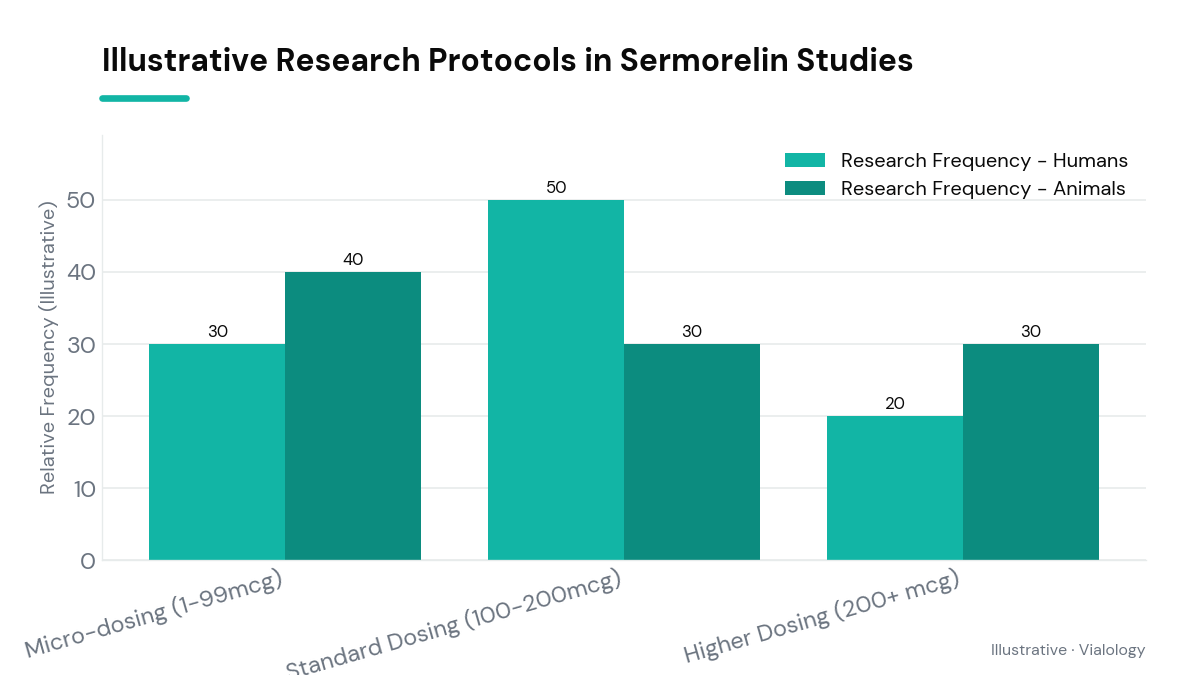
The protocol design for sermorelin research varies significantly depending on the target demographic. For instance, pediatric growth hormone deficiency studies in the late 1980s and early 1990s typically used weight-based dosing, often administering 30 micrograms per kilogram of body weight daily. These studies monitored long-term height velocity over 6 to 12 months, noting that while the peptide stimulated endogenous release, the efficacy depended greatly on individual pituitary capacity.
Conversely, studies involving healthy older adults or individuals experiencing age-related somatopause have relied on lower, fixed-dose regimens. Researchers frequently utilized a sermorelin dosage reference of 1.0 milligram per day to evaluate changes in body composition, sleep quality, and insulin-like growth factor 1 (IGF-1) levels. These adult trials highlighted a distinct pharmacological profile compared to direct growth hormone therapy, characterized by a lower risk of tachyphylaxis and overdose due to natural feedback inhibition loops.

The Mechanism Behind Sermorelin Administration
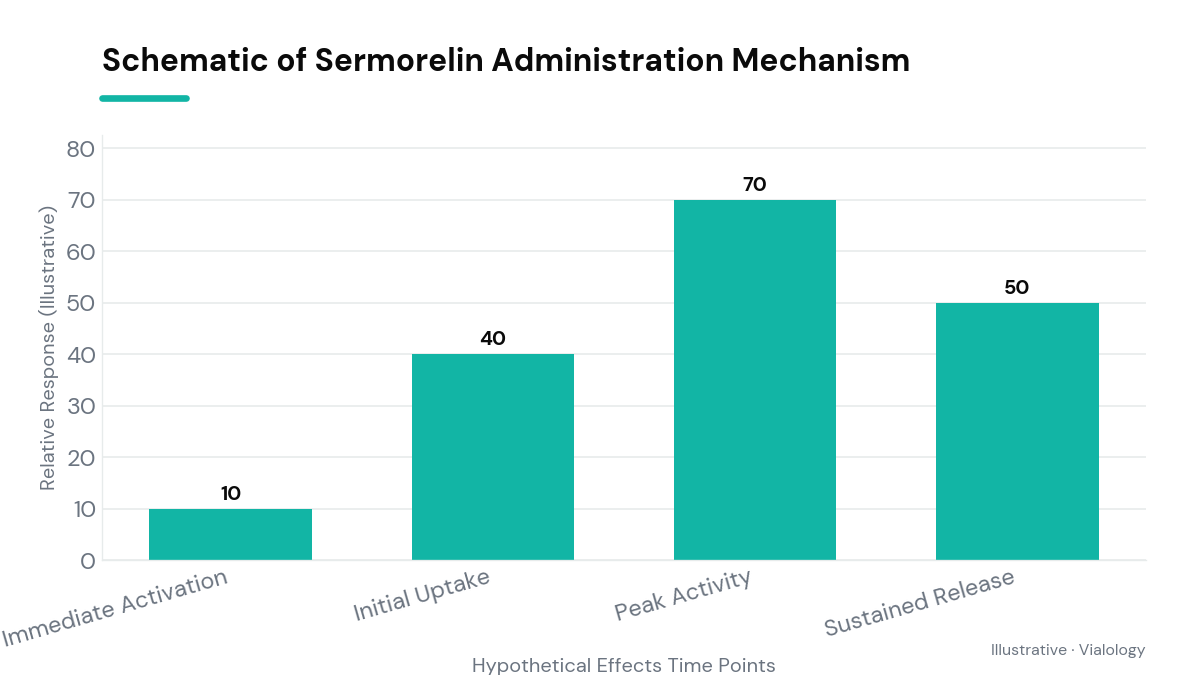
Sermorelin functions as a truncated analogue of natural growth hormone-releasing hormone (GHRH), containing the first 29 amino acids of the 44-amino-acid endogenous peptide. By binding to GHRH receptors on the somatotroph cells in the anterior pituitary, it stimulates the synthesis and secretion of growth hormone. Because this pathway relies on the patient’s existing pituitary function, researchers must carefully screen subjects to ensure hypothalamic-pituitary-somatotropic axis integrity before starting a protocol.
In research settings, scientists also pay close attention to the half-life of sermorelin, which is exceptionally short—approximately 11 to 12 minutes when cleared from circulation. To extend the therapeutic window or study prolonged receptor occupancy, some researchers have experimented with continuous infusion protocols, although once-daily subcutaneous injection remains the standard paradigm for evaluating long-term physiological changes.
Safety Monitoring and Biomarkers in Peptide Research
Monitoring the safety and efficacy of sermorelin protocols involves tracking specific endocrine biomarkers rather than relying solely on subjective outcomes. The primary biomarker utilized in clinical trials is Serum IGF-1, which provides a stable, integrated measure of growth hormone activity over time, bypassing the pulsatile spikes of direct GH measurements. Researchers look for a gradual, controlled increase in IGF-1 into the physiological normal range for the subject’s age group.
Clinical trials have also documented a consistent safety profile, with the most common adverse events being localized injection-site reactions, such as transient redness or swelling. Unlike synthetic growth hormone therapy, which can cause significant fluid retention, joint pain, and insulin resistance, GHRH analogues like sermorelin preserve the regulatory feedback mechanisms of the endocrine system, reducing the likelihood of hyperphysiological hormone spikes.
Related on Vialology
Frequently asked questions
What is sermorelin used for in scientific research?
In scientific research, sermorelin is primarily used to study the regulation of the hypothalamic-pituitary-somatotropic axis and to evaluate the pituitary gland’s capacity to secrete endogenous growth hormone.
How is sermorelin typically administered in clinical studies?
In clinical and experimental protocols, sermorelin is typically administered via subcutaneous injection, which allows for rapid absorption and mimics the acute pulses of endogenous growth hormone-releasing hormone.
Why do researchers monitor IGF-1 levels during sermorelin trials?
Researchers monitor insulin-like growth factor 1 (IGF-1) because it serves as a stable, systemic marker of overall growth hormone activity, making it more reliable than measuring highly volatile, pulsatile growth hormone levels directly.
Is sermorelin currently approved by the FDA for clinical use?
While sermorelin was FDA-approved in 1997 for diagnostic and therapeutic uses, its commercial manufacturing was voluntarily discontinued in the late 2000s, meaning it is currently utilized primarily in clinical research and compounding-pharmacy settings.
Educational use only. Vialology publishes journalistic and educational content about peptide science. Nothing here is medical advice, diagnosis, or treatment, and nothing should be taken as an endorsement to use any substance. Many peptides discussed are experimental and are not approved by the FDA for human use. Always consult a licensed healthcare professional before making any health decision.