
The scientific pursuit of lifespan extension has increasingly focused on the role of peptides for longevity, signaling molecules that orchestrate essential cellular communication pathways. As researchers seek to map the hallmarks of biological aging, these short chains of amino acids have emerged as intriguing tools for potentially modulating cellular repair and metabolic efficiency. However, separating the robust science from the enthusiastic marketing requires a closer look at the actual clinical trials, model organism studies, and biological pathways currently under investigation.
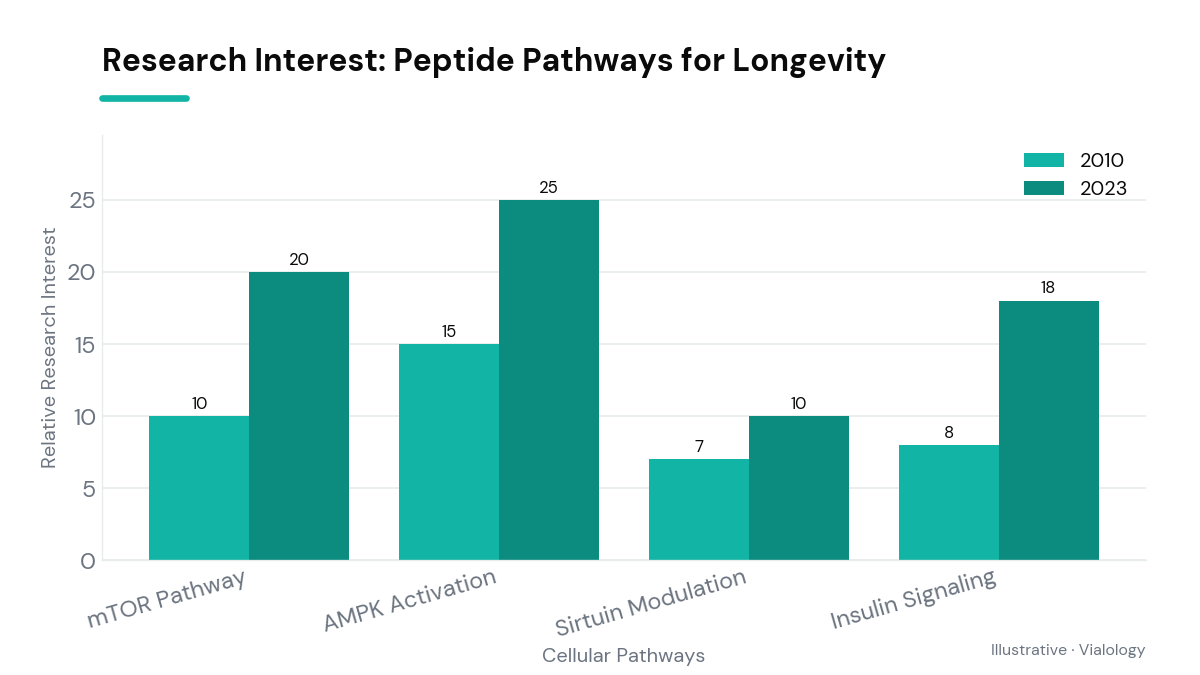
Cellular Pathways Targeted by Peptides for Longevity
In the field of geroscience, researchers focus on several critical pathways that govern how cells age, such as mitochondrial function, cellular senescence, and nutrient sensing. Peptides are being studied because of their ability to mimic endogenous signaling molecules that interface with these exact pathways. For instance, growth hormone secretagogues like ipamorelin and tesamorelin, which stimulate the pituitary gland to release growth hormone, are frequently analyzed for their downstream effects on body composition and tissue repair. A 2020 review published in Frontiers in Endocrinology highlighted how these pathways decline with age, sparking interest in whether targeted peptide intervention can restore youthful signaling patterns.
Another major area of interest is the modulation of mitochondrial health, often considered the powerhouse of the cell. Mitochondria-targeted peptides, such as SS-31 (elamipretide), have been evaluated in preclinical research for their capacity to reduce oxidative stress and optimize ATP production. In animal models, these molecules have shown promise in reversing age-related cardiac and skeletal muscle decline. However, researchers emphasize that while the biochemistry of mitochondrial rescue is compelling in rodent models, translating these microscopic cellular shifts into measurable human lifespan extension remains an active, unproven area of study.

Epigenetic Clocks and Cellular Rejuvenation
Epigenetic aging—the chemical modifications to DNA that alter gene expression over time—represents another primary target for anti-aging therapeutics. Researchers have turned their attention to bioregulator peptides, originally developed and studied heavily in Eastern Europe during the late 20th century. Epitalon (epithalon), a synthetic tetrapeptide modeled after a natural peptide produced in the pineal gland, is widely discussed for its purported ability to interact with telomerase, an enzyme that maintains telomere length. A 2015 study in rodent models suggested that epitalon administration could extend lifespan and reduce spontaneous tumor development, but clinical trials in humans remain highly limited and lacking in rigorous double-blind controls.
The core challenge with epigenetic regulators is their systemic impact. While altering gene expression or lengthening telomeres sounds promising, uncontrolled cellular proliferation is a key hallmark of oncogenesis. Consequently, contemporary researchers are cautious, noting that while these peptides offer a fascinating window into how we might influence the biological clock, the line between cellular rejuvenation and runaway cellular growth is incredibly thin, necessitating decades of rigorous human safety data before definitive conclusions can be drawn.
Evaluating the Strength of Current Scientific Evidence
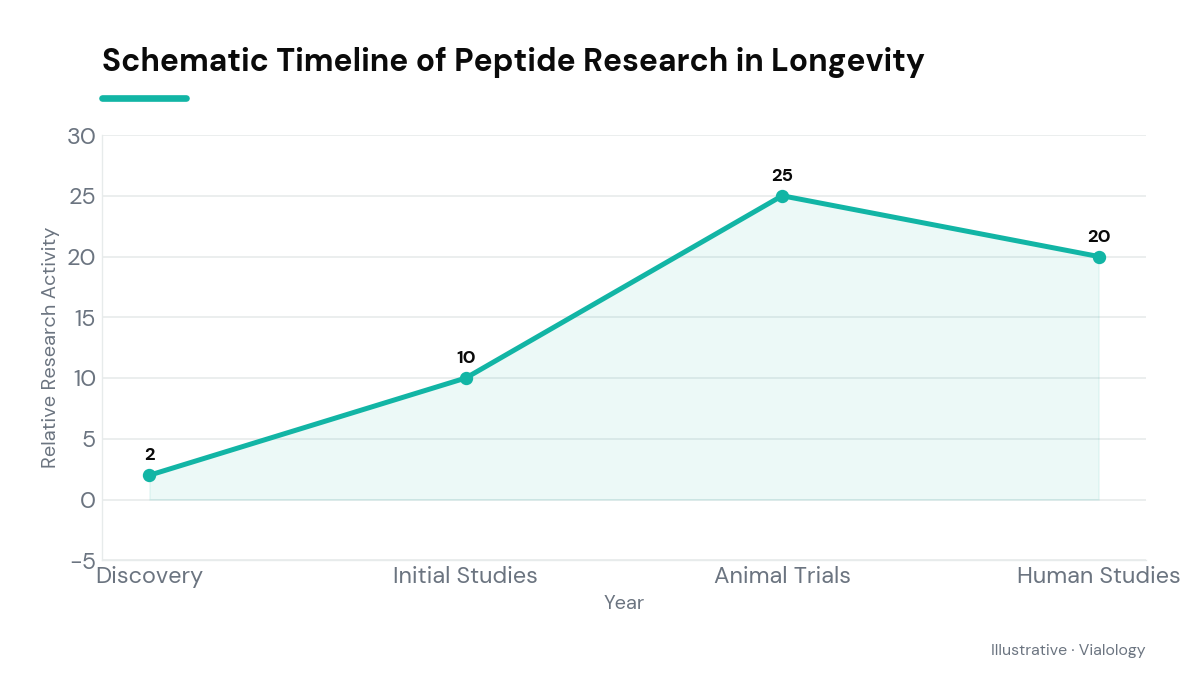
Despite the significant enthusiasm in longevity circles, the gap between preclinical success and validated human therapy remains vast. Most of the compelling data surrounding longevity-associated peptides comes from in vitro (cell culture) experiments or small-animal models like mice, rats, and the nematode Caenorhabditis elegans. While a 2021 study on mitochondrial-derived peptides like MOTS-c demonstrated improved physical performance and metabolic homeostasis in aging mice, human clinical trials are only in their infancy. Evaluating safety, optimal dosing, and long-term systemic consequences in humans is a slow, complex process that cannot be bypassed by laboratory successes.
Furthermore, the regulatory landscape reflects this gap in translation. The majority of peptides discussed in longevity research are not approved by the FDA for the purpose of extending lifespan or treating age-related decline. Many exist in a regulatory grey area, approved only for highly specific clinical indications—such as muscle-wasting diseases or severe hormone deficiencies—or categorized strictly for research use. For the general public, this means that while the fundamental science of peptide signaling is a frontier of modern medicine, the application of these compounds as a mainstream strategy for longevity is currently unsupported by robust, long-term human clinical evidence.

Frequently asked questions
Can peptides slow aging?
While laboratory studies in animal models suggest some peptides can influence cellular repair and metabolic markers associated with aging, there is currently no definitive human clinical evidence proving that peptides can slow or reverse the biological aging process.
Which peptides are studied for longevity?
Researchers primarily study growth hormone secretagogues (like ipamorelin), mitochondrial-derived peptides (like MOTS-c and SS-31), and epigenetic bioregulators (like Epitalon) for their potential to target age-related cellular decline.
Is there strong human evidence for anti-aging peptides?
No, strong human evidence is currently lacking, as the vast majority of promising data is derived from in vitro cell cultures and animal models, with human studies being limited, preliminary, or focused on specific disease states rather than lifespan extension.
Are longevity peptides FDA approved?
No, the FDA has not approved any peptides specifically for the purpose of extending human lifespan or reversing biological aging, though some may be approved for distinct medical conditions like hormone deficiencies.
Educational use only. Vialology publishes journalistic and educational content about peptide science. Nothing here is medical advice, diagnosis, or treatment, and nothing should be taken as an endorsement to use any substance. Many peptides discussed are experimental and are not approved by the FDA for human use. Always consult a licensed healthcare professional before making any health decision.