
Navigating the complex regulatory landscape of modern biotechnology often begins with a fundamental question: are peptides FDA approved? While some of these short-chain amino acids have successfully transitioned into highly regulated, prescription-only pharmaceuticals, others occupy a gray area of scientific exploration. Understanding how these compounds are classified, distributed, and restricted is essential for anyone tracking the rapidly evolving world of peptide science.
The Pharmaceutical Track: Which Peptides are FDA Approved?
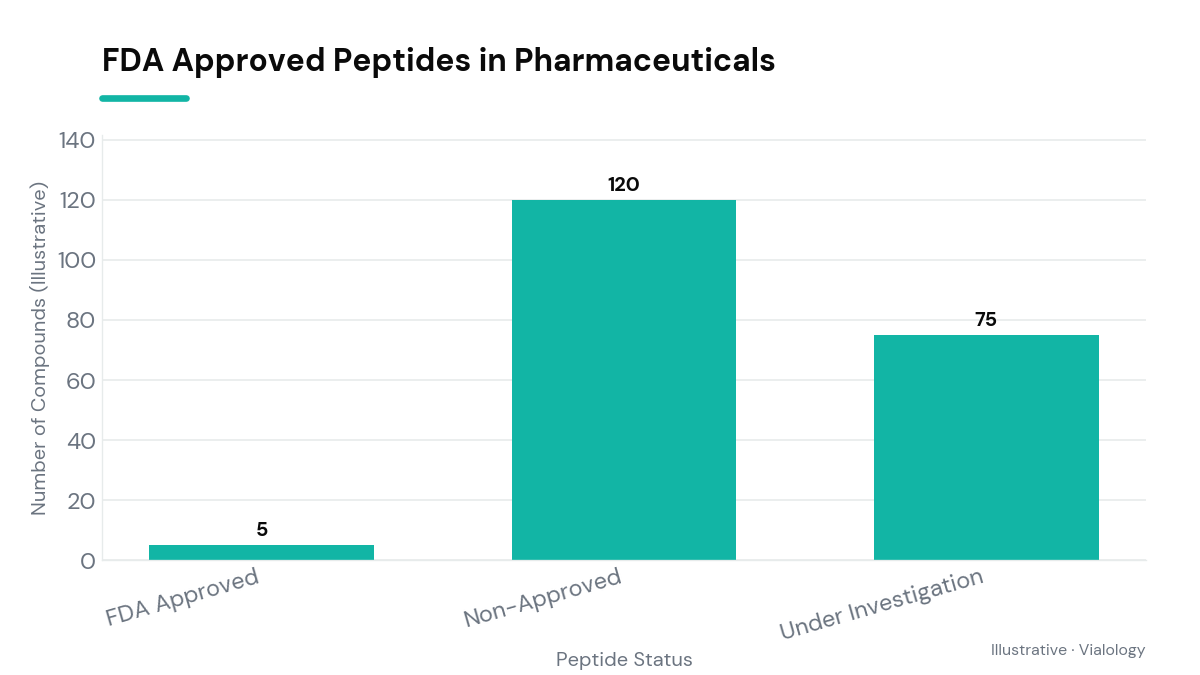
Under federal regulations, a peptide is classified as a drug if it is intended for use in the diagnosis, cure, mitigation, treatment, or prevention of disease. To date, the Food and Drug Administration (FDA) has approved over 80 peptide-based therapeutics for the US market. Well-known examples include insulin, which was first isolated in the 1920s, and newer metabolic regulators like semaglutide, approved in 2017 for type 2 diabetes management. These approved molecules have undergone rigorous multi-phase clinical trials to establish their safety and efficacy profiles before reaching pharmacy shelves.
However, FDA approval is highly specific to the exact formulation, dosage, and medical indication tested. When a peptide receives approval, it is cleared only for its designated clinical application under strict medical supervision. This path is incredibly costly and time-consuming, meaning many promising compounds identified in pre-clinical studies remain unapproved as they await the massive investment required for human clinical trials.

Demystifying the ‘Research Use Only’ Designation
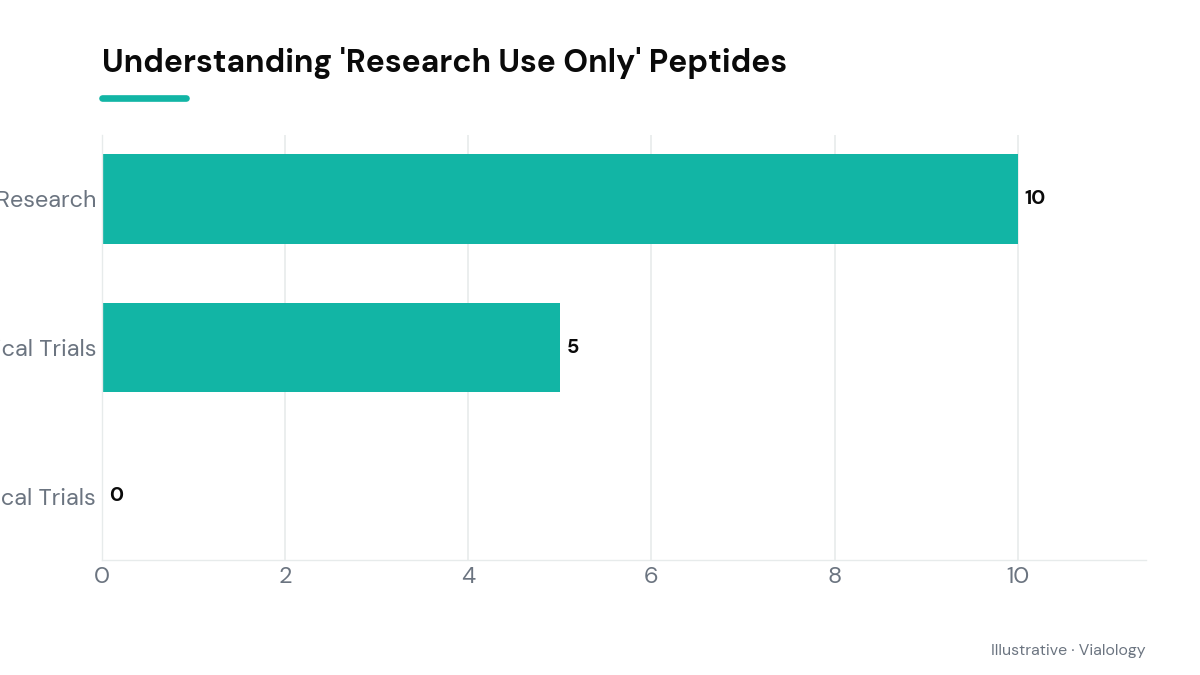
Many peptides discussed in scientific literature and online forums are labeled strictly as ‘Research Use Only’ (RUO) or ‘chemical substances for laboratory research.’ This designation is a legal classification rather than a medical one, signifying that the compound has not undergone the mandatory clinical trials required for human consumption. Under FDA guidelines, RUO peptides are intended solely for in vitro laboratory testing or animal studies to evaluate their biochemical properties, molecular pathways, and potential therapeutic mechanisms.
Selling or purchasing these substances for human administration bypasses the safety nets established by federal law. Because RUO chemicals are not manufactured under Current Good Manufacturing Practice (cGMP) standards required for human pharmaceuticals, they lack standardized oversight regarding purity, sterility, and exact dosing concentration. Consequently, researchers studying these compounds must operate under strict laboratory protocols, as the physiological effects and long-term safety profiles in humans remain largely undocumented or highly unpredictable.
The Role and Realities of Compounding Pharmacies
Compounding pharmacies play a distinct role in the healthcare system by preparing customized medications prescribed by licensed physicians to meet the specific needs of individual patients. Historically, state-licensed compounding pharmacies have formulated certain peptides that are not readily available as commercially manufactured drugs. These facilities operate under state boards of pharmacy, though outsourcing facilities (known as 503B compounding pharmacies) also fall under specific federal oversight to ensure higher manufacturing standards.
However, compounding is not a bypass for FDA approval. Under Section 503A of the Federal Food, Drug, and Cosmetic Act, compounding pharmacies may only utilize bulk drug substances that either comply with an official United States Pharmacopeia (USP) monograph, are components of FDA-approved drugs, or appear on a specific list developed by the FDA (known as the 503A Bulk Drug Substances List). This distinction has become a critical battleground for peptide availability, as many popular research compounds do not meet these stringent criteria.
Recent Regulatory Shifts and the Category 2 List
The regulatory landscape for peptides underwent a dramatic shift in late 2023 when the FDA issued updated guidance regarding bulk drug substances used in compounding. In this sweep, the agency placed several widely discussed peptides—including BPC-157, CJC-1295, and Ipamorelin—into ‘Category 2’ of the 503A Bulk Drug Substances List. Substances placed in this category are identified by the agency as presenting significant safety risks or lacking sufficient scientific evidence to justify compounding, effectively prohibiting pharmacies from compounding them.
The FDA’s 2023 decision was grounded in the position that these compounds have not been adequately evaluated for safety and efficacy in humans. For instance, while some animal studies suggest potential tissue-healing properties for BPC-157, the lack of robust, peer-reviewed human clinical trials raised regulatory red flags. This tightening of enforcement highlights a broader trend: as public interest in peptide science grows, regulatory bodies are actively moving to restrict access to unapproved compounds, emphasizing that clinical safety must precede widespread public distribution.

Frequently asked questions
Are peptides FDA approved?
Some peptides are FDA-approved as prescription medications, such as insulin and semaglutide, but many others exist strictly as unapproved research chemicals. Approval is only granted after a compound successfully passes rigorous, multi-phase human clinical trials to prove its safety and efficacy.
What does ‘research use only’ mean for peptides?
A ‘research use only’ designation means a peptide is legally restricted to laboratory or animal testing and is not approved for human consumption. These substances are not manufactured under the strict quality control standards required for human drugs.
Are compounded peptides legal?
Compounded peptides are legal only if they are prepared by a licensed pharmacy using bulk substances that are FDA-approved, comply with USP monographs, or appear on the FDA’s approved compounding lists. Many experimental peptides do not meet these legal criteria and cannot be compounded.
Why did the FDA restrict some peptides?
In late 2023, the FDA restricted several compounding peptides by placing them in Category 2 due to a lack of clinical safety data and potential health risks. This administrative action prevents compounding pharmacies from legally distributing popular compounds like BPC-157 and CJC-1295.
Educational use only. Vialology publishes journalistic and educational content about peptide science. Nothing here is medical advice, diagnosis, or treatment, and nothing should be taken as an endorsement to use any substance. Many peptides discussed are experimental and are not approved by the FDA for human use. Always consult a licensed healthcare professional before making any health decision.