
Determining an accurate mots-c dosage remains a key challenge for researchers, as this mitochondrial-derived peptide is still primarily in the preclinical stages of investigation. First discovered in 2015, MOTS-c has generated significant interest for its role in regulating metabolic homeostasis, physical performance, and longevity. Because the compound is not approved by the FDA for human use, scientific understanding of its potential therapeutic range is based on animal models and a small number of early-stage clinical trials.
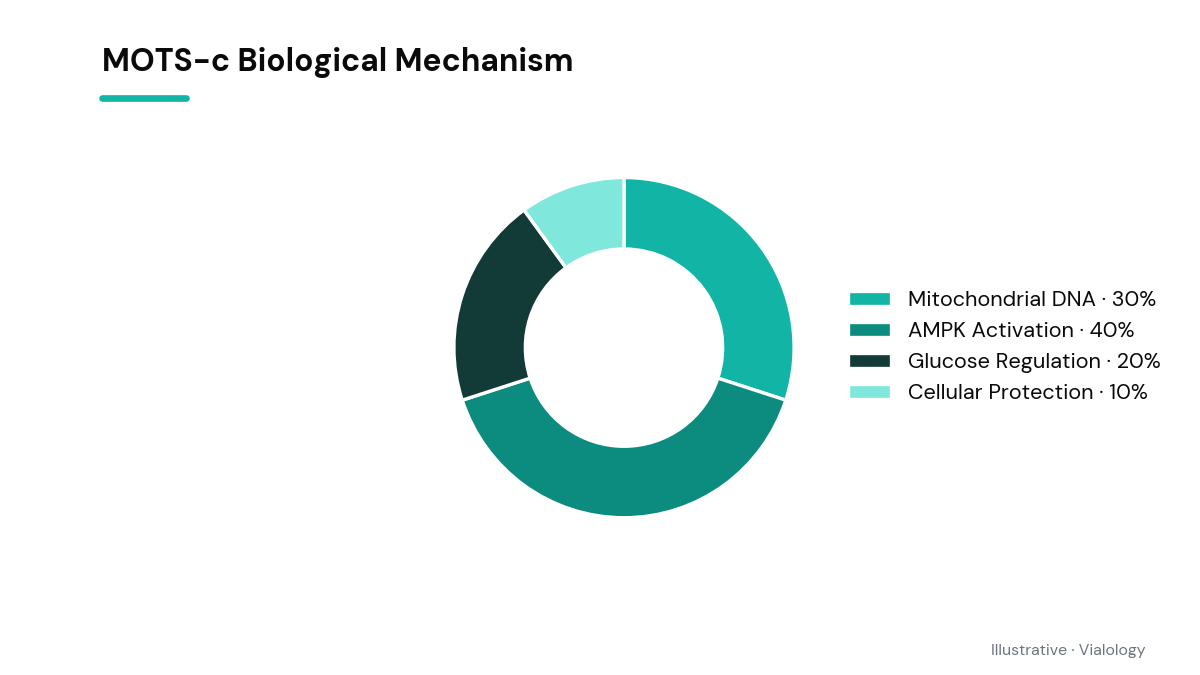
The Biological Mechanism of MOTS-c
MOTS-c, short for mitochondrial open reading frame of the 12S rRNA-c, is a 16-amino-acid peptide encoded within the mitochondrial genome rather than the cell nucleus. Unlike traditional hormones, it functions as an endocrine-like signaling molecule that translocates to the nucleus during metabolic stress. Once in the nucleus, it binds to specific promoter regions to regulate adaptive nuclear gene expression, directly influencing cellular energy expenditure, insulin sensitivity, and lipid metabolism.
In nature, endogenous levels of MOTS-c are observed to decline progressively with age, a trend that researchers suspect may contribute to age-related insulin resistance and decreased physical capacity. By studying how this peptide operates at a systemic level, molecular biologists hope to uncover novel therapeutic pathways for addressing age-related metabolic dysfunction and muscular decline.
How Animal Models Inform MOTS-c Dosage Protocols
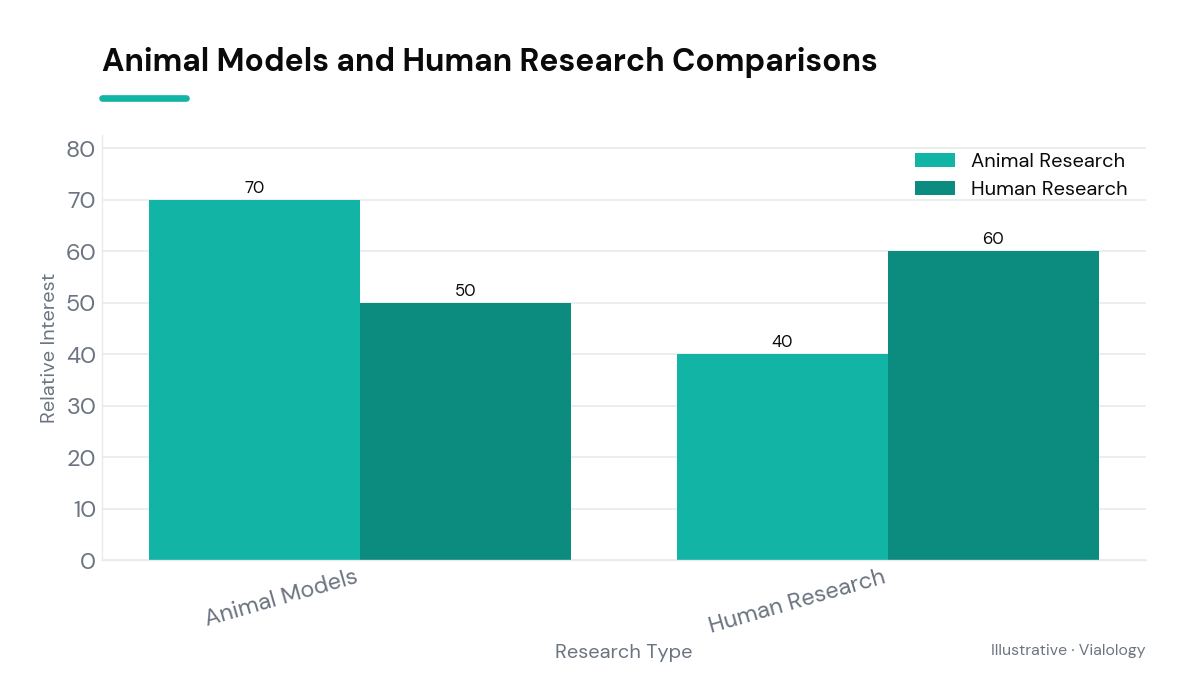
The vast majority of existing peer-reviewed literature on MOTS-c relies on rodent models, where researchers have documented its effects on metabolic flexibility and exercise endurance. In these laboratory settings, researchers must scale murine quantities to calculate a human-equivalent mots-c dosage reference based on body surface area, which is a standard pharmacological translation method. These animal studies frequently utilize systemic injections to observe changes in systemic insulin action and muscle fiber composition.
For example, a landmark 2015 study demonstrated that mice fed a high-fat diet and administered MOTS-c showed remarkable resistance to diet-induced obesity and metabolic decline. However, direct translation to human models is highly complex; mice possess significantly higher metabolic rates than humans, meaning that the absolute ratios used in laboratory mice cannot be directly applied to human subjects without rigorous safety testing.

Investigating Human MOTS-c Dosage in Research
While preclinical data is robust, registered human clinical trials involving synthetic MOTS-c are still in their infancy. The limited clinical trials currently documented in global registries focus primarily on evaluating the safety, tolerability, and pharmacokinetics of the peptide in healthy volunteers and specific clinical cohorts, such as individuals undergoing coronary angiography. In these early human trials, researchers typically explore conservative, escalating subcutaneous micro-doses to map out the compound’s safety profile and half-life in human tissue.
Because MOTS-c is cleared rapidly by renal filtration and has a relatively short half-life in plasma, research protocols often evaluate multi-week administration cycles rather than single, isolated doses. Investigators closely monitor key biomonitors—such as AMPK activation, glucose uptake, and systemic inflammatory markers—to determine whether the administered quantities are sufficient to trigger mitochondrial retrograde signaling without causing adverse immunological responses.
Safety, Tolerability, and Regulatory Status
As an investigational compound, safety and purity are the primary concerns in any laboratory evaluation of MOTS-c. Because the peptide has not undergone the extensive multi-phase clinical testing required for FDA approval, there is no official clinical consensus regarding its long-term safety, potential side effects, or drug interactions. Researchers emphasize that improper administration in animal models can disrupt delicate metabolic feedback loops, underscoring the absolute necessity of controlled clinical trials.
Currently, MOTS-c is classified strictly as a research chemical, meaning it is legally restricted to in vitro and in vivo laboratory research. The academic community continues to advocate for randomized, double-blind, placebo-controlled human studies to fully elucidate its pharmacokinetic behavior, potential toxicities, and therapeutic viability for metabolic health.
Related on Vialology
Frequently asked questions
What is MOTS-c primarily researched for?
Researchers study MOTS-c for its potential to regulate systemic metabolism, improve insulin sensitivity, and enhance physical performance by mimicking the cellular signaling pathways typically activated by exercise.
Is MOTS-c FDA-approved for human use?
No, MOTS-c is not approved by the FDA for any medical or therapeutic application in humans and is legally classified as an investigational research chemical.
How does MOTS-c differ from nuclear-encoded peptides?
Unlike most signaling peptides that are encoded in the cell’s nuclear DNA, MOTS-c is uniquely encoded directly within the mitochondrial genome, allowing it to act as a direct messenger of mitochondrial health.
What administration routes are used in academic research?
In laboratory and preclinical settings, researchers typically administer MOTS-c via subcutaneous or intraperitoneal injection to bypass digestive degradation and ensure systemic bioavailability.
Educational use only. Vialology publishes journalistic and educational content about peptide science. Nothing here is medical advice, diagnosis, or treatment, and nothing should be taken as an endorsement to use any substance. Many peptides discussed are experimental and are not approved by the FDA for human use. Always consult a licensed healthcare professional before making any health decision.