
While researchers continue to investigate the therapeutic potential of synthetic peptides, understanding the standard protocols used in clinical trials, particularly regarding a potential thymosin alpha 1 dosage, remains a high priority for scientific inquiry. Derived naturally from the thymus gland, Thymosin Alpha-1 (Tα1) plays a critical role in modulating immune responses. In clinical and laboratory settings, scientists study this 28-amino acid peptide to determine its precise mechanisms of action and safety profile.
Understanding Thymosin Alpha-1 and Its Mechanism
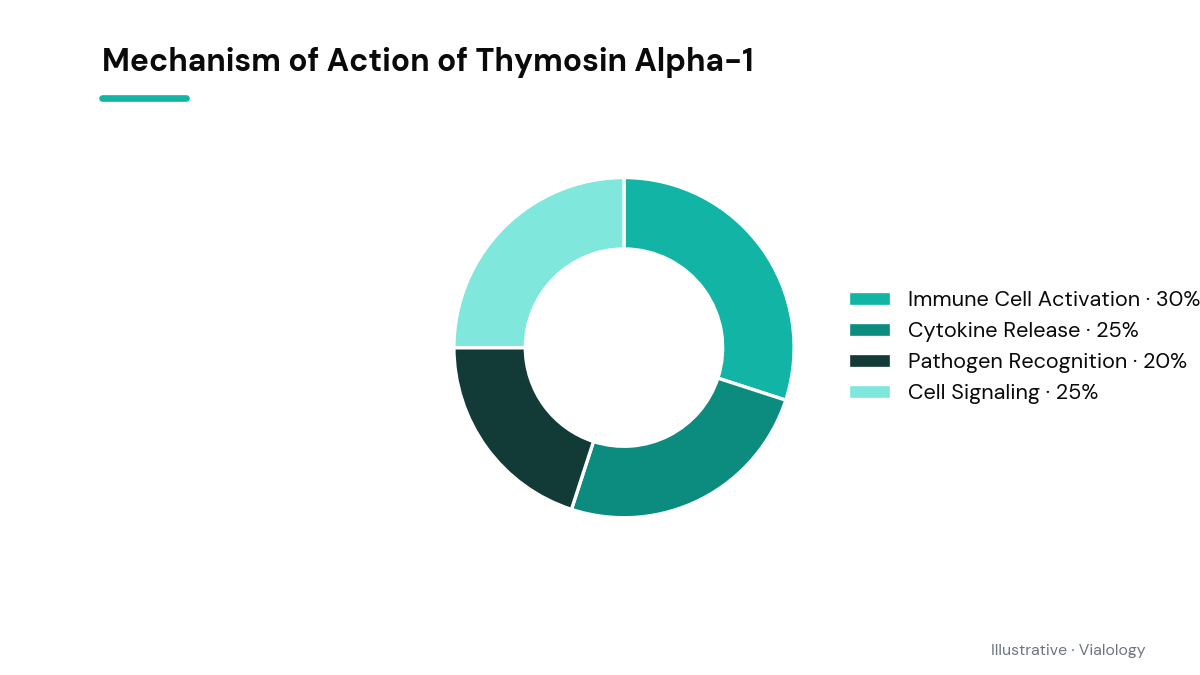
Thymosin Alpha-1 is an endogenous peptide originally isolated from thymic tissue in 1977. It acts primarily as an immunomodulator, enhancing T-cell function, stimulating dendritic cell maturation, and promoting the production of various cytokines such as interferon-gamma and interleukin-2. By signaling through toll-like receptors, the peptide helps orchestrate both the innate and adaptive arms of the immune system. Researchers are particularly interested in how these pathways behave under different experimental conditions, representing a major focus of modern peptide science.
In clinical literature, synthetic versions of Tα1—often referred to under the generic name thymalfasin—have been evaluated across diverse therapeutic areas. Because it is highly conserved across mammalian species, its biological activity is remarkably consistent in animal models. Current scientific investigations focus heavily on how the compound assists in restoring immune homeostasis in states of chronic inflammation, viral infection, and cellular senescence, though researchers must account for the peptide’s short half-life in circulation when designing study parameters.
Clinical Study Parameters and Thymosin Alpha 1 Dosage
In human clinical trials, researchers have evaluated several administration protocols to determine the optimal dosage reference for specific therapeutic targets. Historically, many landmark studies, such as those examining chronic hepatitis B and C, utilized a subcutaneous injection of 1.6 milligrams (mg) administered twice weekly for several months. In other clinical contexts, including adjuvant therapy in oncology trials, researchers have experimented with daily administrations over shorter, cycles-based durations to evaluate immunological markers and overall patient tolerance.
Because Thymosin Alpha-1 is not universally approved for all indications globally, these clinical dosing strategies are strictly experimental and highly context-dependent. Investigators must carefully calculate the human equivalent dose from animal models, where doses are often significantly higher on a body-weight basis. Observing the biological outcomes of these varied protocols helps researchers map out the peptide’s pharmacokinetics, including its rapid absorption and elimination phases.

Research Observations on Safety and Tolerability
Across decades of clinical trials and academic studies, Thymosin Alpha-1 has demonstrated a favorable safety profile with minimal reported adverse effects. The most frequently documented side effects in research settings are localized to the injection site, including temporary redness, mild swelling, or discomfort. Unlike some immunomodulatory drugs, Tα1 does not appear to trigger hyper-inflammatory states or cytokine storms in controlled clinical studies, which researchers attribute to its regulatory, rather than purely stimulatory, mechanism of action.
Despite these encouraging safety metrics, clinical researchers emphasize that long-term data on synthetic Tα1 remains limited, particularly when used outside of established medical protocols. Preclinical studies continue to monitor for potential contraindications, particularly in patients with autoimmune disorders where immune stimulation could theoretically exacerbate underlying pathology. Ongoing academic evaluations aim to further define these boundaries to ensure future clinical designs are both safe and highly targeted.
Future Directions in Thymosin Alpha-1 Science
The horizon of Thymosin Alpha-1 research is expanding into novel therapeutic domains, such as longevity science and neuroimmunology. As scientists uncover the intricate crosstalk between the immune system and age-related systemic decline, Tα1 is increasingly viewed as a potential candidate for mitigating immunosenescence. Future clinical trials are expected to leverage advanced biomarker tracking to observe real-time immune rejuvenation, providing a more granular understanding of how this ancient peptide influences human health span.
Related on Vialology
Frequently asked questions
What is Thymosin Alpha-1 primarily used for in clinical research?
In scientific research, Thymosin Alpha-1 is primarily studied for its ability to modulate the immune system, particularly in the context of chronic viral infections, immunodeficiencies, and as an adjuvant in cancer therapies.
Has Thymosin Alpha-1 been approved by the FDA?
In the United States, Thymosin Alpha-1 has received Orphan Drug Designation for certain conditions, but it is not widely approved for general clinical use, and research into its full therapeutic range is ongoing.
How is Thymosin Alpha-1 typically administered in laboratory studies?
In clinical trials and animal models, researchers almost exclusively administer Thymosin Alpha-1 via subcutaneous injection to bypass gastrointestinal degradation and ensure optimal systemic bioavailability.
Educational use only. Vialology publishes journalistic and educational content about peptide science. Nothing here is medical advice, diagnosis, or treatment, and nothing should be taken as an endorsement to use any substance. Many peptides discussed are experimental and are not approved by the FDA for human use. Always consult a licensed healthcare professional before making any health decision.