

When examining the synthetic peptide Melanotan II, understanding how researchers determine a safe and effective melanotan 2 dosage in laboratory environments is central to analyzing its physiological effects. Developed originally at the University of Arizona in the 1980s, this alpha-melanocyte-stimulating hormone analogue has been the subject of numerous clinical and preclinical investigations. This article explores the scientific literature surrounding how scientists calculate and observe these concentrations in experimental models.
The Mechanism of Action and Receptor Interaction
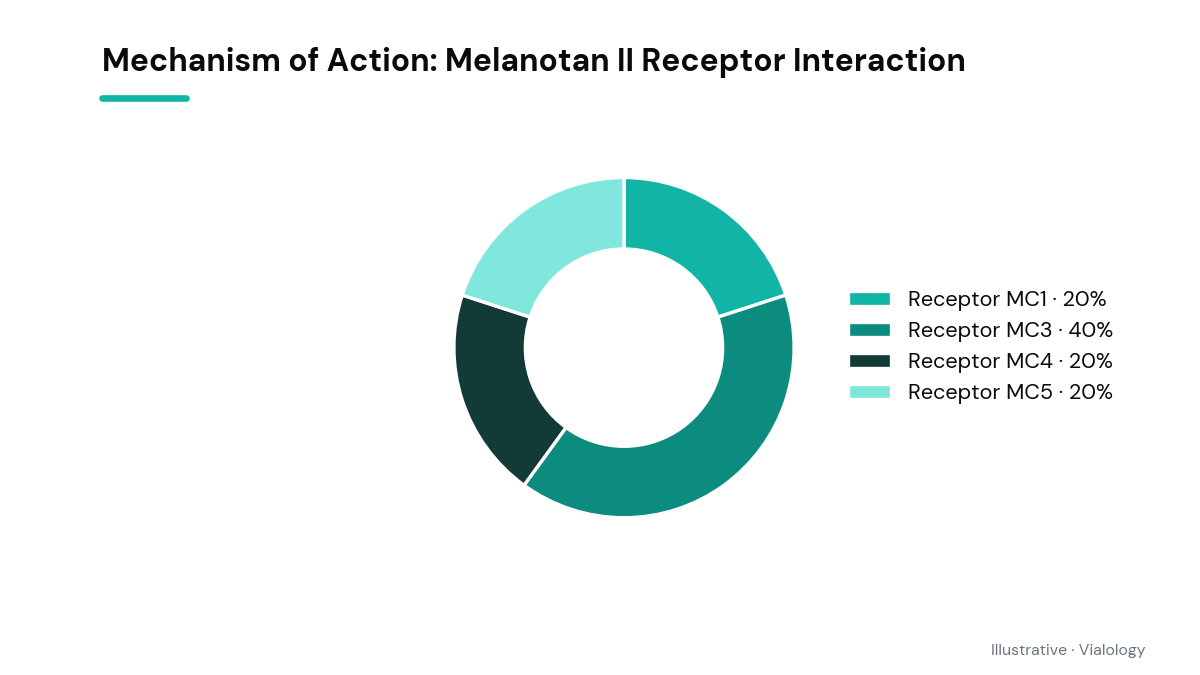
Melanotan II functions as a non-selective agonist of melanocortin receptors, primarily targeting MC1R, MC3R, MC4R, and MC5R. In healthy dermal tissue, the stimulation of the MC1 receptor triggers melanogenesis, the metabolic process by which dark pigments are synthesized to protect cells from ultraviolet radiation. Because of its high potency and prolonged biological half-life compared to endogenous hormones, laboratory researchers closely monitor receptor saturation to prevent cellular down-regulation.
In animal models and early human clinical trials, researchers noted that even minor variations in concentration could trigger a wide range of systemic responses. Beyond pigmentation, the peptide’s binding to MC4R, which regulates appetite and energy homeostasis, introduces complex physiological variables. Because of these wide-ranging systemic interactions, researchers often consult a dosage reference based on historical clinical literature to understand how specific concentrations affect different receptor populations.
Historical Research Protocols and Melanotan 2 Dosage
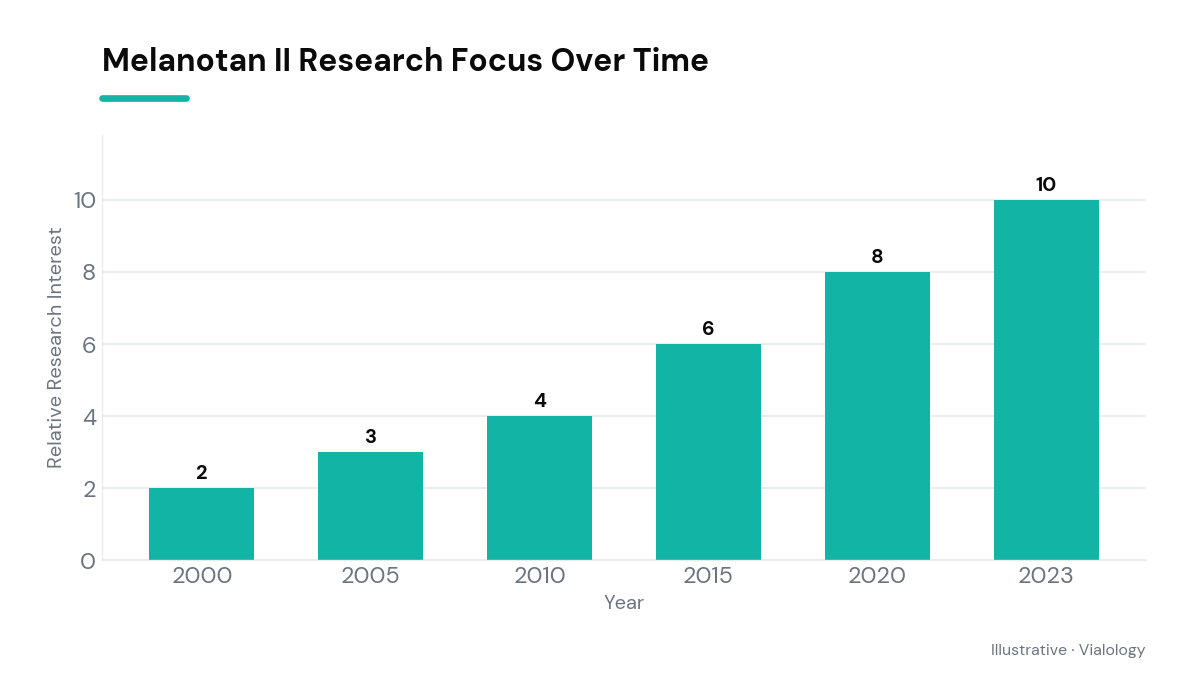
During early clinical evaluations in the late 1990s and early 2000s, pilot studies investigated the synthetic peptide’s potential for photoprotection and erectile dysfunction therapy. These early trials utilized subcutaneous administration protocols to observe tolerability, onset times, and physiological efficacy. In a seminal 1996 study, clinical researchers utilized escalating microgram-based increments to evaluate the compound’s safety margin, observing that cumulative exposure played a significant role in melanin density changes.
The research demonstrated that a lower, more frequent administration schedule was often preferred in experimental designs to minimize acute side effects. Clinical observers noted that sudden spikes in systemic levels frequently resulted in transient nausea, facial flushing, and stretching-yawning syndrome, which are mediated by central nervous system melanocortin receptors. Consequently, modern laboratory protocols focusing on animal models are highly precise, adjusting the administered quantities relative to body surface area.

Safety Profiles and Dose-Dependent Adverse Effects
A primary focus of the academic literature is the high incidence of dose-dependent side effects associated with Melanotan II. In clinical trials published in peer-reviewed journals, adverse events like systemic hypertension, intense facial flushing, nausea, and decreased appetite were strongly correlated with higher administered amounts. In some extreme documented cases of accidental self-administration by members of the public, significantly elevated doses led to severe medical emergencies, including rhabdomyolysis and acute renal failure.
Because Melanotan II has not received regulatory approval from the FDA or EMA for therapeutic use, it remains categorized strictly as a research chemical. Clinical researchers emphasize that without standard pharmaceutical manufacturing guidelines and rigorous phase III clinical trials, establishing a universally safe human dosage remains impossible. Consequently, current research is restricted to laboratory-grade in vitro and in vivo models to further delineate its toxicological thresholds.
Related on Vialology
Frequently asked questions
Is Melanotan II approved for medical use?
No, Melanotan II is not approved by the FDA or any other major regulatory agency for human use, and it is restricted to laboratory research and scientific studies.
What are the most common side effects observed in Melanotan II research?
In clinical and laboratory studies, documented side effects include nausea, facial flushing, increased blood pressure, spontaneous yawning, and decreased appetite.
How does Melanotan II differ from Melanotan I?
Melanotan II is a cyclic heptapeptide that non-selectively targets multiple melanocortin receptors, whereas Melanotan I (Afamelanotide) is a linear peptide that is more selective for the MC1 receptor and has received regulatory approval for specific medical conditions.
What did early clinical studies reveal about Melanotan II’s potency?
Early research indicated that Melanotan II is significantly more potent than natural alpha-MSH, exhibiting a much longer half-life and a stronger binding affinity to melanocortin receptors.
Educational use only. Vialology publishes journalistic and educational content about peptide science. Nothing here is medical advice, diagnosis, or treatment, and nothing should be taken as an endorsement to use any substance. Many peptides discussed are experimental and are not approved by the FDA for human use. Always consult a licensed healthcare professional before making any health decision.