
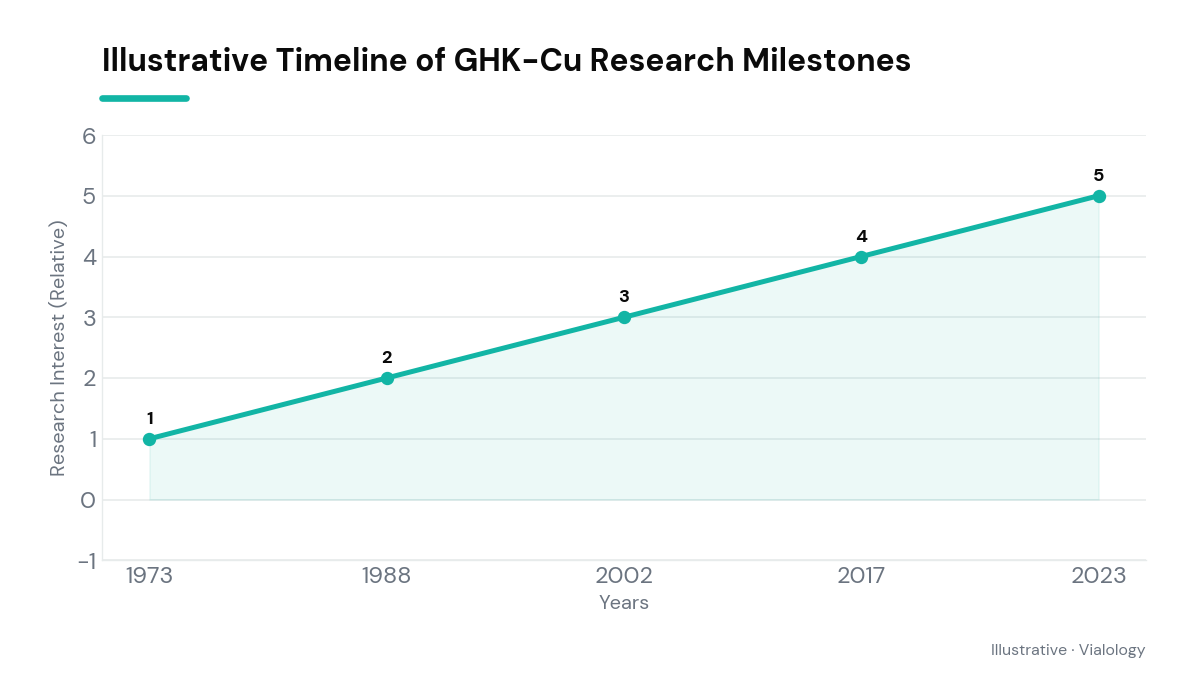
When exploring the potential of copper peptides, reviewing documented GHK-Cu before and after research results reveals a compound with diverse biological implications. Discovered in 1973, this naturally occurring tripeptide-copper complex has been the subject of decades of laboratory and clinical investigation. While often popularized in skincare, scientific literature suggests its systemic influence may extend far beyond superficial aesthetics.
The Cellular Mechanics of GHK-Cu
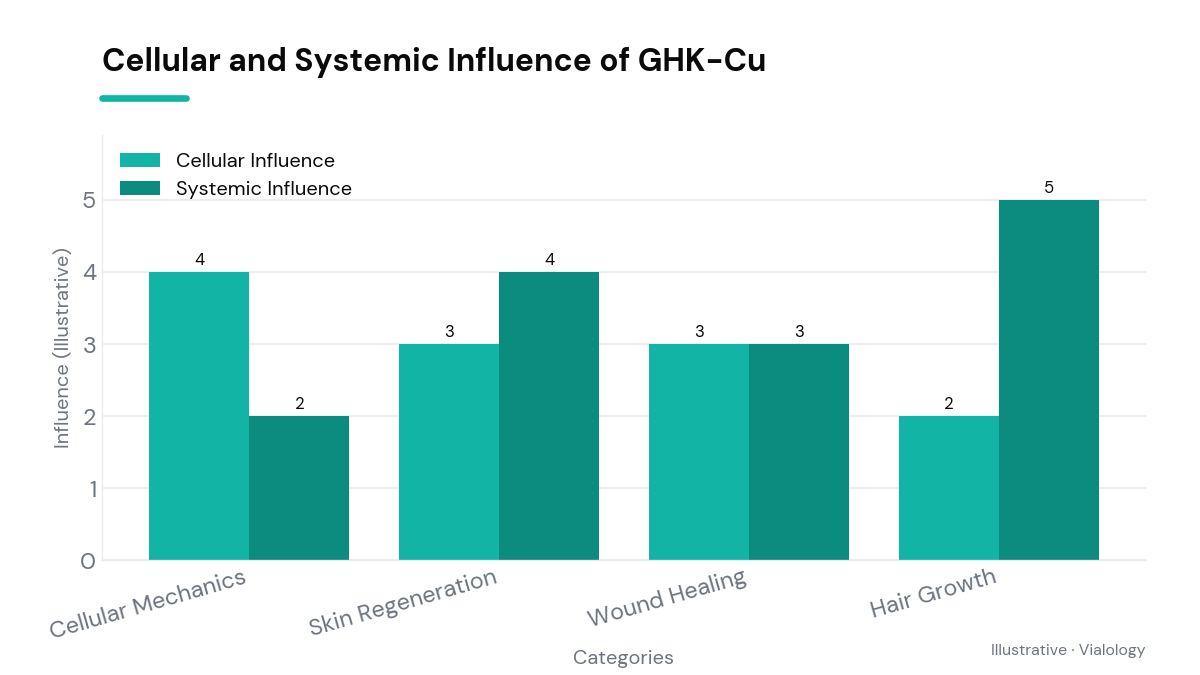
To understand the changes documented in GHK-Cu research, it is essential to look at the molecule’s underlying mechanisms. Research indicates that GHK (glycyl-L-histidyl-L-lysine) has a high affinity for copper ions, readily forming the GHK-Cu complex. In vitro studies show that this complex plays a critical role in regulating copper transport, which is vital for cellular metabolism, antioxidant defense, and tissue remodeling. By modulating the expression of various genes, GHK-Cu appears to signal cells to initiate repair processes, promote collagen synthesis, and suppress inflammatory cytokines.
Furthermore, genetic profiling studies, including a notable 2010 broad-scale analysis, suggest that GHK can reset gene expression in human cells to a healthier state. Researchers observed that the peptide affected over 4,000 human genes, particularly those involved in wound healing, antioxidant response, and tissue regeneration. This genetic influence provides a theoretical framework for the multi-systemic benefits often observed in laboratory models.
Documented Skin Regeneration and Wound Healing
Much of the peer-reviewed literature focusing on GHK-Cu parameters centers on dermatological applications and tissue repair. In clinical trials evaluating aging skin, researchers have documented significant increases in pro-collagen synthesis and skin density. For instance, a 1998 study comparing GHK-Cu to standard anti-aging compounds found that topical application stimulated collagen production in human skin fibroblasts more effectively than vitamin C or retinoic acid. These structural changes correspond with observed improvements in skin elasticity and a reduction in fine lines.
Beyond cosmetics, the peptide’s wound-healing capabilities have been extensively documented in animal models and early human trials. When applied to surgical wounds or ischemic tissues, GHK-Cu accelerates re-epithelialization and angiogenesis—the formation of new blood vessels. According to a comprehensive before and after research summary, the peptide facilitates this healing by attracting immune cells to the site of injury, promoting local antioxidant activity, and carefully balancing the synthesis and degradation of the extracellular matrix.
GHK-Cu Before and After: Hair Growth and Follicle Stimulation
Another area of intense scientific interest is the peptide’s effect on hair follicle dynamics. Early research in the late 20th century established that copper peptides could stimulate follicular cells, leading to larger follicle sizes and thicker hair shafts. In animal models, GHK-Cu demonstrated the ability to transition hair follicles from the resting phase (telogen) into the active growth phase (anagen), mirroring the effects of some established hair-loss treatments.
The underlying mechanism appears to involve both the reduction of localized inflammation and the stimulation of microcirculation around the hair bulb. By promoting angiogenesis and protecting follicle cells from oxidative stress, GHK-Cu helps maintain the structural integrity of the scalp’s cellular environment. While human clinical trials are less common than animal studies in this domain, the preliminary data suggests a promising role for the peptide in addressing various forms of hair thinning.
Systemic Effects and Future Research Horizons
Though topical applications remain the most widely studied, scientists are increasingly interested in the systemic potential of GHK-Cu. Animal studies have explored its role in lung tissue repair, particularly in models of acute lung injury, where the peptide appeared to reduce inflammatory damage. Other laboratory research has investigated its potential neuroprotective properties, with studies suggesting that GHK-Cu may protect brain cells from toxicity and promote nerve regeneration.
It is important to note that while the laboratory evidence is substantial, GHK-Cu is not FDA-approved for systemic medical treatments, and high-quality human clinical trials for internal use are still limited. Researchers emphasize that while the cellular changes observed in vitro and in vivo are promising, further controlled clinical studies are required to fully understand the efficacy, long-term safety, and optimal delivery methods of this versatile tripeptide.
Related on Vialology
Frequently asked questions
What is GHK-Cu and how does it function?
GHK-Cu is a naturally occurring copper peptide complex that functions by regulating copper transport, modulating gene expression, and stimulating collagen synthesis in cells.
What changes does research show regarding GHK-Cu and skin aging?
Clinical and laboratory studies indicate that GHK-Cu promotes collagen and elastin production, which researchers observe as improvements in skin elasticity, thickness, and overall texture.
Is GHK-Cu scientifically proven to regrow hair?
While animal studies and early research show that GHK-Cu can enlarge hair follicles and promote the active growth phase, extensive human clinical trials are still needed to confirm its efficacy for hair loss.
Are there any approved medical uses for GHK-Cu?
Currently, GHK-Cu is widely utilized in cosmetic formulations, but it is not FDA-approved as a medical treatment or drug for systemic therapeutic use.
Educational use only. Vialology publishes journalistic and educational content about peptide science. Nothing here is medical advice, diagnosis, or treatment, and nothing should be taken as an endorsement to use any substance. Many peptides discussed are experimental and are not approved by the FDA for human use. Always consult a licensed healthcare professional before making any health decision.