
While early research on the KISS1 gene heavily relied on rodent models, modern scientific interest has shifted toward exploring human-centric kisspeptin 10 benefits in clinical settings. This decapeptide acts as the primary upstream regulator of the hypothalamic-pituitary-gonadal axis, triggering the release of gonadotropin-releasing hormone to govern reproductive health. By serving as a molecular switch, it bridges the gap between environmental cues, metabolic status, and human fertility.
The HPG Axis Gatekeeper: Mechanism of Action
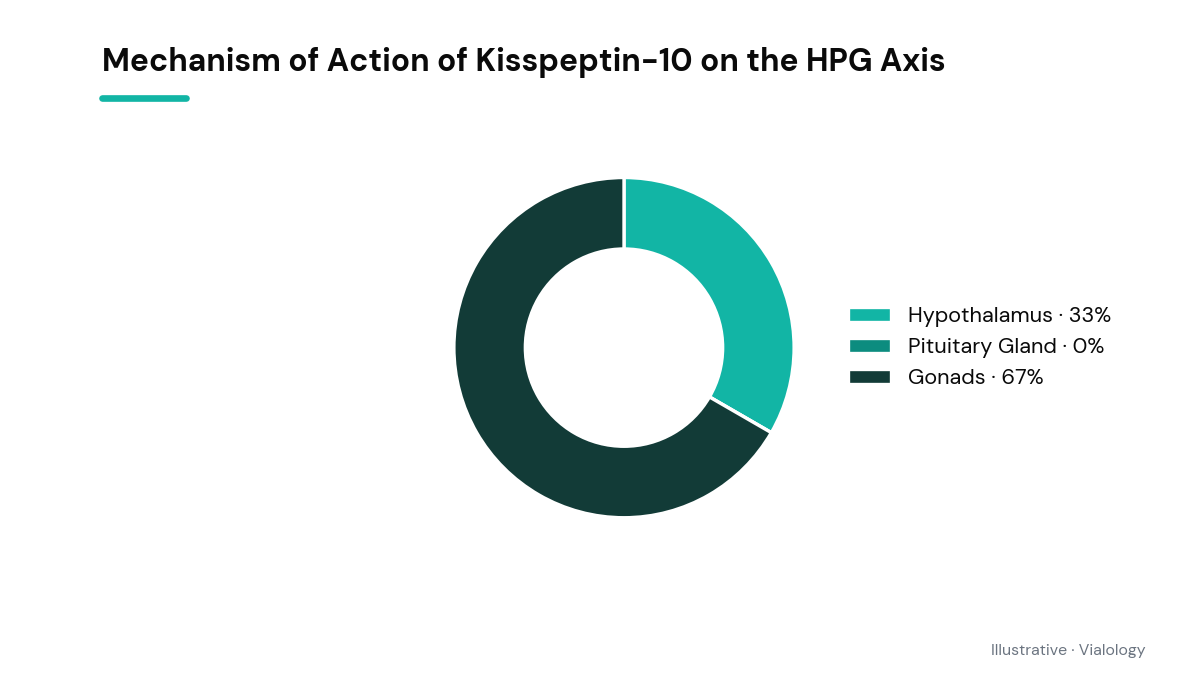
In reproductive endocrinology, kisspeptin-10 occupies an upstream position of biological control. Synthesized in the hypothalamus, this peptide binds directly to the G-protein-coupled receptor KISS1R, initiating a cascade that stimulates the pulsatile secretion of gonadotropin-releasing hormone (GnRH). This signaling subsequently drives the pituitary gland to release luteinizing hormone (LH) and follicle-stimulating hormone (FSH), which are essential for gonadal function. By governing this critical pathway, kisspeptin-10 serves as a master molecular switch for pubertal initiation, coordinating metabolic and environmental cues to ensure reproductive readiness.
While early rodent models mapped this fundamental biology, human clinical translation has revealed distinct differences in sensitivity and feedback loops. Unlike rodents with highly synchronized estrous cycles, human reproductive physiology involves a highly nuanced, continuous feedback system. Consequently, researchers focus heavily on how synthetic kisspeptin-10 mirrors endogenous kisspeptin, forming a crucial foundation for translational reproductive research into hypothalamic disorders and endocrine health.
Beyond Rodents: Investigating Kisspeptin 10 Benefits in Human Trials
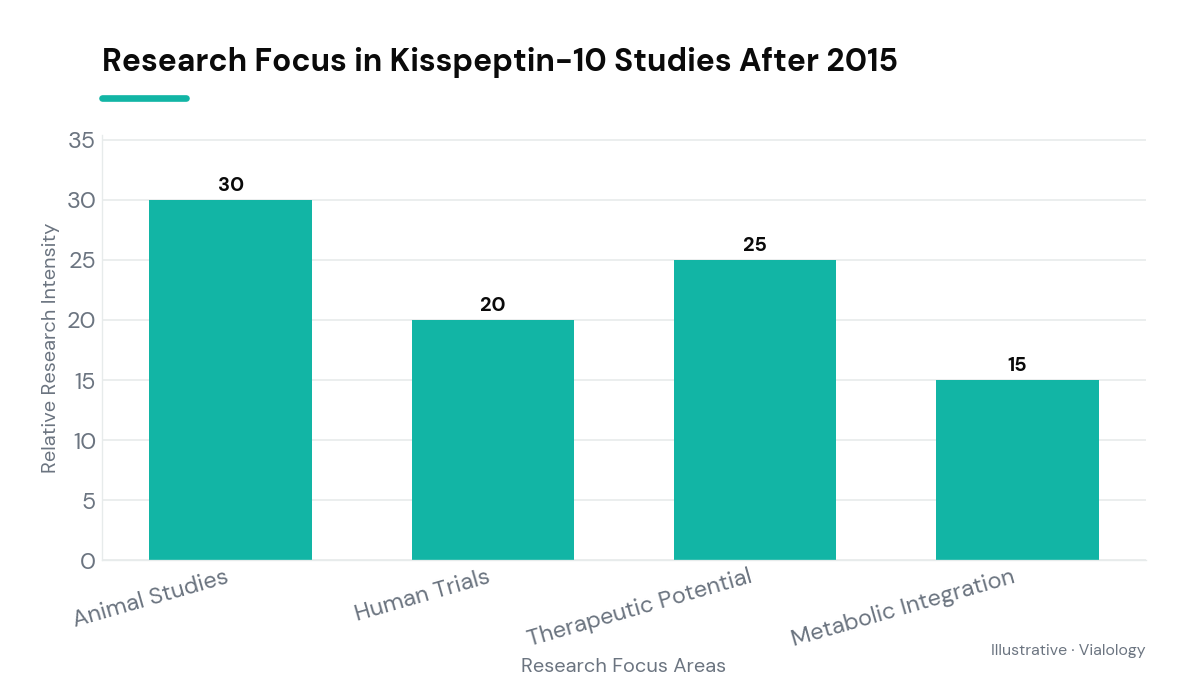
Moving beyond animal models allows researchers to explore the real-time implications of kisspeptin-10 in human clinical studies. Investigators administering intravenous infusions to healthy volunteers and patients with reproductive dysfunction have demonstrated that kisspeptin-10 stimulates robust, pulsatile LH secretion. This suggests a potential to address hypogonadal states without the ovarian or testicular overstimulation risks often associated with direct GnRH or gonadotropin therapies.
A key aspect of these human trials is the peptide’s rapid clearance and biological potency. With a short half-life in human circulation, it allows for highly precise endocrine manipulation. Clinical researchers evaluating potential kisspept5in 10 benefits note that this rapid action profile makes it an exceptional candidate for diagnostic testing, helping to differentiate between hypothalamic and pituitary causes of hypogonadism.
Therapeutic Potential in Hypothalamic Amenorrhea and Infertility
Hypothalamic amenorrhea, where metabolic stress, weight loss, or intense exercise halts menstruation, represents a major challenge in reproductive medicine. Since this condition stems from impaired GnRH pulsatility rather than intrinsic ovarian defects, kisspeptin-10 has become a compelling research focus. Clinical studies show that administered kisspeptin can successfully restore LH pulsatility in affected women, addressing the root endocrine disruption.
Researchers are also evaluating the peptide in assisted reproductive technologies (ART) like in vitro fertilization (IVF). Standard protocols typically use human chorionic gonadotropin (hCG) to trigger egg maturation, which carries risks of ovarian hyperstimulation syndrome (OHSS). Early trials suggest kisspeptin-10 provides a more physiological trigger, potentially reducing OHSS risk while yielding viable, mature oocytes.
Emerging Research in Metabolic and Neuroendocrine Integration
Modern research highlights kisspeptin-10 as a critical bridge between metabolism and human fertility. The body must possess adequate energy reserves to reproduce, and kisspeptin neurons are uniquely positioned to sense signals like leptin, ghrelin, and insulin. In energy deficits, kisspeptin expression is down-regulated, halting the reproductive axis to conserve vital resources.
Investigating this connection in human subjects offers deep insights into obesity-related subfertility. Researchers are actively exploring whether modulating kisspeptin pathways can reverse reproductive suppression associated with metabolic imbalances, shedding light on how systemic health dictates reproductive capacity.
Related on Vialology
Frequently asked questions
What is kisspeptin-10 and how does it function?
Kisspeptin-10 is a biologically active cleavage product of the kisspeptin protein that binds to the KISS1R receptor in the brain, triggering the release of gonadotropin-releasing hormone (GnRH).
Why is human research on kisspeptin-10 preferred over rodent models?
While rodent models established the pathway, human biology features distinct receptor distribution and feedback mechanisms, making clinical trials essential to verify safety and physiological efficacy.
Is kisspeptin-10 approved by the FDA for clinical use?
No, kisspeptin-10 is not FDA-approved for therapeutic use and remains restricted to laboratory research and clinical investigational studies.
What role does kisspeptin-10 play in IVF research?
In IVF clinical studies, kisspeptin-10 is investigated as a physiological trigger for egg maturation that may significantly reduce the risk of ovarian hyperstimulation syndrome compared to traditional hCG protocols.
Educational use only. Vialology publishes journalistic and educational content about peptide science. Nothing here is medical advice, diagnosis, or treatment, and nothing should be taken as an endorsement to use any substance. Many peptides discussed are experimental and are not approved by the FDA for human use. Always consult a licensed healthcare professional before making any health decision.