
To understand the frontier of modern biotechnology, one must first answer a fundamental question: what is a peptide? Often described as the molecular messengers of the human body, these tiny compounds sit at the intersection of chemistry and biology, dictating everything from cellular communication to metabolic regulation. As research into these molecules accelerates, understanding their basic structure is essential for anyone curious about the future of medicine, biotechnology, and longevity science.
Defining the Basics: What is a Peptide?
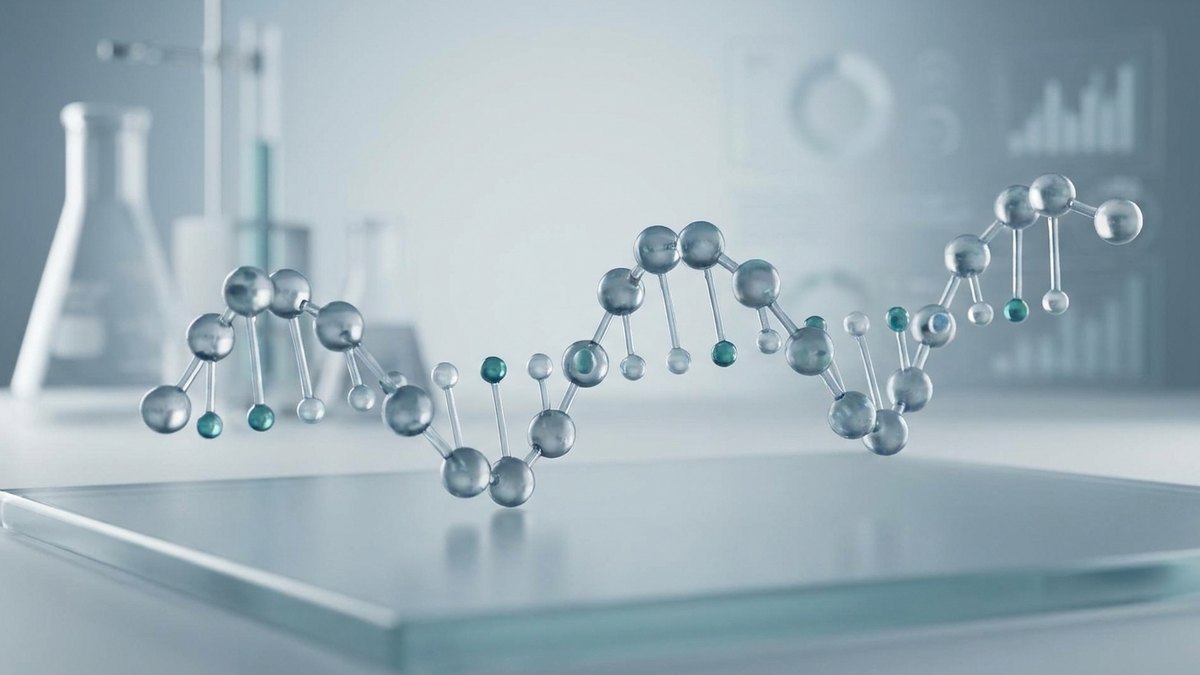
To grasp how these molecules function, it helps to look at them as building blocks. Peptides are short chains of amino acids, which are the basic organic compounds composed of nitrogen, carbon, hydrogen, and oxygen. When amino acids link together via chemical bonds known as peptide bonds, they form these short chains. In scientific literature, a chain is typically classified as a peptide if it contains between two and fifty amino acids. If the chain grows longer than fifty amino acids, it undergoes a structural transition and is generally classified as a protein.
Because of their smaller size compared to complex proteins, peptides are highly agile. They act as precise signaling molecules, traveling through the body to bind to specific receptors on the surface of cells. This binding action triggers a cascade of biological responses, instructing cells to perform vital functions such as repairing tissue, releasing hormones, or modulating immune activity.
Peptides vs. Proteins vs. Amino Acids: The Structural Difference
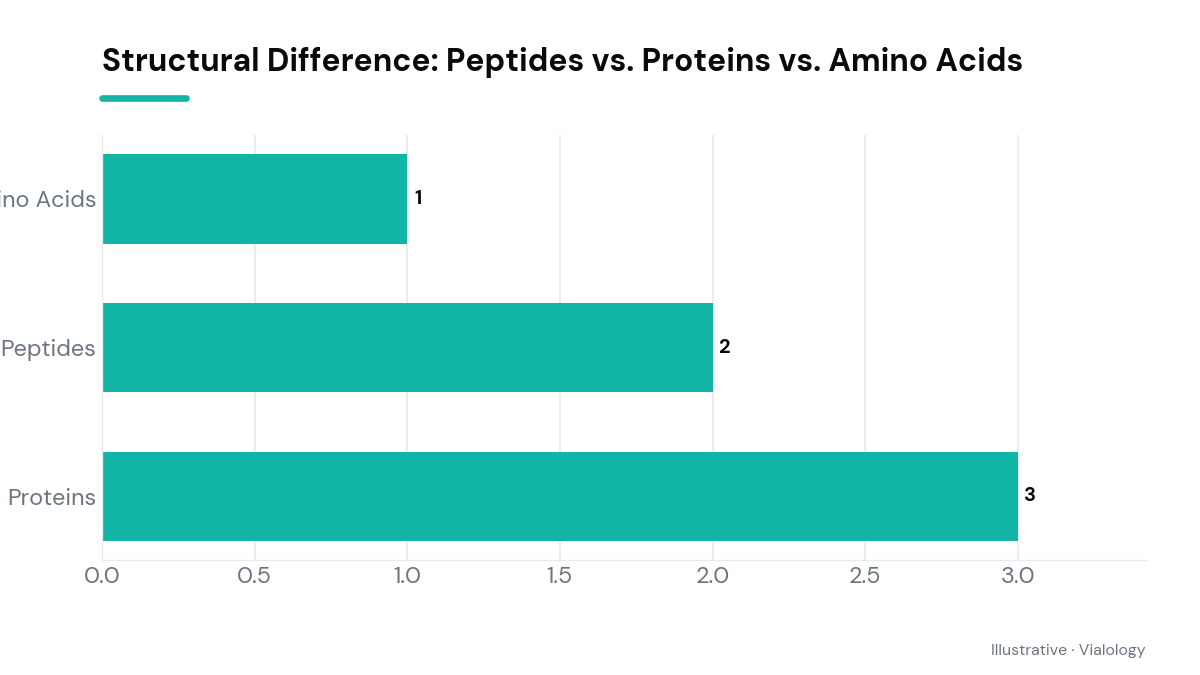
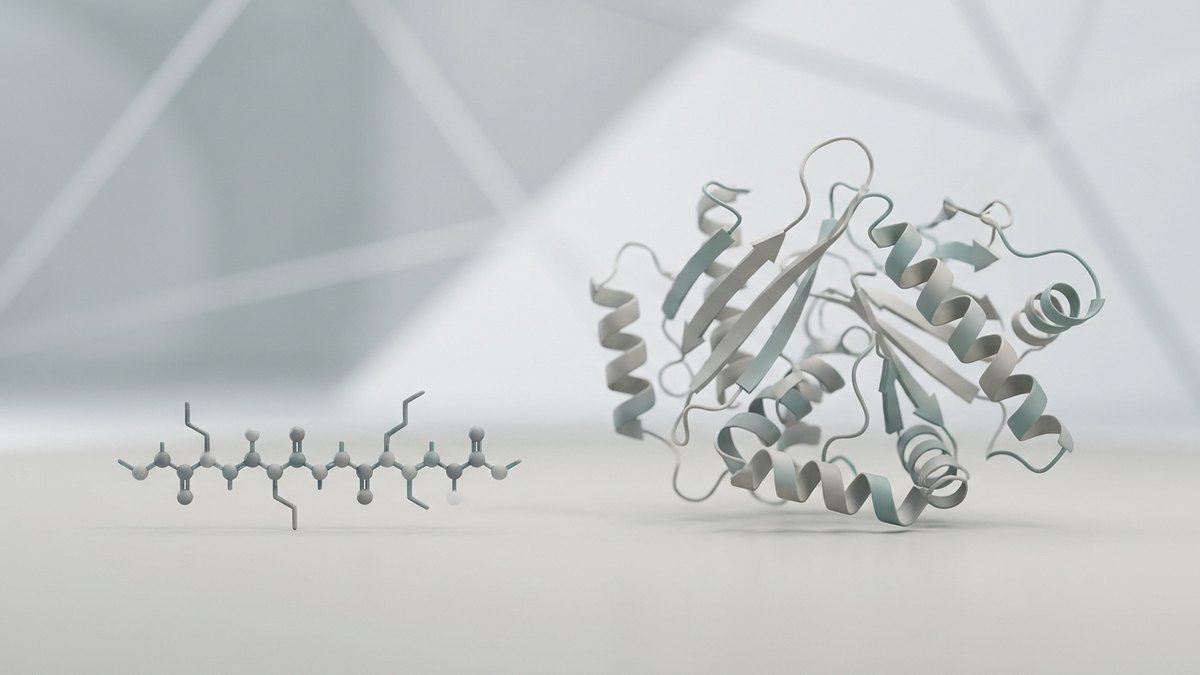
To clearly differentiate these terms, imagine amino acids as individual letters, peptides as short words, and proteins as entire paragraphs. Amino acids are the singular units; there are twenty standard amino acids that combine in various sequences to create all human life. When a small handful of these letters are strung together, they form a peptide, which possesses its own unique chemical message. When hundreds of these letters combine, they fold into complex, three-dimensional shapes to become proteins, such as collagen, keratin, or hemoglobin.
This structural difference is not just nominal; it dictates how these substances behave inside the body. Proteins are large, complex, and often require significant energy to break down and utilize. Peptides, by contrast, are smaller and structurally simpler, allowing them to penetrate tissues and cell membranes more easily. This high bioavailability and targeted signaling capability are precisely what make them such a compelling subject of study for researchers looking to influence specific biological pathways without disrupting broader physiological systems.
Why Peptides Matter in Modern Biology and Scientific Research
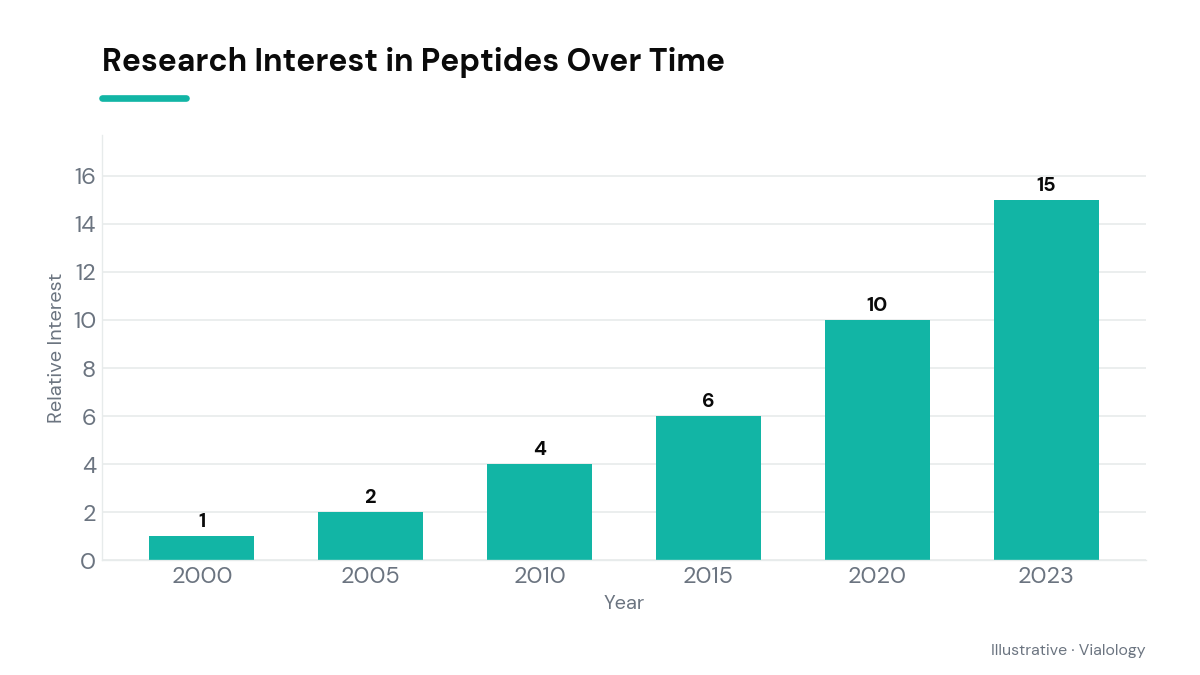
The scientific fascination with peptides is not a recent trend, but rather a decades-long evolution. Since the discovery of synthetic insulin in the early 20th century—which was the first peptide therapeutic to achieve widespread clinical use—researchers have recognized the immense potential of these molecules. Today, thousands of natural and synthetic peptides have been identified, with scientists actively investigating their roles in diverse physiological processes. A 2021 review in the journal Molecules highlighted that over 80 peptide-based therapeutics have been approved globally, primarily for metabolic diseases, oncology, and endocrinology, illustrating their profound utility in modern medicine.
Beyond established therapeutics, researchers are looking at how peptides might address complex biological challenges, such as cellular senescence, cognitive decline, and tissue regeneration. For example, in preclinical models, specific signaling peptides have demonstrated the ability to upregulate mitochondrial function and stimulate localized collagen synthesis. Because they are highly specific in their actions, they offer a distinct advantage: the ability to target precise cellular receptors with minimal off-target effects, presenting a cleaner mechanism of action than many traditional small-molecule drugs.
Frequently asked questions
What is a peptide in simple terms?
A peptide is a short chain of amino acids, containing between two and fifty units, that acts as a targeted biological messenger in the body.
What is the difference between a peptide and a protein?
The primary difference is size and structure; peptides are smaller chains of fifty or fewer amino acids, while proteins are larger, complex chains of over fifty amino acids that fold into specific three-dimensional shapes.
Are peptides naturally found in the body?
Yes, peptides are naturally produced by all living organisms and serve as crucial hormones, neurotransmitters, and signaling molecules, with insulin and oxytocin being prominent examples.
Why are peptides important in scientific research?
Peptides are vital to research because their small size and high specificity allow scientists to study and manipulate precise cellular pathways with minimal side effects, opening new avenues for understanding metabolic, immunological, and regenerative.
Educational use only. Vialology publishes journalistic and educational content about peptide science. Nothing here is medical advice, diagnosis, or treatment, and nothing should be taken as an endorsement to use any substance. Many peptides discussed are experimental and are not approved by the FDA for human use. Always consult a licensed healthcare professional before making any health decision.