
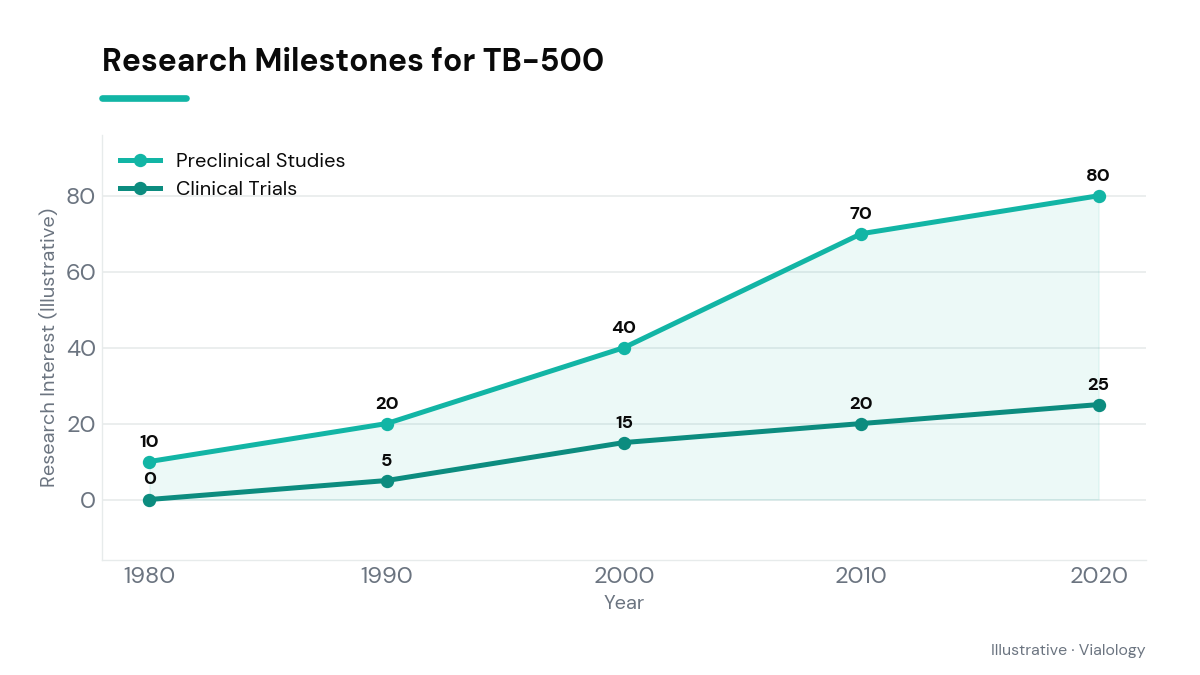
In the landscape of regenerative medicine and sports science, TB-500 has emerged as one of the most widely discussed synthetic peptides. Derived from a naturally occurring protein, this compound has generated significant interest among researchers studying cellular migration and tissue repair. However, despite its prominent place in online discussions, the gap between preclinical promise and human clinical evidence remains substantial.
Understanding Thymosin Beta-4 and the Origin of TB-500
To understand TB-500, one must first look at thymosin beta-4 (T̢4), a naturally occurring peptide composed of 43 amino acids that is highly conserved across species. First isolated in 1981 from the thymus gland, T̢4 is found in high concentrations in blood platelets, white blood cells, and wound fluids, where it acts as a major actin-sequestering molecule. In the human body, T̢4 plays a critical role in maintaining cellular structure, promoting cell migration, and protecting tissues from oxidative stress and inflammation following an injury.
TB-500 is a term often used interchangeably with thymosin beta-4 in research circles, but they are biochemically distinct. TB-500 is a synthetic short peptide fragment that replicates the active segment of the full-length T̢4 protein—specifically, the region containing amino acids 17 to 23, which is responsible for cellular migration and angiogenesis. By isolating this specific sequence, molecular biologists have attempted to create a smaller, more stable compound that can replicate the regenerative properties of the parent protein without the complexity of synthesizing the entire 43-amino-acid chain.
Preclinical Findings: Tissue Repair and Angiogenesis
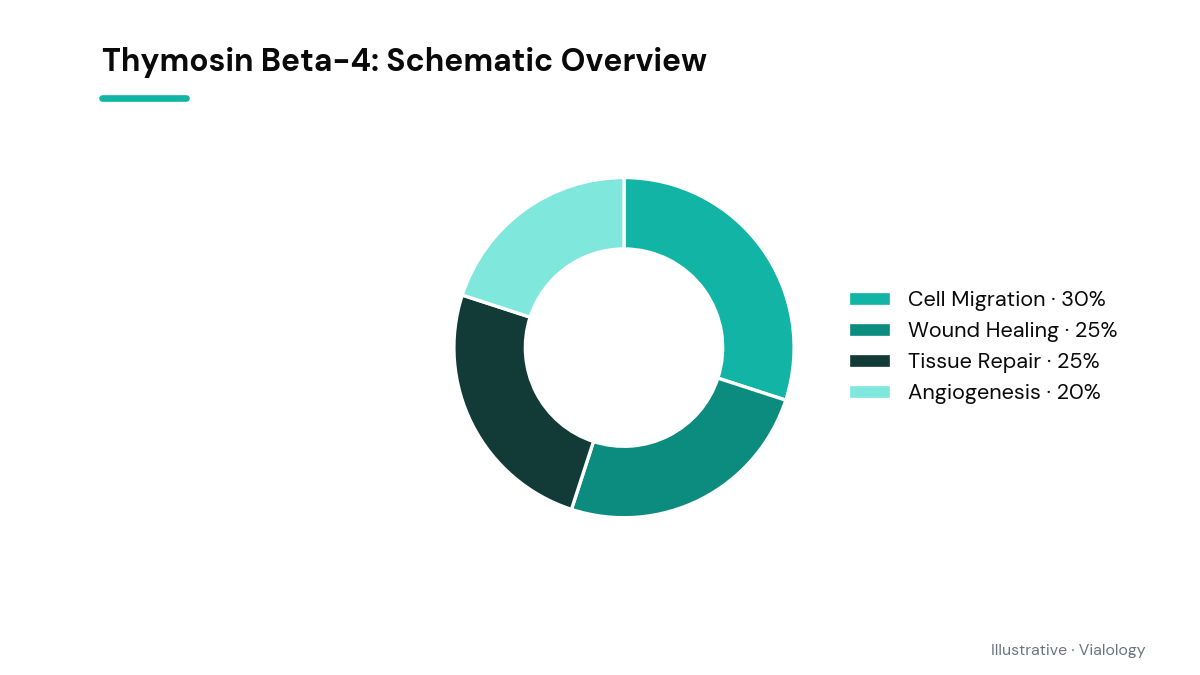
Over the past few decades, preclinical research has extensively examined how thymosin beta-4 and its synthetic fragments influence tissue repair in laboratory settings. In various animal models, researchers have observed that these peptides promote angiogenesis—the physiological process through which new blood vessels form from pre-existing vessels. By signaling the migration of endothelial cells, the peptide helps supply oxygen and essential nutrients to damaged areas, which is a foundational step in repairing injured tissues.
Beyond blood vessel growth, animal studies have explored the peptide’s effects on musculoskeletal healing, specifically within tendons, ligaments, and muscle fibers. For instance, a 2015 review highlighted how the active domain of T̢4 could downregulate certain inflammatory cytokines, thereby mitigating excessive scar tissue formation and encouraging more functional cellular alignment during recovery. Despite these intriguing observations in rodent models, researchers emphasize that animal physiology does not always predict human outcomes, leaving many questions about its systemic efficacy unanswered.
The Human Data Gap and Regulatory Status
Despite the growing interest in TB-500 within the athletic and wellness communities, there is a profound lack of clinical data regarding its use in humans. While full-length thymosin beta-4 has been evaluated in early-phase human trials for localized applications—such as ophthalmic drops for corneal injuries and topical gels for chronic pressure ulcers—the isolated synthetic fragment TB-500 has not undergone the rigorous, multi-phase clinical trial process required to establish human safety, tolerability, or pharmacokinetic profiles.
Consequently, TB-500 is not approved by the U.S. Food and Drug Administration (FDA) or any other major global regulatory agency for human therapeutic use. It remains classified strictly as a research chemical, and its administration is banned by the World Anti-Doping Agency (WADA) under the category of peptide hormones and growth factors. Because the clinical literature lacks peer-reviewed safety data for systemic human administration, the potential long-term risks, optimal dosages, and drug interactions of TB-500 remain entirely uncharacterized.
Frequently asked questions
What is TB-500?
TB-500 is a synthetic peptide fragment modeled after the active domain of thymosin beta-4, a naturally occurring protein involved in cellular repair and migration.
How is TB-500 related to thymosin beta-4?
While thymosin beta-4 is the full-length 43-amino-acid protein produced by the body, TB-500 is a shorter synthetic sequence designed to replicate its active, regenerative properties.
What have studies looked at for TB-500?
Preclinical studies in animal and cell models have primarily investigated its role in accelerating wound healing, promoting new blood vessel formation (angiogenesis), and modulating inflammation.
Is TB-500 approved for human use?
No, TB-500 is not approved by the FDA or other regulatory bodies for human use, and it is classified as a banned substance by the World Anti-Doping Agency (WADA).
Educational use only. Vialology publishes journalistic and educational content about peptide science. Nothing here is medical advice, diagnosis, or treatment, and nothing should be taken as an endorsement to use any substance. Many peptides discussed are experimental and are not approved by the FDA for human use. Always consult a licensed healthcare professional before making any health decision.