

In modern endocrine research, CJC-1295 and Ipamorelin: The GHRH/GHRP Growth-Hormone Secretagogue Stack Explained represents one of the most widely studied peptide combinations. Investigators frequently explore how these two synthetic secretagogues interact to influence natural growth hormone production. By targeting distinct pathways within the pituitary gland, this dual-action model offers a compelling look into endocrine synergy.
Analyzing CJC-1295 and Ipamorelin: The GHRH/GHRP Growth-Hormone Secretagogue Stack Explained
To understand how these peptides interact, we must first look at the biological pathways governing growth hormone (GH) release. CJC-1295 is a synthetic analog of Growth Hormone-Releasing Hormone (GHRH), a peptide naturally produced in the hypothalamus that signals the anterior pituitary gland to produce and release growth hormone. In clinical research, modified versions of CJC-1295, often paired with Drug Affinity Complex (DAC) to extend half-life, are studied for their ability to sustain elevated plasma GH levels over longer periods. By extending the therapeutic window, researchers can observe the prolonged downstream effects on IGF-1 without requiring frequent redosing in animal subjects.
Conversely, Ipamorelin belongs to the Growth Hormone-Releasing Peptide (GHRP) class. Instead of mimicking GHRH, GHRPs act as agonists of the ghrelin receptor, also known as the growth hormone secretagogue receptor (GHS-R). When Ipamorelin binds to these receptors, it triggers a rapid, pulsatile release of growth hormone. Unlike older-generation GHRPs like GHRP-2 or GHRP-6, clinical models indicate that Ipamorelin is highly selective, meaning it stimulates growth hormone release without significantly elevating cortisol, prolactin, or aldosterone levels. This selectivity makes it a highly valuable tool for isolation-based scientific observation.
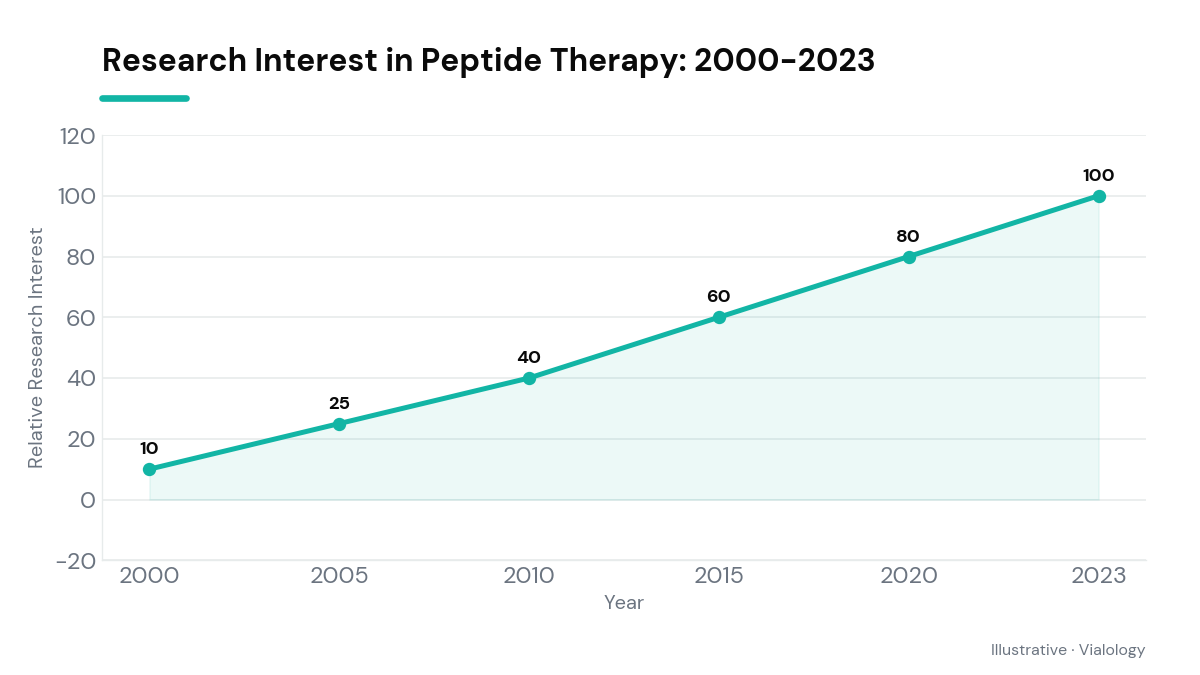
The Synergistic Potential of the Endocrine Combination
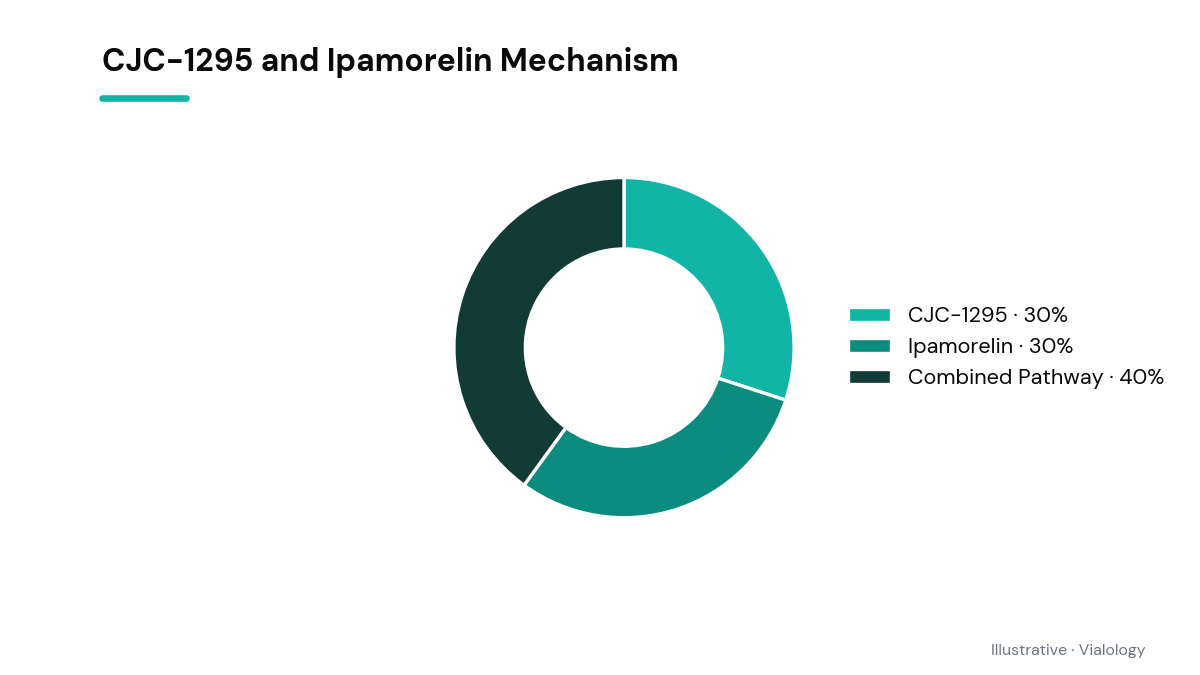
When researchers evaluate the CJC-1295/Ipamorelin stack, they are investigating a phenomenon known as endocrine synergy. Because GHRH analogs and GHRPs utilize entirely different signaling pathways, administering them concurrently does not simply produce an additive effect; rather, the combination has been shown in animal models to produce a synergistic surge in growth hormone. While CJC-1295 increases the overall number of secretagogue-secreting cells and maintains a steady baseline potential, Ipamorelin initiates a precise, potent pulse of hormone release. This dual-pathway stimulation maximizes the biological response by tackling pituitary stimulation from two distinct biological fronts simultaneously.
This dual-action approach mimics the body’s natural pulsatile rhythm of growth hormone secretion far more closely than administering either peptide in isolation. In laboratory settings, this synergistic mechanism helps prevent the receptor desensitization that can occur when a single pathway is overstimulated, presenting a highly efficient model for studying growth hormone dynamics. By avoiding the receptor downregulation typically associated with continuous agonist exposure, researchers can observe sustained metabolic and tissue-level adaptations over longer experimental timelines.

What the Research Says: Clinical Data and Physiological Effects
While neither CJC-1295 nor Ipamorelin is FDA-approved for general anti-aging or physical enhancement, historical clinical trials have shed light on their physiological impacts. Early research in healthy adults suggested that GHRH analogs could promote lean muscle mass development and support fat metabolism by upregulating insulin-like growth factor 1 (IGF-1), a primary mediator of growth hormone’s effects on tissue growth. Furthermore, observational studies on sleep architecture indicate that growth hormone secretagogues may influence slow-wave sleep cycles, which are critical for cellular repair, immune function, and cognitive recovery. These potential downstream benefits continue to drive academic interest in both clinical and preclinical settings.
However, scientists emphasize that much of the existing literature is derived from rodent models or small-scale human trials from the early 2000s. Long-term safety profiles, potential risks of systemic IGF-1 elevation, and the exact metabolic consequences in diverse populations remain active areas of academic debate. As such, these compounds are strictly classified as research chemicals, reserved for laboratory exploration rather than therapeutic use. Understanding the precise boundaries between established clinical data and popular anecdotal claims is essential for any objective scientific inquiry.
Safety, Research Classifications, and Future Outlook
As the landscape of peptide science evolves, the regulatory status of these compounds remains highly restricted. Currently, both CJC-1295 and Ipamorelin are classified as prohibited substances by major athletic governing bodies, including the World Anti-Doping Agency (WADA), due to their potential to enhance physical performance artificially. In the clinical research community, investigators continue to monitor how these secretagogues impact glucose tolerance and insulin sensitivity, as growth hormone naturally exerts anti-insulin actions that can alter metabolic homeostasis over time.
Future studies aim to further map the cellular mechanisms of these secretagogues, exploring potential therapeutic applications for muscle-wasting diseases, age-related endocrine decline, and injury rehabilitation. Until large-scale, long-term human clinical trials are conducted, the scientific consensus remains cautious, emphasizing that these peptides are powerful endocrine modulators whose full spectrum of systemic effects is still being uncovered in controlled laboratory environments.
Related on Vialology
Frequently asked questions
What is the primary difference between CJC-1295 and Ipamorelin?
CJC-1295 acts as a GHRH analog that stimulates the pituitary gland to increase baseline growth hormone production, whereas Ipamorelin is a GHRP that mimics ghrelin to trigger a rapid, pulsatile release of growth hormone.
Why are these two peptides studied together?
They are studied together because they target different receptors in the pituitary gland, creating a synergistic effect that results in a greater release of growth hormone than either compound could achieve alone.
Are CJC-1295 and Ipamorelin approved for human use?
No, neither CJC-1295 nor Ipamorelin is currently approved by the FDA for therapeutic or recreational use in humans, and they remain classified as research chemicals.
Educational use only. Vialology publishes journalistic and educational content about peptide science. Nothing here is medical advice, diagnosis, or treatment, and nothing should be taken as an endorsement to use any substance. Many peptides discussed are experimental and are not approved by the FDA for human use. Always consult a licensed healthcare professional before making any health decision.