

The rise of the dihexa nootropic peptide in preclinical studies represents a fascinating frontier in cognitive science. Originally developed by researchers at Washington State University, this synthetic compound was designed specifically to overcome a major hurdle in neuro-pharmacology: crossing the blood-brain barrier. Scientists are currently evaluating its potential to facilitate synaptic growth and enhance neural connectivity at fractions of the concentration required by traditional neurotrophic factors.
Understanding the Blood-Brain Barrier Challenge
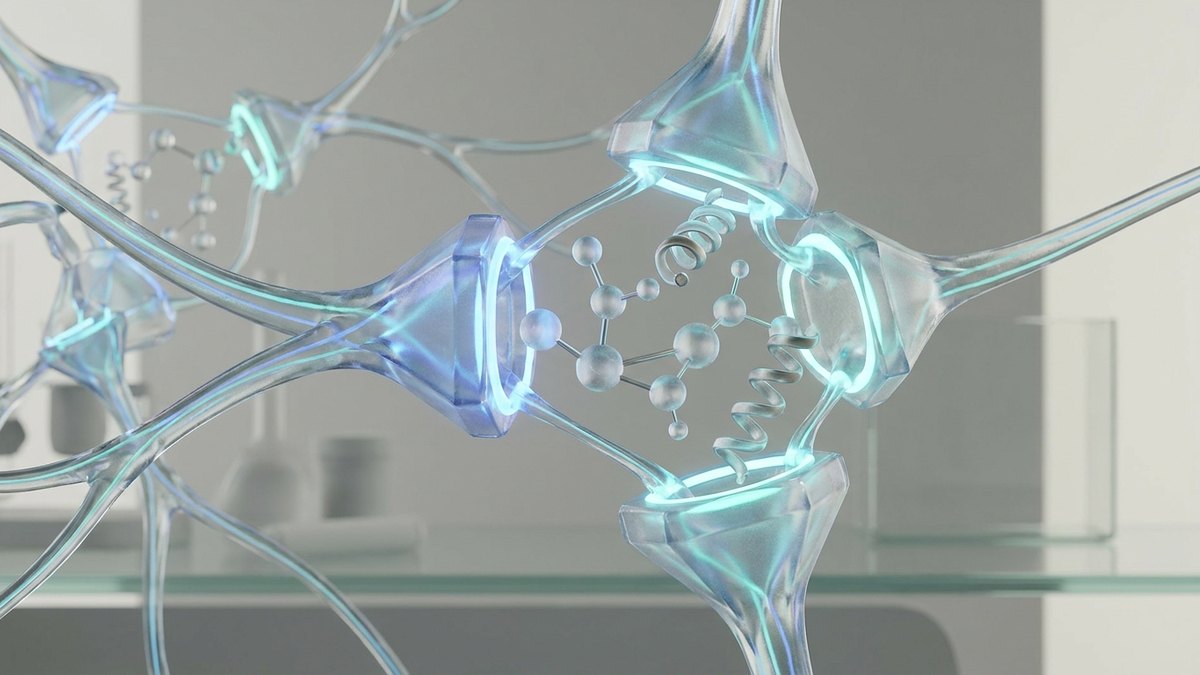
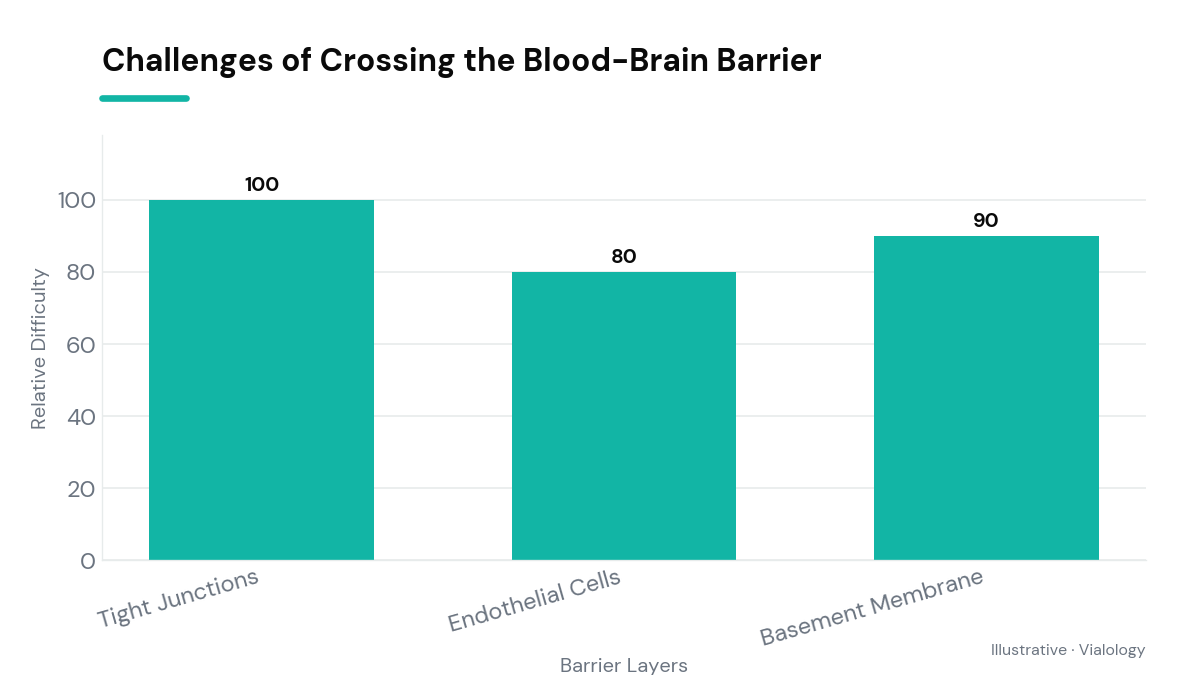
For any neuroprotective compound to exert its effects, it must first bypass the blood-brain barrier (BBB)—a highly selective semipermeable border of endothelial cells that prevents solutes in the circulating blood from non-selectively crossing into the extracellular fluid of the central nervous system. Most peptide-based therapeutics fail this test due to their large molecular size and hydrophilic nature, which prevents them from passing through these tightly sealed cellular junctions.
Dihexa, a peptide-derived small molecule, was structurally engineered to bypass these limitations. By balancing lipophilicity and molecular weight, this novel agent demonstrates high permeability, allowing it to enter the central nervous system much more effectively than native peptide molecules.
Mechanisms of Action: The Dihexa Nootropic Pathway
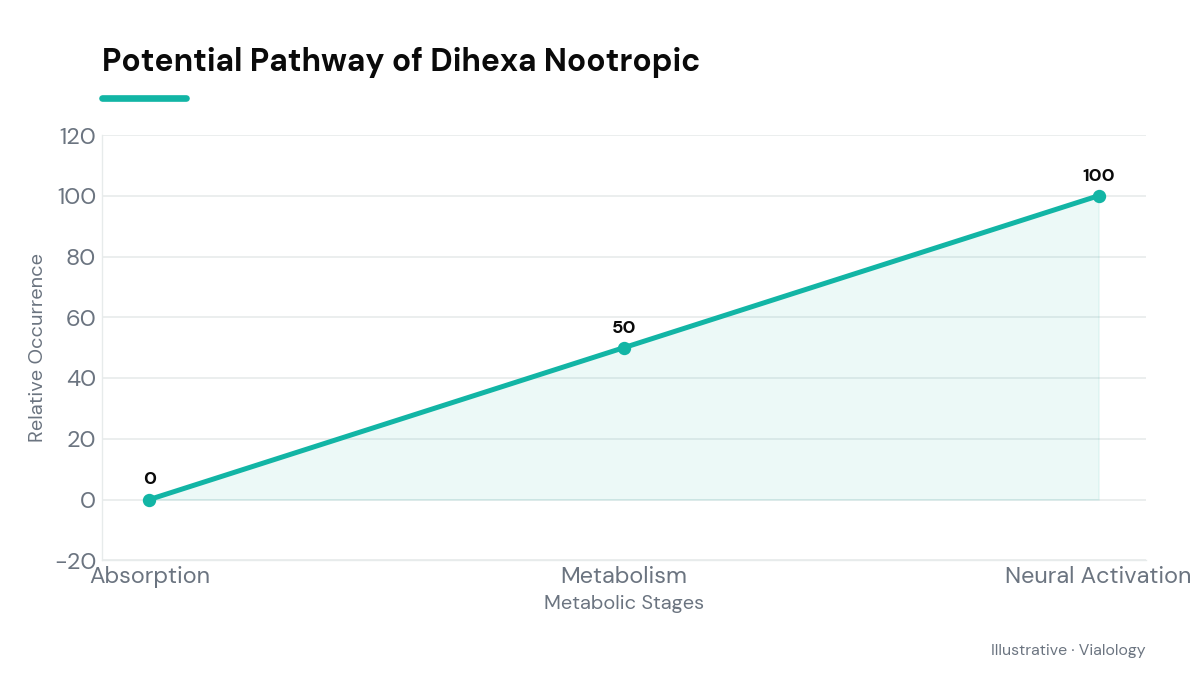
Unlike traditional stimulants that temporarily alter neurotransmitter levels, the dihexa nootropic peptide is designed to interact directly with Hepatocyte Growth Factor (HGF) and its receptor, c-Met. In laboratory models, dihexa binds to HGF with high affinity, which in turn facilitates the dimerization of c-Met, initiating a signaling cascade that promotes spinogenesis—the formation of new dendritic spines.
This mechanism is crucial because dendritic spines serve as the primary receiving stations for excitatory synaptic inputs. According to Frontier’s Dihexa research, the compound’s capacity to induce functional synapse formation is estimated to be significantly more potent than brain-derived neurotrophic factor (BDNF), suggesting deep implications for research into neurodegenerative conditions and memory consolidation.
What the Preclinical Studies Show
To date, the vast majority of peer-reviewed data on dihexa stems from animal models and in vitro cell cultures. A foundational study demonstrated that dihexa could reverse cognitive impairment in animal models of Alzheimer’s-like pathology by repairing lost synaptic connections, rather than simply slowing down cellular degeneration.
Despite these promising preclinical results, it is important to emphasize that dihexa has not undergone extensive human clinical trials and is not approved by the Food and Drug Administration (FDA) for human use. Researchers emphasize that while the molecule’s ability to cross the BBB is a major scientific milestone, safety, long-term toxicity, and pharmacokinetic profiles in humans remain largely unmapped.
Future Directions in Nootropic Peptide Research
The development of dihexa has paved the way for a new generation of small-molecule peptides optimized for central nervous system delivery. Beyond cognitive enhancement, researchers are investigating how these BBB-permeable molecules might assist in recovery from traumatic brain injuries, stroke, and other neurological insults where synaptic networks are compromised.
As the field of neurochemistry advances, the focus remains on refining these compounds to ensure target specificity, minimizing off-target effects while maximizing the structural plasticity of neural networks. For now, dihexa remains a highly prized research tool, illustrating the vast potential of peptide-derived therapeutics in overcoming physiological barriers.
Related on Vialology
Frequently asked questions
What is Dihexa?
Dihexa is a synthetic peptide-derived small molecule developed by researchers to cross the blood-brain barrier and promote the growth of new brain cell connections.
Is Dihexa approved for human consumption?
No, Dihexa is not approved by the FDA for human use and is currently restricted to laboratory research and preclinical studies.
How does Dihexa cross the blood-brain barrier?
Due to its specific molecular weight and balanced lipid-solubility, Dihexa is able to pass through the tightly joined endothelial cells of the blood-brain barrier much more effectively than larger, traditional peptides.
Educational use only. Vialology publishes journalistic and educational content about peptide science. Nothing here is medical advice, diagnosis, or treatment, and nothing should be taken as an endorsement to use any substance. Many peptides discussed are experimental and are not approved by the FDA for human use. Always consult a licensed healthcare professional before making any health decision.