
When exploring the landscape of modern biochemistry, understanding What Makes a Peptide “Research Use Only”? RUO Compliance and Buyer Responsibility Explained is essential for anyone navigating the acquisition of laboratory reagents. This designation is not merely a formality, but a strict regulatory boundary that separates clinical medical products from materials intended solely for in vitro or animal experimentation. By unpacking the legal and scientific frameworks governing these compounds, researchers can better understand their responsibilities under current federal guidelines.
Defining the ‘Research Use Only’ (RUO) Designation
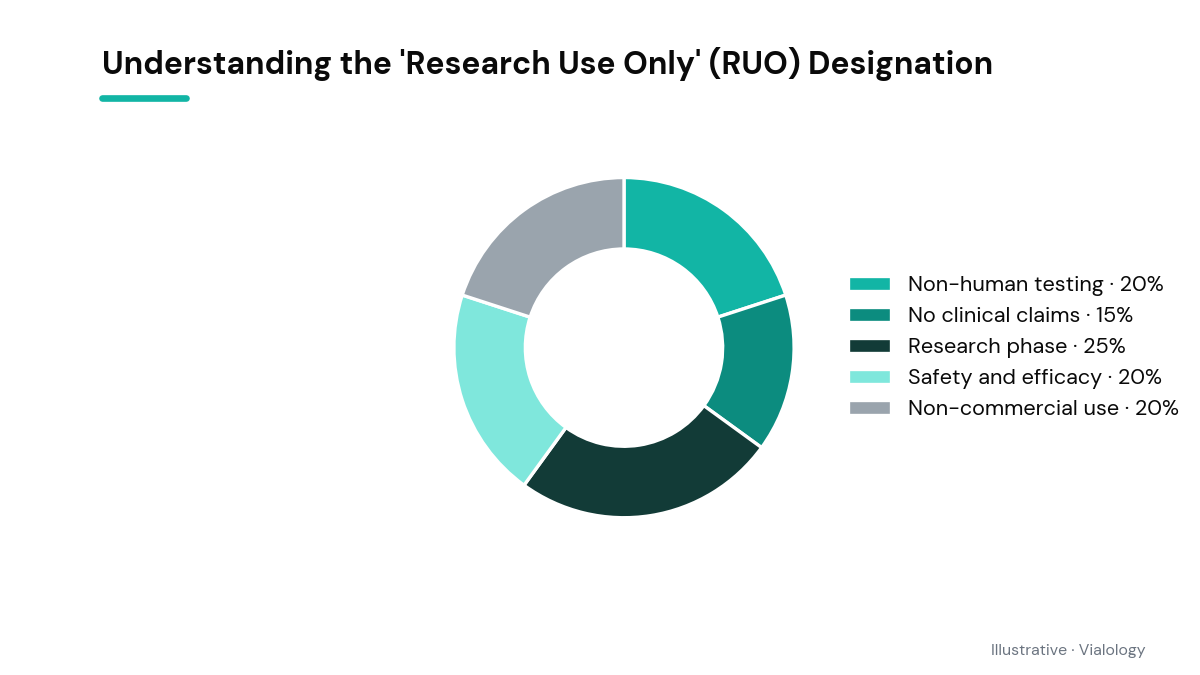
The term ‘Research Use Only’ (RUO) is a regulatory classification established by agencies like the U.S. Food and Drug Administration (FDA) to identify products that are in the laboratory phase of development. These substances have not undergone the rigorous, multi-phase clinical trial process required to establish safety, efficacy, and dosage for human administration. Consequently, RUO peptides are manufactured under different quality control standards than those intended for diagnostic or therapeutic use in humans, meaning they lack current Good Manufacturing Practice (cGMP) certification for clinical application.
In a laboratory setting, RUO compounds are invaluable tools for mapping biological pathways, testing receptor affinity, and conducting preclinical animal studies. Because these peptides are intended strictly for scientific discovery, manufacturers label them with clear warnings indicating they are not for human consumption or diagnostic procedures. This clear legal demarcation protects public health while allowing scientific innovation to proceed unimpeded within controlled laboratory environments.
Regulatory Frameworks and Buyer Responsibility
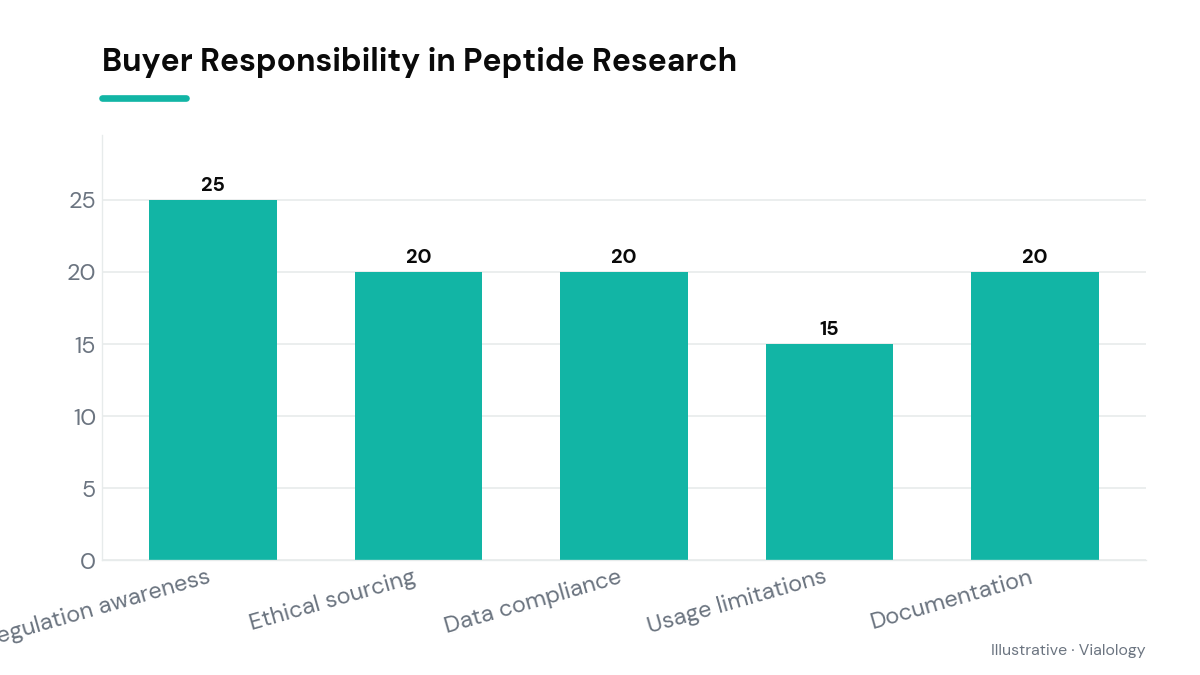
The responsibility for maintaining the integrity of the RUO classification falls heavily on the buyer. When an institution or individual purchases these reagents, they typically agree to legal terms of service stipulating that the materials will only be used for laboratory research. Misusing these compounds for self-administration or unauthorized clinical trials bypasses critical consumer protection laws and can lead to severe legal and health consequences.
Regulatory bodies monitor the distribution of these chemicals to prevent diversion into the consumer market. According to a 2022 FDA compliance update, firms distributing RUO products must ensure their marketing and sales practices do not imply or encourage human use. Buyers should familiarize themselves with a comprehensive research-use-only compliance guide to understand how institutions verify intended use and maintain rigorous compliance standards during procurement.

What Makes a Peptide “Research Use Only”? RUO Compliance and Buyer Responsibility Explained in Practice
In practice, compliance means that any laboratory utilizing these peptides must adhere to strict containment and disposal protocols. Since many of these molecules have unknown toxicological profiles in humans, they must be handled with appropriate personal protective equipment (PPE) and stored under specific cryogenic or desiccated conditions to prevent degradation. Research teams must document the chain of custody and experimental protocols to demonstrate that the substances are used exclusively for their stated scientific objectives.
Furthermore, the scientific community relies on the distinction between research-grade and medical-grade materials to maintain data integrity. Using non-validated, non-cGMP compounds in unauthorized human experiments not only violates safety protocols but also produces unscientific, unpublishable results due to potential impurities or batch-to-batch variations. True scientific advancement relies on respecting these boundaries and conducting controlled, transparent research that can be peer-reviewed and replicated.
Related on Vialology
Frequently asked questions
What does the RUO label mean on a peptide vial?
The RUO label indicates that the peptide is manufactured strictly for laboratory research and has not been approved for human use, diagnosis, or therapy by regulatory bodies like the FDA.
Can RUO peptides be used in human clinical trials?
No, RUO peptides cannot be used in human trials unless they transition to an Investigational New Drug (IND) status and are manufactured under current Good Manufacturing Practices (cGMP).
Who is legally responsible if an RUO peptide is used incorrectly?
The buyer or primary investigator bears the legal responsibility, as purchasing agreements explicitly state that the compounds are intended solely for in vitro or animal laboratory research.
Are RUO peptides manufactured differently than medical-grade peptides?
Yes, while RUO peptides are often highly pure, they are not produced under the sterile, tightly regulated cGMP conditions required for human-grade pharmaceuticals.
Educational use only. Vialology publishes journalistic and educational content about peptide science. Nothing here is medical advice, diagnosis, or treatment, and nothing should be taken as an endorsement to use any substance. Many peptides discussed are experimental and are not approved by the FDA for human use. Always consult a licensed healthcare professional before making any health decision.