
As interest in regenerative medicine grows, many researchers and health enthusiasts find themselves asking, is bpc-157 legal in the United States and abroad? The short answer is complex, as the compound occupies a grey area between clinical prohibition and permitted laboratory research. Understanding the current regulatory landscape requires navigating recent decisions by federal drug agencies, athletic commissions, and state boards.
The FDA Decision: Is BPC-157 Legal for Compounding?
In September 2023, the U.S. Food and Drug Administration (FDA) issued a significant update that drastically shifted how BPC-157 is handled in the United States. The agency placed the peptide on the Category 2 list of bulk drug substances under Sections 503A and 503B of the Federal Food, Drug, and Cosmetic Act. Category 2 substances are those that the FDA has identified as presenting significant safety risks or for which there is insufficient scientific evidence to support compounding. This designation effectively prohibited compounding pharmacies from manufacturing or distributing BPC-157 for patient use.
This federal action was primarily driven by the lack of human clinical trials. While animal models—such as a 2010 study published in the Journal of Pharmacological Sciences—demonstrated promising wound-healing and gastric protective effects, the FDA emphasized that there is no established safety profile for human administration. Consequently, healthcare providers can no longer legally write prescriptions for compounded BPC-157 to be filled by licensed pharmacies.
The Research Chemical Loophole and Lab Use
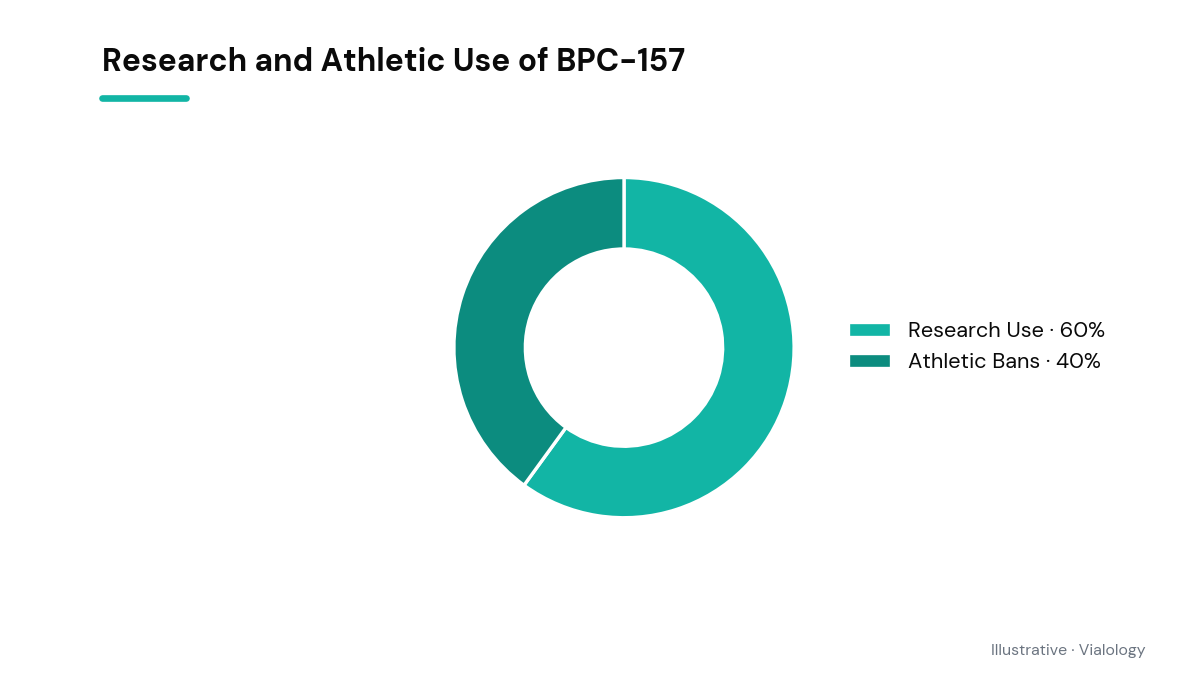
Despite the compounding ban, BPC-157 is widely available online labeled as a research chemical or for research use only. Under federal law, it remains legal to purchase, possess, and distribute BPC-157 if it is intended strictly for laboratory research, in vitro testing, or animal studies. These sales are legal because the substances are not marketed, labeled, or sold for human consumption.
However, the FDA and Federal Trade Commission (FTC) closely monitor companies that sell these compounds. If a seller makes health claims, provides dosing guides, or implies that the substance is safe for human use, they can face severe legal consequences, including warning letters and product seizures. Researchers seeking more context on the BPC-157 legal status can consult federal registers to understand how these compound categories shift.
State-Level Regulation and Athletic Bans
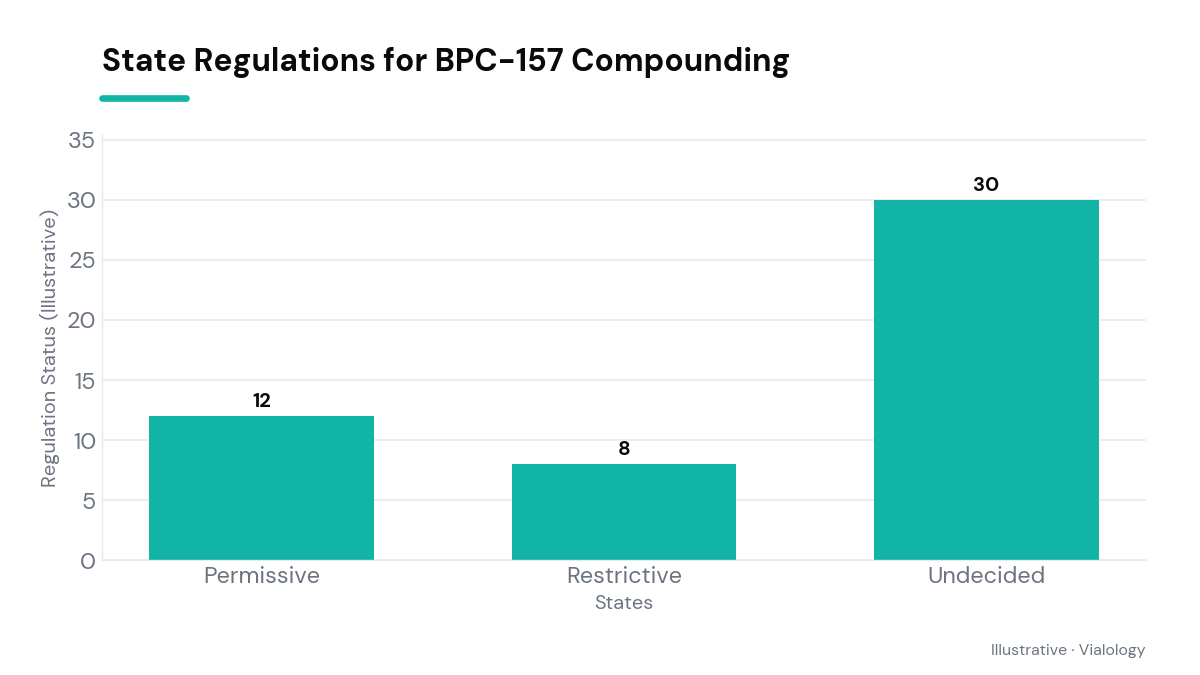
While the FDA sets the national baseline, individual state medical boards have the authority to impose stricter regulations. In states like California, Texas, and Florida, medical boards have historically aligned rapidly with FDA compounding advisories, putting practitioners at risk of disciplinary action if they continue to recommend or administer BPC-157. Some state-level departments of health have initiated independent audits of clinics specializing in peptide therapies, leading to administrative fines and license suspensions for non-compliance.
Beyond state laws, competitive athletes must navigate an entirely different set of regulations. In 2022, the World Anti-Doping Agency (WADA) officially added BPC-157 to its Prohibited List under the category of Non-Specified Substances (peptide hormones, growth factors, related substances, and mimetics). Because BPC-157 promotes angiogenesis and accelerated tissue repair, athletic governing bodies view it as a performance-enhancing agent, meaning any detection of the compound in an athlete’s system results in immediate disqualification and a multi-year ban.
Related on Vialology
Frequently asked questions
Is BPC-157 approved by the FDA?
No, BPC-157 is not approved by the FDA for human use, and compounding pharmacies are prohibited from distributing it due to safety and efficacy concerns raised in late 2023.
Can doctors legally prescribe BPC-157?
No, following the FDA’s 2023 classification of BPC-157 under Category 2 of bulk drug substances, compounding pharmacies cannot legally prepare it for human prescription.
Why did WADA ban BPC-157?
WADA banned BPC-157 in 2022 because its tissue-regenerating and angiogenic properties are classified as performance-enhancing, posing an unfair advantage in athletic recovery.
Is it illegal to buy BPC-157 for laboratory research?
It remains legal to buy BPC-157 solely for laboratory research and scientific experimentation, provided it is not intended, marketed, or sold for human consumption.
Educational use only. Vialology publishes journalistic and educational content about peptide science. Nothing here is medical advice, diagnosis, or treatment, and nothing should be taken as an endorsement to use any substance. Many peptides discussed are experimental and are not approved by the FDA for human use. Always consult a licensed healthcare professional before making any health decision.