
Investigating the parameters of a semax dosage in scientific literature reveals a complex history of clinical research and neurological exploration. Developed in Russia during the late 1980s, Semax is a synthetic analog of adrenocorticotropic hormone (ACTH) that has intrigued researchers worldwide for its potential neuroprotective qualities. This editorial overview examines how scientific studies structure their investigations into this compound without prescribing or endorsing its use.
Understanding the Mechanism of Semax
Semax is a heptapeptide derived from a fragment of adrenocorticotropic hormone (ACTH), specifically designed to retain neurological activity without triggering systemic hormonal responses. In laboratory models, it has been shown to stimulate the expression of Brain-Derived Neurotrophic Factor (BDNF) and Nerve Growth Factor (NGF). These proteins are critical for neuronal survival, development, and synaptic plasticity, which explains why the peptide is a major subject of interest in cognitive science.
Furthermore, researchers observe that the peptide influences the levels of monoamine neurotransmitters, including dopamine and serotonin, within the brain. By modulating these pathways, Semax appears to support executive function and resilience to cellular stress, such as oxygen deprivation. However, much of this foundational science relies on animal models and specific Eastern European clinical trials, necessitating further global research.
Historical Semax Dosage Protocols in Clinical Trials
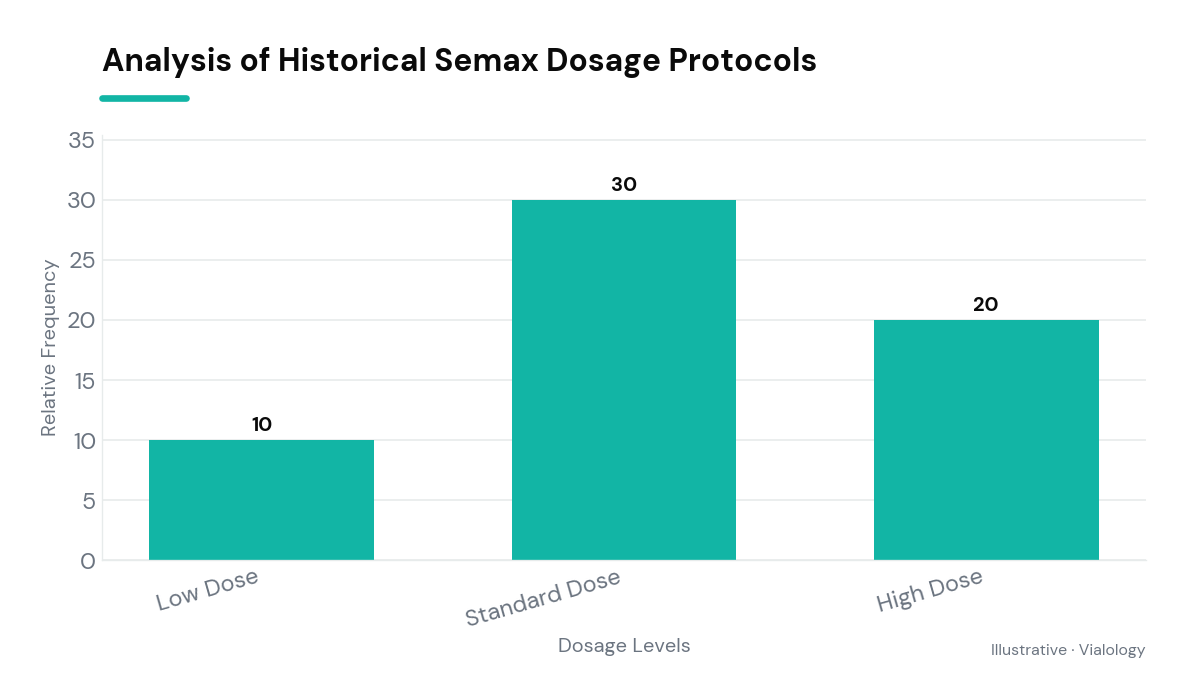
In countries where Semax is registered as a therapeutic pharmaceutical, clinical protocols vary widely depending on the target condition. For instance, in Russian medical literature, researchers evaluating acute ischemic stroke recovery often document a higher dosage administered intranasally compared to protocols designed for minor cognitive enhancement. For a broader overview of the peptide’s development and clinical history, researchers can consult Captide’s Semax research to examine its diverse scientific applications.
For mild cognitive impairment or transient intellectual fatigue, standard clinical guides describe a protocol of lower concentrations administered over several days or weeks. Conversely, post-stroke rehabilitation trials document significantly elevated volumes, often delivered under strict medical supervision within the critical 24-hour post-injury window. These distinct applications highlight why scientists emphasize that there is no single, universal dosing paradigm for this peptide.

Routes of Administration and Bioavailability
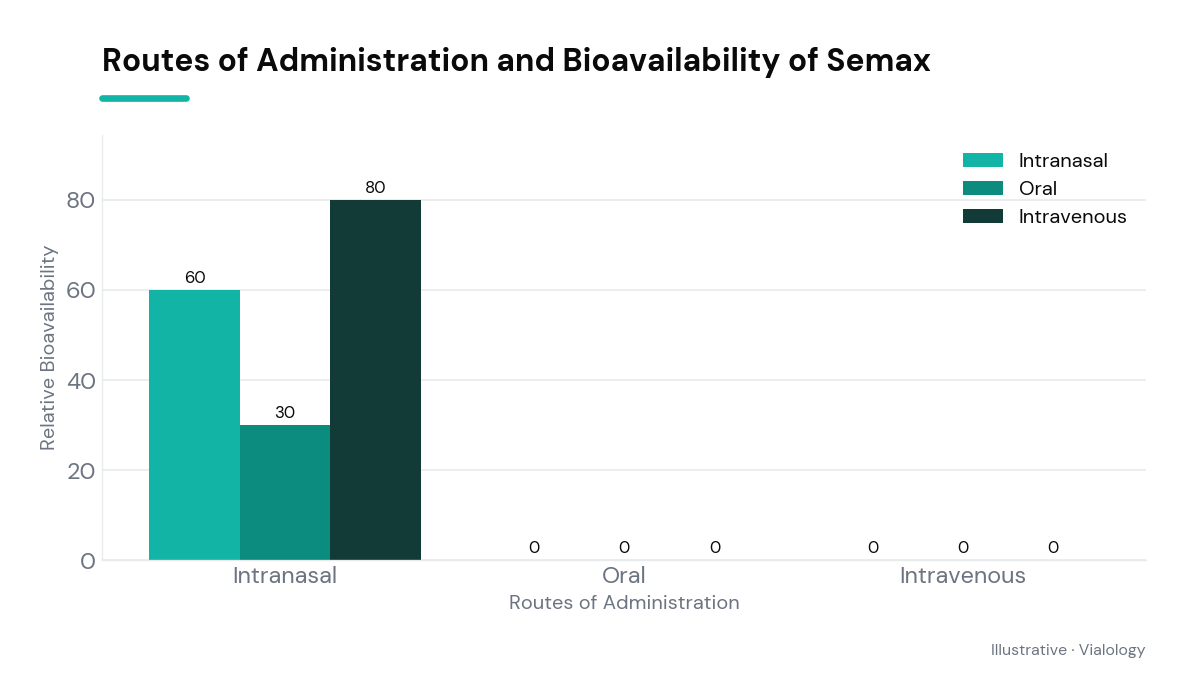
In scientific literature, the primary route of administration for Semax is intranasal, which allows the peptide to bypass the blood-brain barrier more effectively than oral administration. When introduced through the nasal mucosa, Semax rapidly enters the cerebrospinal fluid and brain tissues. Researchers favor this pathway because oral ingestion typically results in rapid degradation of the peptide by enzymes in the digestive tract, rendering it largely inactive.
Some pre-clinical animal models utilize subcutaneous injections to study the systemic distribution of the peptide, but the intranasal route remains the standard for human clinical trials due to its direct target delivery and non-invasive nature. The varying bioavailability between these methods is a primary focus of current pharmacokinetic studies.
Safety Considerations and Future Directions
Data from historical clinical applications suggest that Semax is generally well-tolerated, with a low incidence of severe adverse effects. The most frequently documented side effects in research settings are mild local irritation of the nasal mucosa, transient headaches, or mild anxiety. Because it does not exert systemic hormonal effects like full-length ACTH, it avoids many of the endocrine complications associated with hormone therapy.
Despite these findings, long-term safety data in diverse populations remain limited. Because Semax is not FDA-approved, researchers continue to advocate for rigorous, large-scale clinical trials to map its safety profile comprehensively and clarify its long-term physiological impact before any standardized global applications can be established.
Related on Vialology
Frequently asked questions
What is Semax used for in scientific research?
Researchers study Semax primarily for its neuroprotective, cognitive-enhancing, and restorative potential in models of brain injury, ADHD, and stroke.
Is Semax approved by the FDA?
No, Semax is not approved by the FDA for any therapeutic use in the United States, and it remains classified as a research compound in many jurisdictions.
How does Semax interact with the brain?
Studies suggest that Semax works by elevating levels of brain-derived neurotrophic factor (BDNF) and modulating neurotransmitters like dopamine and serotonin.
Why is Semax typically administered intranasally in studies?
Intranasal administration is preferred in research because it allows the peptide to bypass the blood-brain barrier and avoids enzymatic degradation in the digestive tract.
Educational use only. Vialology publishes journalistic and educational content about peptide science. Nothing here is medical advice, diagnosis, or treatment, and nothing should be taken as an endorsement to use any substance. Many peptides discussed are experimental and are not approved by the FDA for human use. Always consult a licensed healthcare professional before making any health decision.