
As the global search for effective metabolic therapies intensifies, researchers are closely studying how 5-amino-1mq weight loss mechanisms function at a cellular level. Originally identified as a selective membrane-permeable inhibitor of nicotinamide N-methyltransferase (NNMT), this small molecule has sparked significant scientific curiosity. Unlike traditional stimulants that suppress appetite through central nervous system pathways, it appears to target the body’s fundamental metabolic machinery directly within fat tissue.
Understanding the Role of NNMT in Metabolism
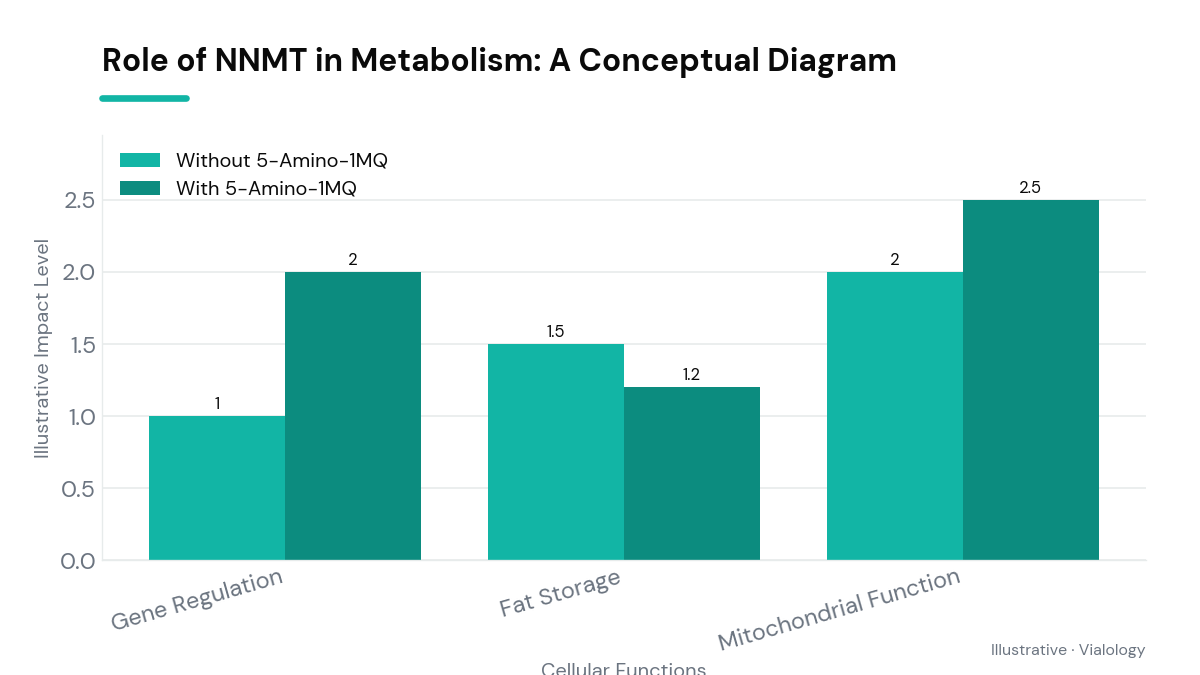
Nicotinamide N-methyltransferase (NNMT) is a cytosolic enzyme highly active in adipose tissue and the liver. It plays a pivotal role in regulating energy homeostasis by transferring a methyl group from S-adenosylmethionine (SAM) to nicotinamide. Studies have shown that when NNMT levels are elevated, cellular metabolism slows down, making it harder for the body to utilize stored energy efficiently. Consequently, researchers have focused on NNMT inhibition as a potential pathway for reversing metabolic dysfunction.
By suppressing NNMT activity, 5-Amino-1MQ effectively prevents the depletion of nicotinamide adenine dinucleotide (NAD+), a coenzyme crucial for mitochondrial function and cellular respiration. When NAD+ levels are preserved, the mitochondria—often described as the cellular powerhouses—can work more efficiently to oxidize fatty acids. This mechanism of action represents a paradigm shift in obesity research, focusing on cellular energy expenditure rather than central nervous system appetite suppression.
What Animal Models Reveal About 5-Amino-1MQ Weight Loss
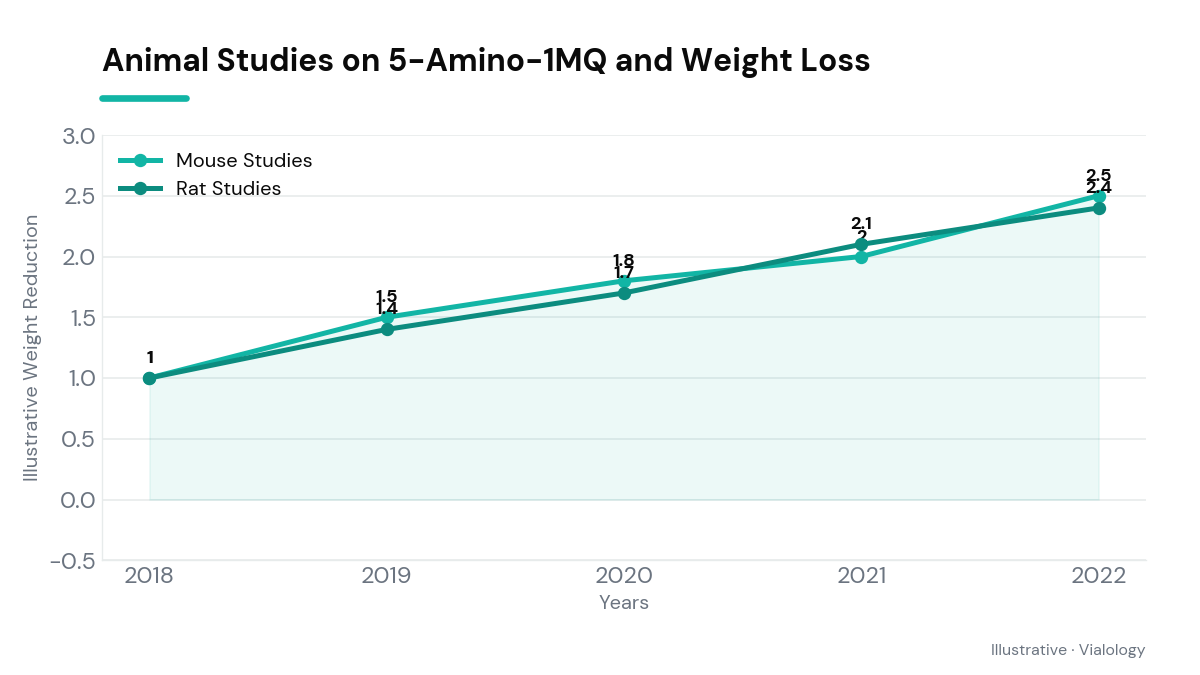
In a landmark 2018 study published in Biochemical Pharmacology, researchers investigated the effects of NNMT inhibitors on diet-induced obese mice. The subjects were fed a high-fat diet and treated with 5-Amino-1MQ. Over the course of the study, the treated mice exhibited a significant reduction in body weight and fat mass without any decrease in food intake, prompting researchers to closely analyze this weight-loss research data to understand the underlying metabolic shifts.
Furthermore, the study demonstrated that NNMT inhibition led to improvements in cholesterol profiles and insulin sensitivity in the animal subjects. Specifically, the researchers observed a decrease in white adipose tissue cell size, which suggests that the compound actively promotes the shrinking of fat stores by enhancing lipolysis. While these rodent trials provide a compelling proof-of-concept, it is important to note that preclinical success does not always translate directly to human physiology.
Mitochondrial Biogenesis and Muscle Preservation
Beyond its direct impact on fat cells, 5-Amino-1MQ is also of great interest to longevity researchers due to its effects on skeletal muscle. As organisms age, muscle mass typically declines alongside mitochondrial efficiency. By blocking NNMT, 5-Amino-1MQ stimulates the expression of sirtuin 1 (SIRT1), a key protein associated with longevity and mitochondrial biogenesis. This process encourages the formation of new mitochondria, enhancing the oxidative capacity of skeletal muscle tissue.
In animal models, this boost in mitochondrial health translated to improved physical performance and endurance. Because muscle is a highly metabolically active tissue, preserving or enhancing muscle quality during weight reduction is crucial for maintaining long-term metabolic health. Researchers hypothesize that combining NNMT inhibition with physical exercise could yield synergistic benefits for muscle recovery and metabolic rate, though clinical trials in humans are still required to validate this theory.
The Current State of Human Clinical Research
Despite the encouraging data generated in laboratory settings and animal models, 5-Amino-1MQ is not currently approved by the US Food and Drug Administration (FDA) for human use. The compound remains classified as a research chemical, meaning its safety, long-term side effects, and efficacy in humans have not been established through rigorous, large-scale clinical trials. The lack of standardized human data means that any potential risks or adverse drug interactions remain largely unknown.
Future clinical investigations will need to focus on determining the safety profile of NNMT inhibitors in humans, evaluating oral bioavailability, and assessing whether the metabolic improvements observed in mice can be replicated safely in human cohorts. Until these clinical trials are conducted and published, the scientific community views 5-Amino-1MQ primarily as a valuable tool for understanding metabolic pathways rather than a validated therapeutic option for weight management.
Related on Vialology
Frequently asked questions
What is 5-Amino-1MQ?
5-Amino-1MQ is a small, membrane-permeable molecule that acts as a selective inhibitor of the enzyme nicotinamide N-methyltransferase (NNMT), which is heavily involved in regulating cellular metabolism.
How does 5-Amino-1MQ influence weight in research models?
In animal studies, the compound blocks NNMT, preserving NAD+ levels and boosting mitochondrial activity, which leads to increased fat oxidation and reduced adipose tissue without suppressing appetite.
Is 5-Amino-1MQ FDA-approved for human use?
No, 5-Amino-1MQ is not FDA-approved for human use and is currently classified as a research chemical intended solely for laboratory studies.
Does 5-Amino-1MQ cause muscle loss?
Preclinical research suggests the opposite; by activating pathways related to mitochondrial biogenesis, the compound may help preserve or support skeletal muscle health during metabolic shifts.
Educational use only. Vialology publishes journalistic and educational content about peptide science. Nothing here is medical advice, diagnosis, or treatment, and nothing should be taken as an endorsement to use any substance. Many peptides discussed are experimental and are not approved by the FDA for human use. Always consult a licensed healthcare professional before making any health decision.