
As scientific interest in exercise mimetics grows, understanding the experimental slu-pp-332 dosage protocols used in pre-clinical studies has become essential for researchers in the metabolic health space. Developed as a selective estrogen-related receptor (ERR) agonist, this compound mimics some of the physiological benefits of physical training by activating specific metabolic pathways. However, because the compound has not been approved for human use, all existing data on its administration originates from rodent models.
What is SLU-PP-332 and How Does It Work?
To contextualize how researchers determine an experimental SLU-PP-332 dosage, it is helpful to understand the compound’s mechanism of action. SLU-PP-332 acts as a specialized agonist targeting estrogen-related receptors, specifically ERȒ, ERR̒, and ERR̓. These nuclear receptors play a critical role in regulating genes associated with mitochondrial biogenesis, oxidative metabolism, and cellular energy expenditure. By stimulating these receptors, the compound effectively tricks muscle tissue into behaving as though it has undergone rigorous endurance exercise.
In primary literature, such as a landmark 2023 study published in the Journal of Pharmacology and Experimental Therapeutics, researchers observed that targeting these receptors led to an increase in fatigue-resistant muscle fibers. This metabolic shift enhanced the physical endurance of the animal subjects, allowing them to run significantly longer on treadmills without prior training. This unique metabolic remodeling is what makes the compound a highly discussed candidate in longevity and obesity research.
Analyzing the SLU-PP-332 Dosage in Animal Models
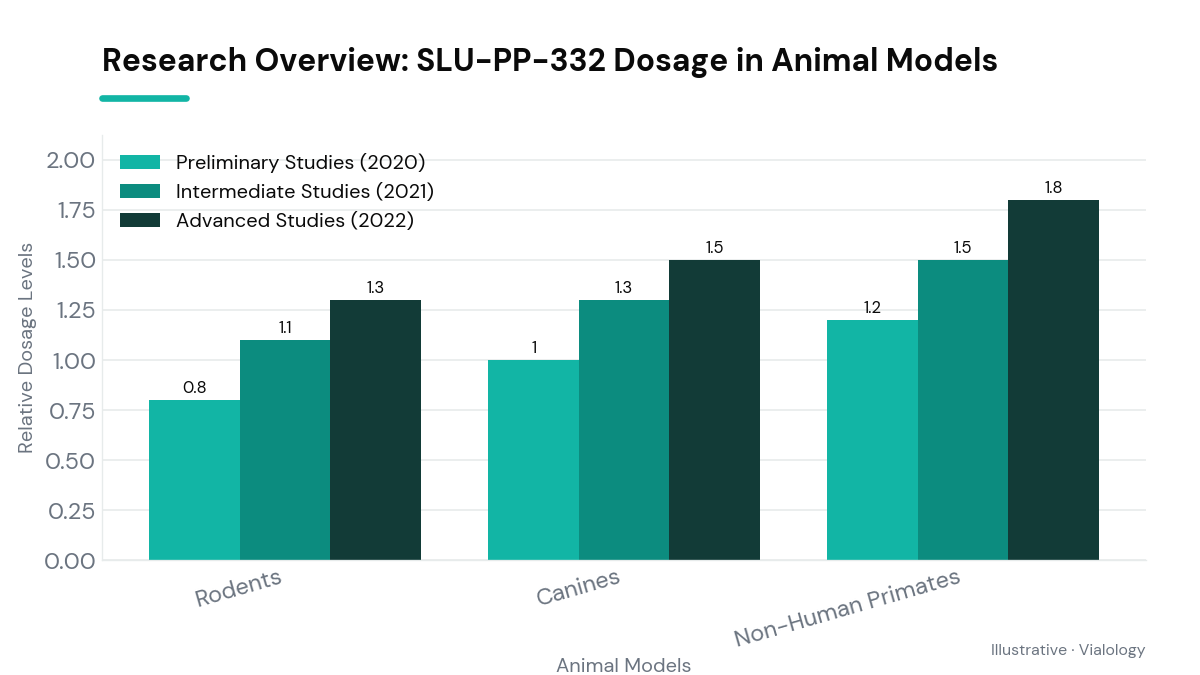
Because SLU-PP-332 is strictly an investigational chemical, there are no human clinical trials to establish a standardized human SLU-PP-332 dosage. Instead, current literature relies exclusively on mouse models of obesity and metabolic syndrome. In these studies, researchers typically administer the compound via intraperitoneal injection or oral gavage to evaluate its bioavailability and systemic effects. The exact quantities utilized are carefully calibrated based on the body weight of the animal subjects, usually expressed in milligrams per kilogram of body weight per day.
For instance, key pre-clinical trials investigating metabolic rate and fat loss have utilized a daily regimen of 25 mg/kg to 50 mg/kg of body weight administered over several weeks. Scientists seeking a reliable dosage reference for their own laboratory design often analyze these specific concentrations to balance efficacy with potential toxicity. These animal-specific protocols help researchers map out how the compound influences lipid metabolism and skeletal muscle gene expression, though converting these metrics to human equivalents requires complex scaling calculations that have not yet been validated in clinical settings.

Key Findings on Efficacy and Safety from Laboratory Trials
In the rodent trials conducted so far, the dosages evaluated have yielded notable physiological transformations. Animals treated with the experimental compound demonstrated improved insulin sensitivity, reduced fat mass accumulation, and enhanced overall energy expenditure without a corresponding decrease in food intake. These findings suggest that the compound directly alters metabolic efficiency rather than suppressing appetite, marking a distinct departure from how traditional weight-management compounds operate.
Despite these promising metabolic markers, researchers emphasize that safety data remains highly preliminary. High-dose administration in animal models has not yet shown severe acute toxicity, but long-term systemic effects on cardiac tissue, hormonal balance, and overall organ function are still virtually unknown. Because ERRs are expressed widely throughout the body—including the heart and kidneys—understanding the precise therapeutic window is critical before any human evaluation can safely begin.
The Gap Between Rodent Protocols and Human Application
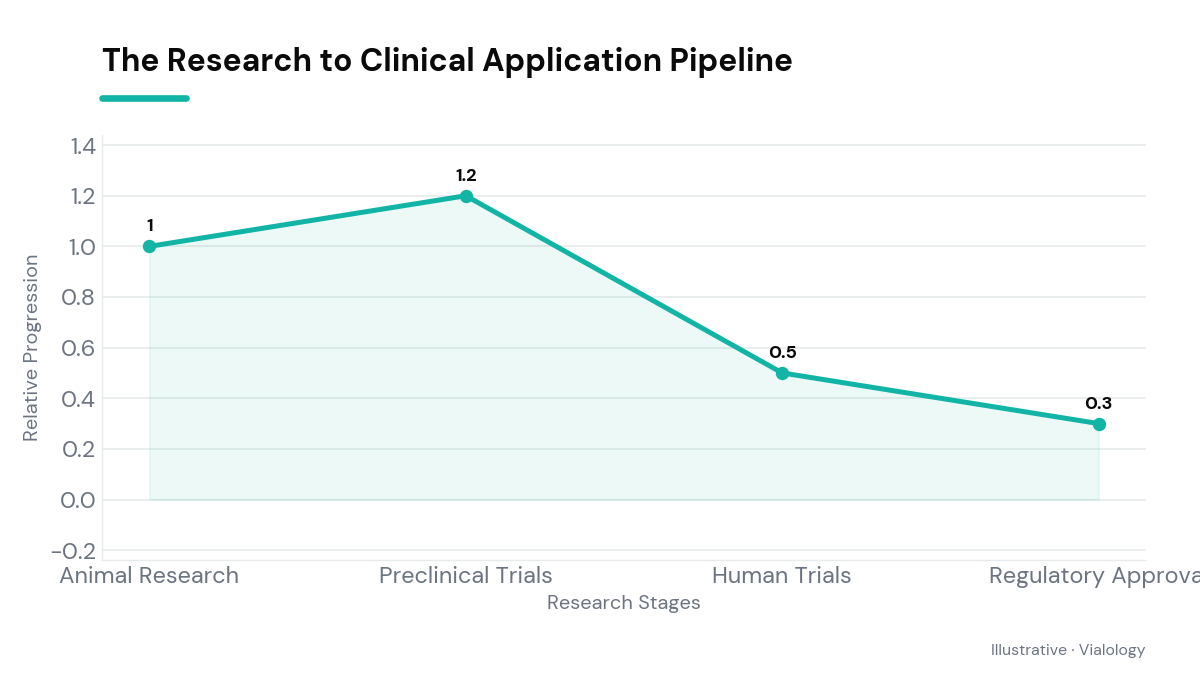
The transition from rodent-based laboratory protocols to human application represents a monumental hurdle in pharmacology. A common pitfall in interpreting peptide and small-molecule research is the direct translation of animal milligrams-per-kilogram doses to human subjects. Due to differences in metabolic rate, body surface area, and pharmacokinetics, a simple direct conversion is inaccurate and potentially hazardous. Scientists must utilize Allometric Scaling formulas to estimate a human equivalent dose, a process that is purely theoretical until phase I clinical trials are initiated.
Currently, no regulatory body, including the FDA, has approved SLU-PP-332 for human consumption, and it remains classified strictly as a research chemical. Consequently, there are no legitimate guidelines regarding how a human might tolerate the compound, what side effects might arise, or what a safe therapeutic range would look like. Until formal clinical trials are authorized and conducted, the parameters surrounding its administration will remain confined to theoretical modeling and controlled laboratory environments.
Related on Vialology
Frequently asked questions
What is the standard human dosage for SLU-PP-332?
There is no standard human dosage for SLU-PP-332 because the compound has not been approved for human use or tested in clinical trials. Current data is restricted entirely to animal models, making any human administration theoretical and unsafe.
How is SLU-PP-332 administered in research studies?
In laboratory settings, researchers typically administer the compound to animal subjects via intraperitoneal injection or oral gavage to study its metabolic effects. These administration methods are designed specifically for controlled animal research environments.
What did the 2023 study show regarding SLU-PP-332?
The 2023 study demonstrated that treating mice with SLU-PP-332 increased skeletal muscle endurance and stimulated mitochondrial function, allowing them to run longer. It also showed promising results in reducing fat accumulation and improving insulin sensitivity in the subjects.
Educational use only. Vialology publishes journalistic and educational content about peptide science. Nothing here is medical advice, diagnosis, or treatment, and nothing should be taken as an endorsement to use any substance. Many peptides discussed are experimental and are not approved by the FDA for human use. Always consult a licensed healthcare professional before making any health decision.