
While clinical investigations into hypothalamic-pituitary-gonadal axis regulation have expanded rapidly, determining a standard kisspeptin-10 dosage remains a highly complex task for researchers studying reproductive endocrinology. As a potent stimulator of gonadotropin-releasing hormone (GnRH), this biologically active peptide fragment is utilized across various experimental models to evaluate luteinizing hormone and follicle-stimulating hormone secretion. Because the compound is not FDA-approved for therapeutic human use, understanding its experimental applications requires a close look at how it is administered in pre-clinical and early clinical trial environments.
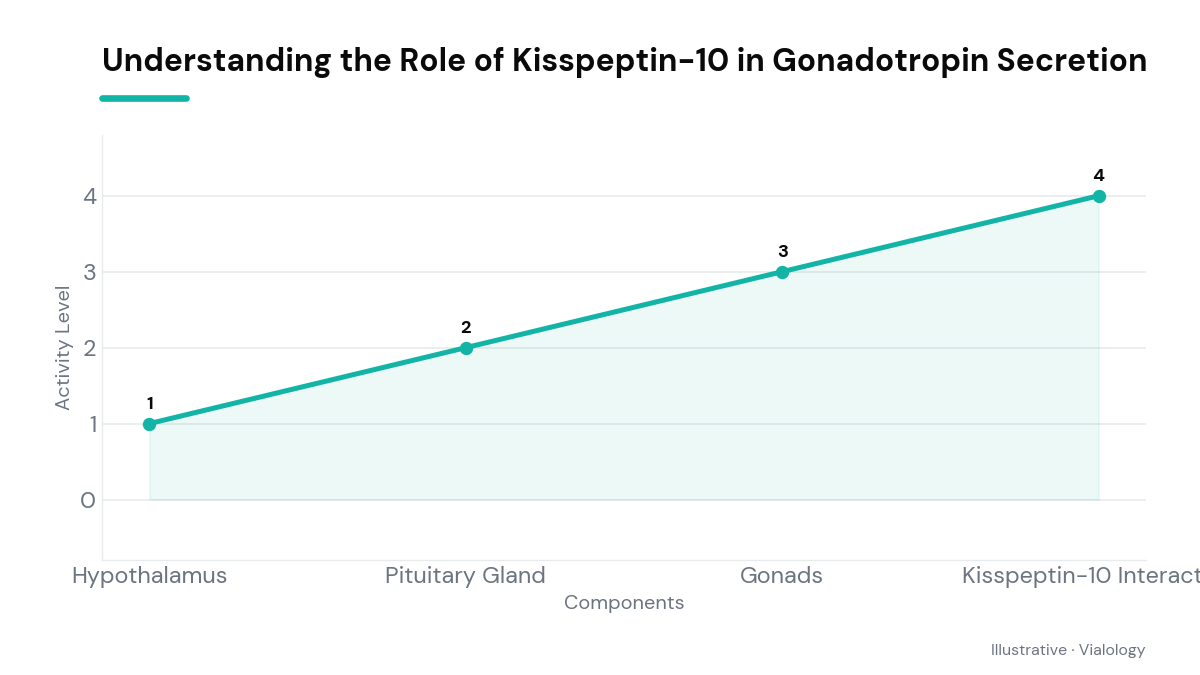
The Biological Role of Kisspeptin-10 in Gonadotropin Secretion
Kisspeptin-10 is the shortest fully functional fragment of the parent kisspeptin-54 peptide, holding a shorter half-life but preserving high biological activity. Within the hypothalamic-pituitary-gonadal (HPG) axis, this peptide acts as an upstream regulator, binding to the KISS1R receptor on gonadotropin-releasing hormone (GnRH) neurons to stimulate downstream hormone release.
In research settings, scientists leverage this rapid receptor activation to observe the pulsatile secretion of luteinizing hormone (LH) and follicle-stimulating hormone (FSH). Investigating these neural pathways helps map out reproductive endocrinology feedback systems, particularly in the study of hypogonadotropic hypogonadism and delayed puberty models.
Kisspeptin-10 Dosage Patterns in Clinical Literature
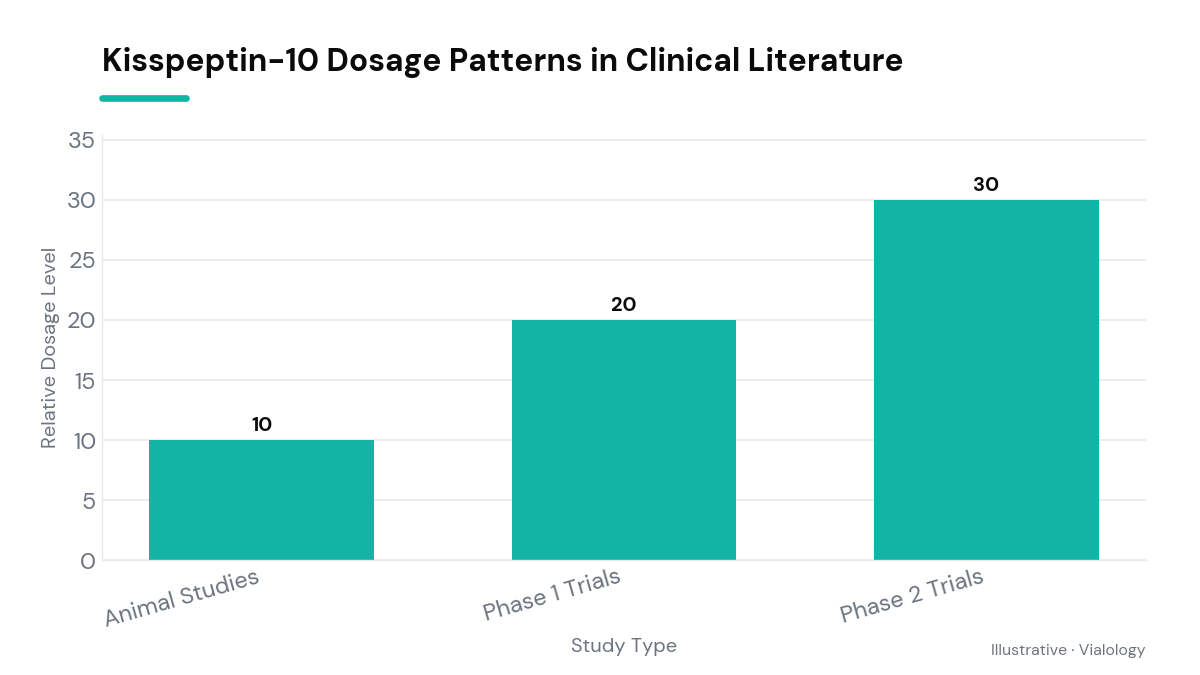
Clinical investigations have primarily explored intravenous (IV) and subcutaneous (SC) administration methods in highly controlled laboratory environments to track LH and testosterone responses. Early trials evaluating male reproductive physiology have utilized intravenous bolus doses ranging from 0.1 to 10 micrograms per kilogram of body weight. To understand the broader therapeutic landscape and access original study data on these protocols, investigators often read the literature to compare how various infusion rates alter endocrine pulsatility.
Because the peptide has an estimated circulating half-life of only four minutes in human plasma, single bolus injections offer only short-lived windows of hormonal stimulation. To achieve more sustained elevations of LH, some clinical protocols have shifted to continuous intravenous infusions, testing rates between 0.3 and 3.6 micrograms per kilogram per hour to model physiological hormone release patterns.
Animal Models and Pre-Clinical Research Insights
Pre-clinical animal models provide a foundational framework for analyzing the molecular kinetics of this peptide. In rodent studies, researchers frequently administer higher relative doses, such as 1 to 50 micrograms per subject, through intraperitoneal or intracerebroventricular injections to directly stimulate hypothalamic pathways and measure rapid hormonal spikes.
These animal trials are instrumental in identifying the biological limitations of continuous stimulation, particularly receptor desensitization. Data indicate that sustained, high-dose administration of kisspeptin-10 can downregulate the KISS1R receptor, resulting in an unexpected cessation of gonadotropin release, highlighting the critical importance of temporal spacing in experimental designs.
Safety, Limitations, and Future Directives
Despite its utility as a powerful probe for the endocrine system, kisspeptin-10 is not approved by the FDA for therapeutic human use, and long-term safety profiles remain unknown. Adverse effects reported in clinical research are generally mild and transient, yet the risk of receptor desensitization limits its immediate clinical utility without modified administration schedules.
Future research efforts are heavily focused on developing stable peptide analogs with longer half-lives and studying pulsatile delivery systems. By mimicking the natural pulse of kisspeptin secretion, researchers aim to harness the therapeutic potential of this pathway without triggering the feedback-inhibitory responses observed with constant exposure.
Related on Vialology
Frequently asked questions
What is kisspeptin-10 used for in scientific research?
Scientists utilize kisspeptin-10 as an experimental tool to study the regulation of reproductive hormones and the hypothalamic-pituitary-gonadal axis.
Is there an established, FDA-approved kisspeptin-10 dosage?
No, kisspeptin-10 is not FDA-approved for human use, meaning there is no standard clinical dosage outside of investigational research protocols.
Why do research protocols often utilize continuous infusions of kisspeptin-10?
Because the peptide has a very short half-life of roughly four minutes, continuous infusions help researchers sustain active hormone signaling longer than single injections.
What is receptor desensitization in kisspeptin-10 studies?
Receptor desensitization occurs when prolonged or high doses of kisspeptin-10 downregulate the KISS1R receptor, temporarily shutting down gonadotropin release.
Educational use only. Vialology publishes journalistic and educational content about peptide science. Nothing here is medical advice, diagnosis, or treatment, and nothing should be taken as an endorsement to use any substance. Many peptides discussed are experimental and are not approved by the FDA for human use. Always consult a licensed healthcare professional before making any health decision.