
In this overview of Metabolic Peptide Capsules Compared: 5-Amino-1MQ, SLU-PP-332, Tesofensine, and Orforglipron, we examine how modern science is targeting metabolic pathways via oral administration. Traditionally restricted to injections, newer formulations and small molecules are shifting the landscape of research into cellular energy and weight management. Researchers are increasingly focusing on these oral candidates to understand how they influence cellular respiration, fat burning, and appetite regulation.
Cellular Energy and the Role of 5-Amino-1MQ
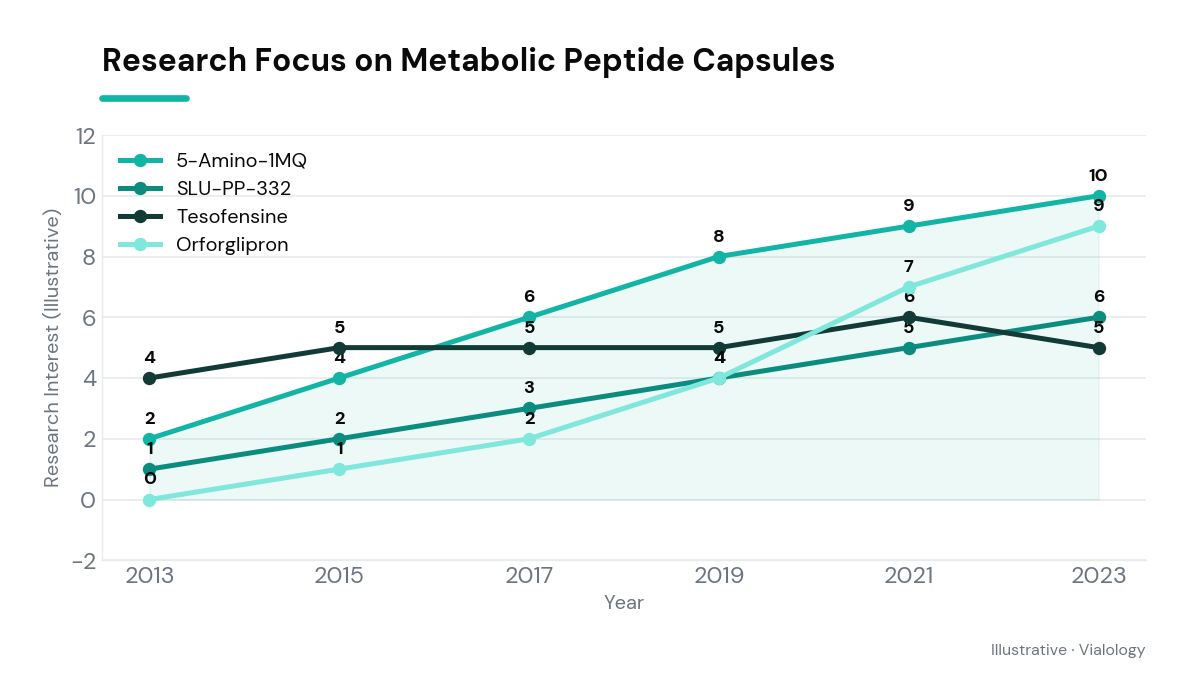
5-Amino-1MQ is a small molecule that inhibits nicotinamide N-methyltransferase (NNMT), an enzyme highly active in fat tissue. When NNMT is blocked, cellular levels of nicotinamide adenine dinucleotide (NAD+) increase, which plays a critical role in energy metabolism and mitochondrial function. In animal models, particularly mice fed a high-fat diet, NNMT inhibition was shown in a 2018 study to prevent adipocyte hypertrophy and reduce body weight without changing food intake. This mechanism has made 5-Amino-1MQ a primary subject of interest for researchers looking into metabolic efficiency at the cellular level.
Unlike traditional peptide injections, 5-Amino-1MQ is often studied in oral forms, making a capsule format comparison highly relevant for scientists comparing delivery methods. By avoiding the need for subcutaneous administration, oral candidates offer a different pharmacokinetic profile, though researchers must still account for oral bioavailability and hepatic first-pass metabolism when evaluating cellular uptake.
Mitochondrial Activators and the Science of SLU-PP-332
SLU-PP-332 is an estrogen-related receptor (ERR) agonist, specifically targeting ERR alpha, beta, and gamma. These receptors are key regulators of mitochondrial biogenesis and oxidative metabolism. By activating these pathways, SLU-PP-332 essentially mimics some of the physiological effects of physical exercise at the cellular level, earning it the informal moniker of an “exercise mimetic” in scientific literature. A 2023 study published in the Journal of Pharmacology and Experimental Therapeutics demonstrated that mice treated with SLU-PP-332 showed increased fatigue resistance and enhanced skeletal muscle mitochondrial function.
The compound works by encouraging cells to burn fatty acids for energy rather than glucose, which can lead to metabolic remodeling. Although still in the pre-clinical phase of development and not approved for human consumption, SLU-PP-332 represents a novel frontier in metabolic research. Scientists are eager to see if future clinical trials can replicate these mitochondrial adaptations in human subjects, particularly through oral dosing protocols.

Central and Peripheral Regulation: Tesofensine vs Orforglipron
Moving beyond purely cellular energy pathways, researchers are comparing centrally acting agents like Tesofensine with peripheral gut hormone mimetics like Orforglipron. Tesofensine is a triple monoamine reuptake inhibitor that prevents the reabsorption of dopamine, serotonin, and noradrenaline in the brain. Originally developed for neurodegenerative disorders, clinical trials observed that Tesofensine significantly suppressed appetite, leading to weight reduction in Phase II studies. By acting on the central nervous system, it alters satiety signals, though researchers remain cautious about potential cardiovascular side effects like elevated heart rate.
In contrast, Orforglipron represents a major shift in the glucagon-like peptide-1 (GLP-1) space. While traditional GLP-1 receptor agonists like semaglutide are large peptides requiring subcutaneous injection, Orforglipron is a non-peptide small molecule designed specifically for oral administration. It targets the GLP-1 receptor to stimulate insulin secretion, slow gastric emptying, and promote satiety. Early Phase II clinical data published in 2023 indicates that Orforglipron offers comparable weight management potential to injectable GLP-1s, making it a pivotal subject in the evolution of oral metabolic therapies.
Metabolic Peptide Capsules Compared: 5-Amino-1MQ and Future Research
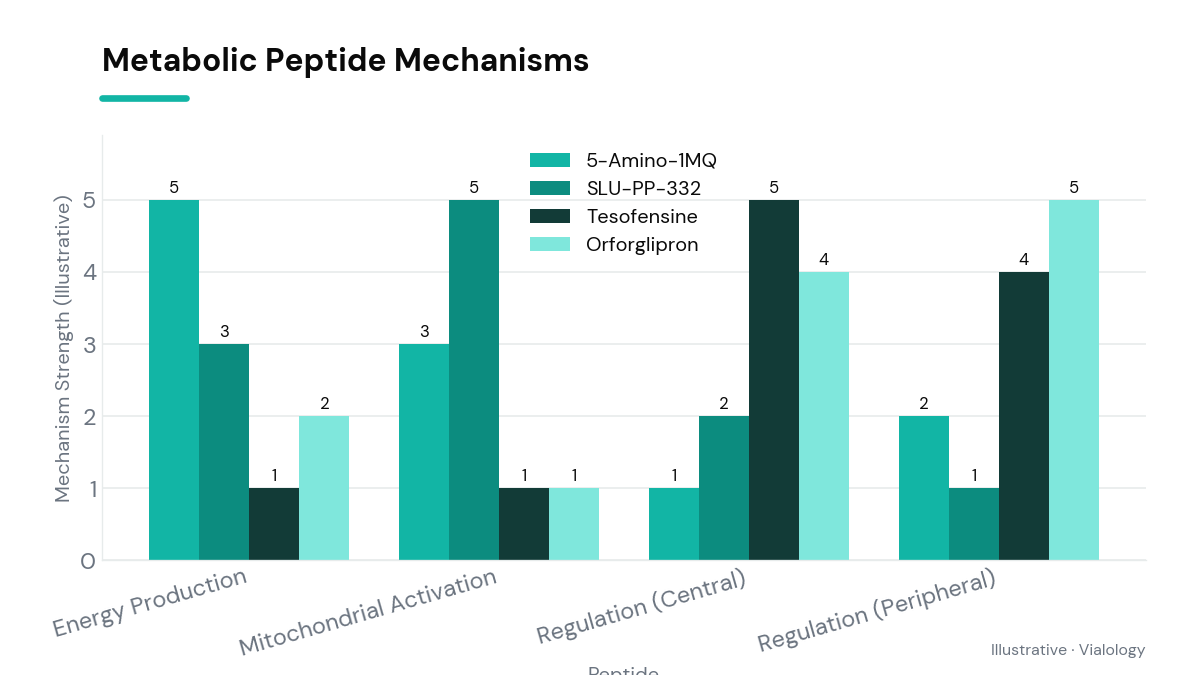
When evaluating Metabolic Peptide Capsules Compared: 5-Amino-1MQ, SLU-PP-332, Tesofensine, and Orforglipron, it becomes clear that each compound utilizes a distinct biological lever. While 5-Amino-1MQ and SLU-PP-332 focus on intracellular mechanisms—specifically NNMT inhibition and mitochondrial biogenesis—Tesofensine and Orforglipron target systemic regulation through neurological pathways and gut hormone receptors. This diversity of action allows researchers to study metabolic dysfunction from multiple angles, from cellular respiration to systemic appetite control.
Despite their potential, none of these compounds should be viewed as quick fixes, and their regulatory statuses vary. Currently, Orforglipron and Tesofensine are undergoing rigorous clinical trials for human use, whereas 5-Amino-1MQ and SLU-PP-332 remain primarily in the category of research chemicals and pre-clinical models. Understanding the precise pharmacokinetic profiles, long-term safety data, and oral bioavailability of these diverse molecules remains the primary focus of ongoing metabolic science.
Related on Vialology
Frequently asked questions
Is 5-Amino-1MQ a peptide?
Technically, 5-Amino-1MQ is a small molecule inhibitor rather than a classic peptide, but it is frequently categorized alongside metabolic peptides in research discussions due to its targeted cellular pathways.
What is the primary difference between Orforglipron and other GLP-1 agonists?
Unlike injectable peptides such as semaglutide, Orforglipron is a small, non-peptide molecule engineered specifically for oral bioavailability, allowing it to target the GLP-1 receptor via a capsule format.
Are these metabolic compounds approved by the FDA?
No, none of these specific compounds are currently FDA-approved for general weight loss or metabolic enhancement, and they remain under active clinical investigation or restricted to laboratory research.
Educational use only. Vialology publishes journalistic and educational content about peptide science. Nothing here is medical advice, diagnosis, or treatment, and nothing should be taken as an endorsement to use any substance. Many peptides discussed are experimental and are not approved by the FDA for human use. Always consult a licensed healthcare professional before making any health decision.