

Research into the bam15 peptide has intensified as scientists seek novel ways to regulate cellular metabolism and combat obesity-related metabolic disorders. As a selective small-molecule mitochondrial uncoupler, this compound is distinguishing itself from historical, highly toxic weight-loss agents by targeting mitochondria without disrupting vital cell membrane potential. Researchers are exploring its unique mechanism to understand how it safely increases energy expenditure in animal models.
What is the BAM15 Peptide and How Does It Work?
BAM15 (N5,N6-bis(2-fluorophenyl)[1,2,5]oxadiazolo[3,4-b]pyrazine-5,6-diamine) is a mitochondrial protonophore uncoupler. Unlike older-generation uncouplers like 2,4-dinitrophenol (DNP), which often caused severe systemic toxicity and hyperthermia, BAM15 operates with a high degree of selectivity. It works by transporting protons across the inner mitochondrial membrane, bypassing the ATP synthase enzyme. This process, known as mitochondrial uncoupling, dissipates the proton gradient as heat, forcing the cell to burn more substrates—namely lipids and glucose—to maintain energy production.
What makes the BAM15 peptide analogue so intriguing to the scientific community is its wide therapeutic window. In vitro studies demonstrate that BAM15 does not depolarize the plasma membrane, a critical flaw of earlier compounds that led to cell death. By maintaining the electrical potential of the cell’s outer membrane, BAM15 minimizes systemic toxicity while still driving robust metabolic activity in targeted tissues.
Metabolic Effects and Weight Management in Preclinical Studies
In animal models, BAM15 has demonstrated remarkable efficacy in reducing body fat without affecting lean muscle mass or depressing appetite. A seminal 2020 study showed that mice treated with BAM15 were resistant to diet-induced obesity and exhibited improved insulin sensitivity. The compound essentially coaxes the body into a state of high caloric expenditure, burning off excess energy as heat even in the presence of a high-fat diet.
Furthermore, this metabolic shift appears to occur without raising core body temperature to dangerous levels, a common side effect of non-selective uncouplers. By shifting the focus of mitochondrial uncoupler research toward safety and tissue specificity, BAM15 has opened new avenues for studying the treatment of non-alcoholic fatty liver disease (NAFLD) and type 2 diabetes.

Cardiovascular and Longevity Implications of the BAM15 Peptide
Beyond weight loss, researchers are investigating the broader systemic benefits of the BAM15 peptide on cellular health and longevity. Mitochondrial dysfunction is a hallmark of aging, and mild mitochondrial uncoupling is hypothesized to act as a form of cellular hormesis. By inducing a low level of mitochondrial stress, BAM15 may trigger beneficial cellular adaptation mechanisms, such as mitochondrial biogenesis and the clearance of damaged cellular components through mitophagy.
Early rodent trials also suggest that BAM15 may offer cardioprotective benefits, potentially reducing the severity of ischemic reperfusion injuries. While these findings are highly promising, it is crucial to emphasize that all current evidence is restricted to cell cultures and animal models. BAM15 is not approved by the FDA for human use, and clinical trials are required to determine its safety profile in humans.
Current Status of BAM15 Research
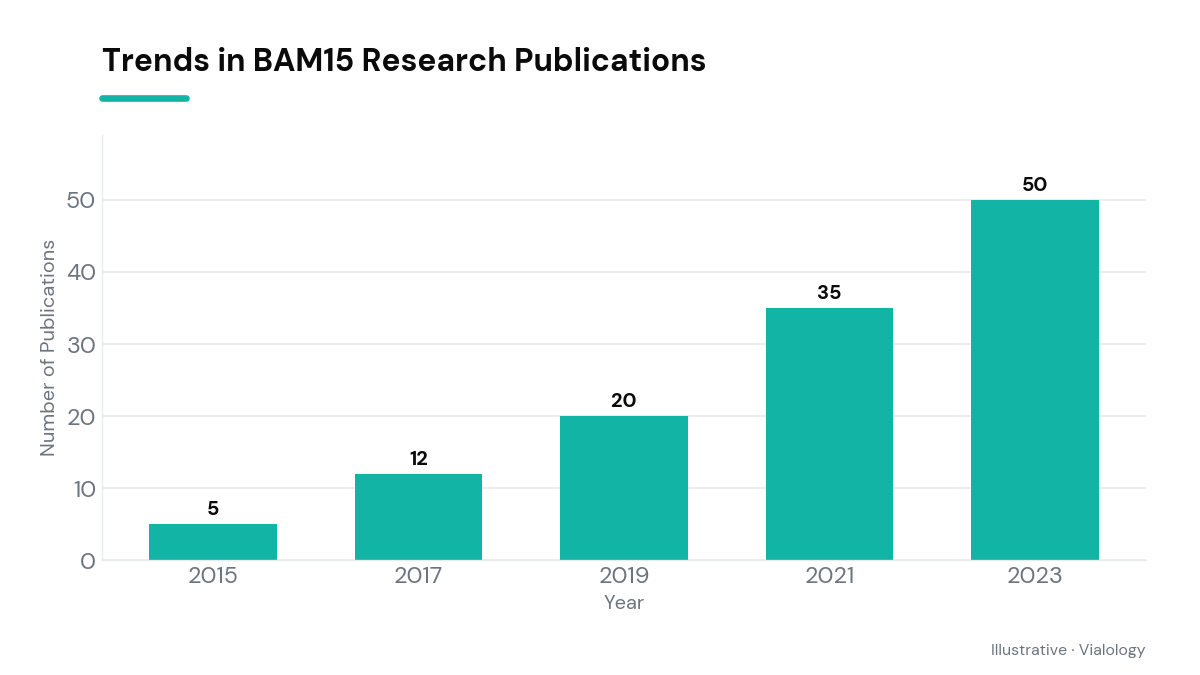
As of today, BAM15 remains strictly a research chemical. Scientists are utilizing it as a pharmacological tool to map out the intricate pathways of energy homeostasis and cellular respiration. The primary focus of current studies is to optimize its bioavailability and evaluate any long-term toxicological profiles in non-rodent species before human trials can be considered.
Related on Vialology
Frequently asked questions
Is the BAM15 peptide safe for human consumption?
No, BAM15 is currently an unapproved research chemical that has only been studied in vitro and in animal models; its safety, side effects, and long-term toxicity in humans have not yet been established.
How does BAM15 differ from DNP?
Unlike DNP, which is highly toxic because it depolarizes both mitochondrial and plasma membranes, BAM15 selectively targets the inner mitochondrial membrane, preventing the dangerous cell death and hyperthermia associated with older uncouplers.
Can BAM15 be used to treat obesity?
While preclinical animal research shows that BAM15 can reduce body fat and improve insulin sensitivity, it is not approved to treat, cure, or prevent obesity or any other medical condition in humans.
Educational use only. Vialology publishes journalistic and educational content about peptide science. Nothing here is medical advice, diagnosis, or treatment, and nothing should be taken as an endorsement to use any substance. Many peptides discussed are experimental and are not approved by the FDA for human use. Always consult a licensed healthcare professional before making any health decision.