
When studying novel cognitive enhancers, understanding how active compounds enter the bloodstream is critical, which is why Dihexa Capsules: Oral Bioavailability Considerations for Nootropic Research remains a key focus among neuroscientists. Originally developed at Washington State University, Dihexa is a synthetic peptide derivative designed to exhibit high stability and blood-brain barrier penetration. Researchers continue to investigate this molecule’s unique properties to determine how oral administration impacts its potential cognitive benefits.
What is Dihexa and How Does It Work?
Dihexa, also known by its developmental code name N-hexanoic-Tyr-Ile-(6) aminohexanoic amide, is a small peptide-derived molecule designed to mimic the activity of hepatocyte growth factor (HGF). HGF is a crucial protein that binds to the c-Met receptor, triggering cellular pathways involved in cell survival, tissue regeneration, and synaptic plasticity. In laboratory models, Dihexa has been shown to facilitate dendritic spinogenesis—the creation of new connections between brain cells—at concentrations significantly lower than naturally occurring growth factors.
Unlike larger trophic factors that require direct infusion into the brain due to their inability to cross the blood-brain barrier, Dihexa is a small lipophilic molecule. This molecular structure allows it to bypass restrictive physiological barriers more readily, making it an attractive subject for researchers investigating potential therapies for neurodegenerative conditions. However, despite these promising structural traits, its translation into practical research applications depends heavily on how the compound is processed by the digestive system.
Dihexa Capsules: Oral Bioavailability Considerations for Nootropic Research
When evaluating Dihexa capsules, oral bioavailability considerations represent a primary challenge for investigators seeking to replicate laboratory success. Bioavailability refers to the fraction of an administered dose that reaches systemic circulation in an unchanged form. Traditional peptides are notorious for poor oral bioavailability because the gastrointestinal tract is highly efficient at breaking down peptide bonds into individual amino acids before they can be absorbed.
Fortunately, Dihexa’s specific chemical modification renders it far more resistant to enzymatic degradation than standard peptides. A 2012 study published in the Journal of Pharmacology and Experimental Therapeutics indicated that Dihexa is remarkably stable against metabolic clearance. This stability suggests that Dihexa may survive the first-pass metabolism of the liver, allowing a measurable concentration to reach the brain. Nonetheless, further study is needed to map the exact pharmacokinetic profile of oral capsules compared to other delivery methods.
Comparing Oral Administration and Other Research Routes
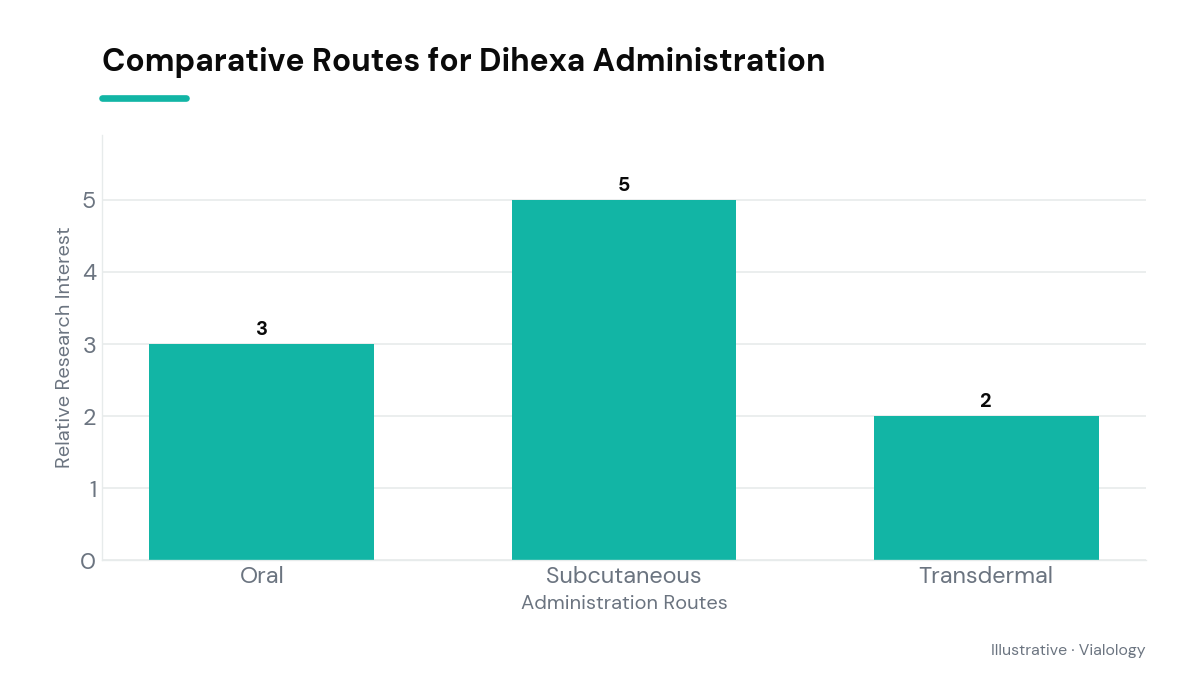
In academic literature, Dihexa has been administered via multiple routes, including intravenous, intraperitoneal, and transdermal pathways. While injectable routes typically yield one hundred percent bioavailability, they present logistical challenges for long-term longitudinal studies in animal models. Consequently, researchers often look to oral formulations to simplify study protocols, though this requires a deeper understanding of the compound’s absorption kinetics.
While early rodent models demonstrated that oral administration of Dihexa could influence cognitive biomarkers, human data remains extremely limited. Scientists investigating these dynamics must carefully weigh the convenience of oral options against potential variations in absorption rates among different subjects. Investigating these oral bioavailability considerations is essential for determining whether oral capsules can reliably deliver consistent therapeutic concentrations to target tissues in the brain.
The Current State of Dihexa Scientific Research
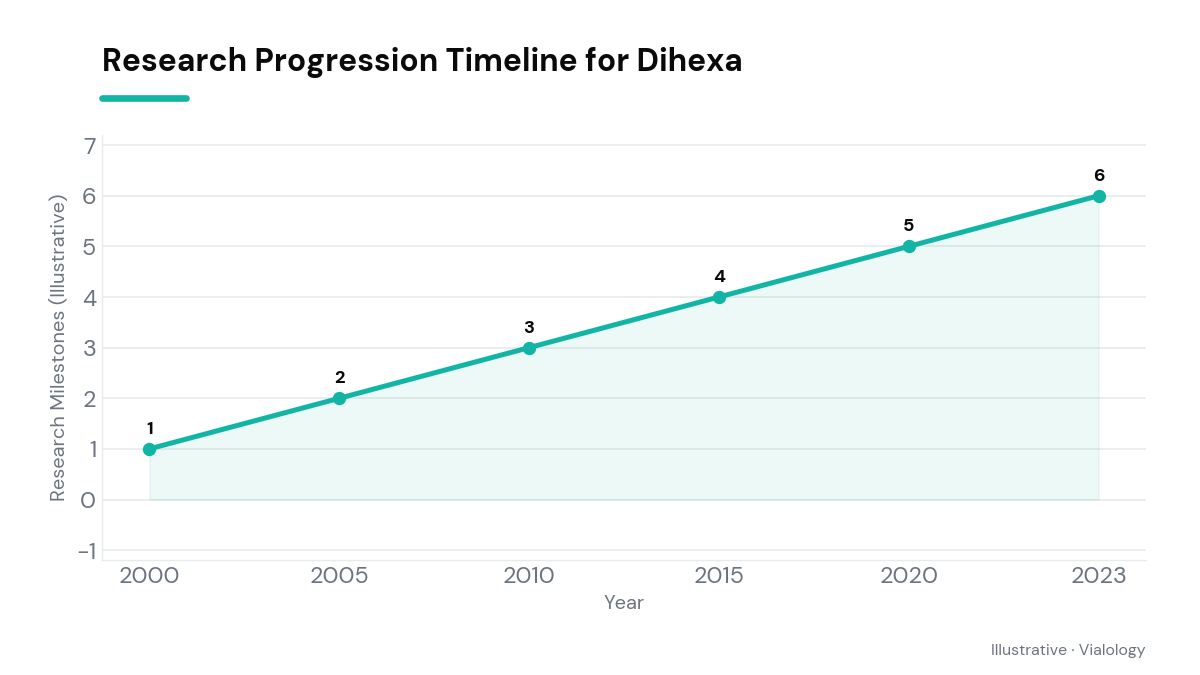
To date, Dihexa remains an investigational compound and is not approved by the FDA for human use, treatment, or prevention of any disease. Most of the available data comes from preclinical animal models, where it demonstrated potential to improve spatial memory and learning capabilities. Because human trials are virtually non-existent, the scientific community treats claims regarding its safety, long-term efficacy, and potential side effects with rigorous skepticism.
Future research will likely focus on clinical trials that can definitively map Dihexa’s pharmacokinetics in humans. Until such peer-reviewed data is published, the molecule remains strictly a tool for laboratory research, helping scientists better understand the mechanisms of synaptic plasticity and the potential of HGF-mimicking compounds in modern neurology.
Related on Vialology
Frequently asked questions
Is Dihexa approved for human consumption?
No, Dihexa is an investigational compound and is not approved by the Food and Drug Administration (FDA) for human use or therapeutic treatment.
Why is oral bioavailability a challenge for peptide research?
Peptides are generally broken down by digestive enzymes in the stomach and liver, which often prevents them from entering the bloodstream intact.
How does Dihexa cross the blood-brain barrier?
Dihexa is a small, lipophilic molecule, which structurally allows it to cross the blood-brain barrier more easily than larger proteins or traditional peptides.
Educational use only. Vialology publishes journalistic and educational content about peptide science. Nothing here is medical advice, diagnosis, or treatment, and nothing should be taken as an endorsement to use any substance. Many peptides discussed are experimental and are not approved by the FDA for human use. Always consult a licensed healthcare professional before making any health decision.