
In the rapidly expanding world of scientific research, understanding the technical specifications of research chemicals is critical, which is why we present Peptide Purity Percentages Explained: What 98% vs 99.9% Actually Means. While these numbers might seem like minor distinctions on a certificate of analysis, the difference between ninety-eight percent and ninety-nine point nine percent purity represents a massive variance in the presence of synthesis byproducts. For researchers analyzing peptide-receptor interactions, this margin can be the deciding factor between a clean, reproducible study and an anomalous experimental result.
How Peptides are Synthesized and Why Impurities Exist
Solid-phase peptide synthesis (SPPS), first pioneered by Robert Bruce Merrifield in 1963, remains the gold standard for creating custom amino acid chains. During this iterative chemical process, amino acids are added one by one to a growing chain anchored to a solid resin support. Despite the highly controlled environment of modern laboratories, each coupling step is not one hundred percent efficient; tiny fractions of incomplete reactions, truncated sequences, and optical isomers inevitably accumulate. These imperfect sequences, along with residual solvents like acetonitrile or trifluoroacetic acid (TFA), make up the remaining percentage of any raw peptide batch before the rigorous purification phase begins.
High-performance liquid chromatography (HPLC) is then utilized to separate the target peptide from these unwanted synthesis fragments. However, achieving absolute, hundred-percent purity is practically impossible due to thermodynamic limits and the chemical similarities between the desired peptide and its closely related truncated variants. Consequently, manufacturers categorize their final yields by purity tiers, leaving researchers to interpret what these percentages signify for their specific laboratory protocols.
Peptide Purity Percentages Explained: What 98% vs 99.9% Actually Means in the Lab
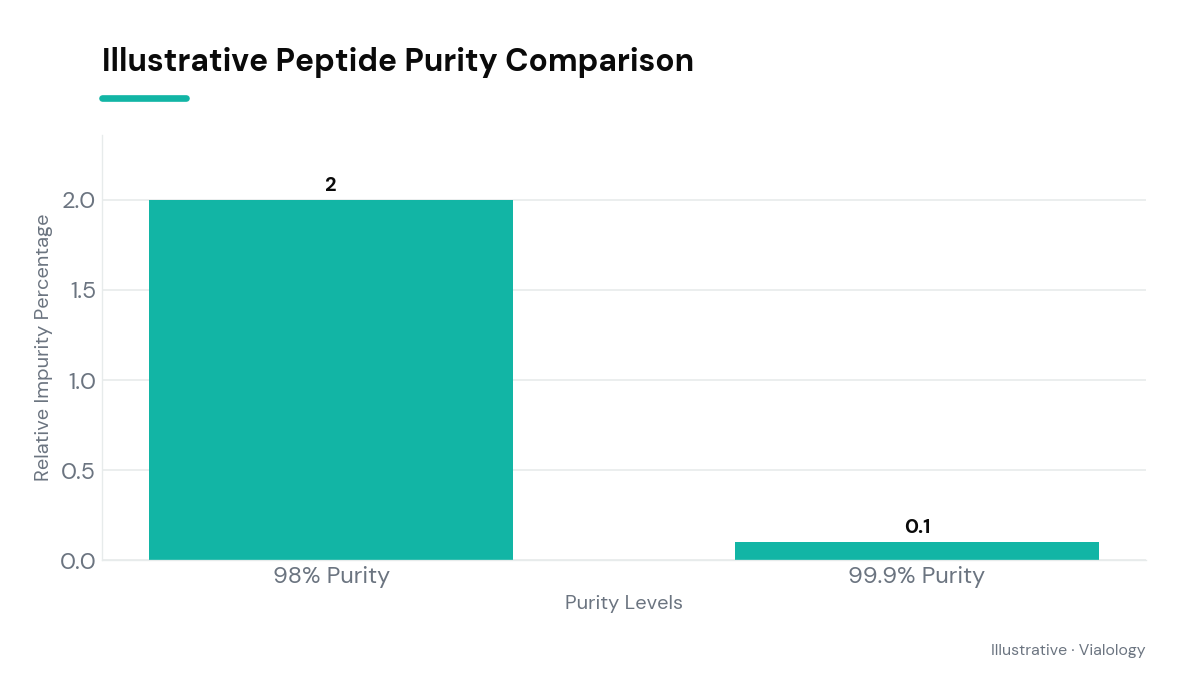
On paper, the mathematical difference between 98% and 99.9% is a mere 1.9 percent, but in the context of molecular biology and analytical chemistry, this margin is significant. A vial containing a 98% pure peptide means that up to two percent of the total mass consists of unidentified peptide fragments, salts, or residual moisture. While a 98% purity standard is often considered acceptable for basic in vitro screening or preliminary assays, more sensitive applications demand the ultra-high precision of a 99.9% pure compound.
To put this into perspective, when dealing with highly potent signaling molecules that operate at nanomolar or picomolar concentrations, even a fraction of a percent of a contaminant can interfere with cellular receptor binding. These minor impurities can trigger unexpected immunological responses in animal models, leading to skewed data that misrepresents the actual therapeutic potential of the compound under investigation. Therefore, having peptide purity percentages explained clearly helps researchers select the exact grade of compound required to ensure their experimental trials remain valid and untainted by extraneous chemical signals.
High-Performance Liquid Chromatography and Mass Spectrometry
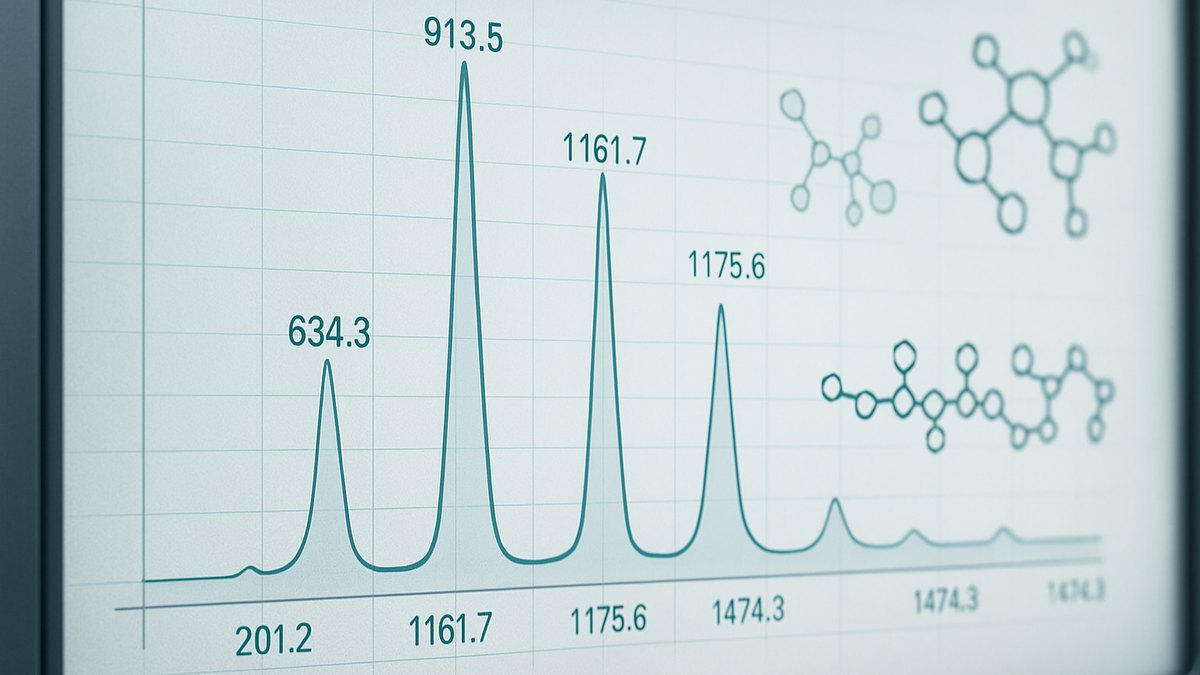
To verify that a peptide meets the rigorous standards of 98% or 99.9% purity, laboratories rely on two primary analytical techniques: HPLC and Mass Spectrometry (MS). HPLC measures the compound’s chemical purity by passing the sample through a chromatographic column under high pressure, separating the target peptide from impurities based on their physical properties. This process generates a chromatogram with a primary peak representing the target peptide, surrounded by smaller peaks that denote the impurities. The area under these peaks is calculated to determine the final purity percentage.
Mass spectrometry acts as the secondary verification phase, confirming the molecular weight of the compound to ensure that the primary peak identified by HPLC is indeed the target peptide and not a structurally similar isomer. Together, these analytical reports, often referred to as Certificates of Analysis (CoA), provide the empirical proof that a batch conforms to its labeled specifications. Without this rigorous dual-testing methodology, purity claims are merely theoretical, making verified HPLC-MS documentation indispensable for modern scientific investigations.
The Experimental Consequences of Sub-Standard Purity
In preclinical research, the integrity of the data hinges on isolating variables, meaning any chemical noise can jeopardize an entire study. If a researcher utilizes a peptide batch containing unexpected diastereomers or deletion sequences, any observed biological effect—whether beneficial or toxic—cannot be confidently attributed to the primary peptide. Over the years, numerous pilot studies have suffered from reproducibility crises simply because the raw materials utilized did not match the high-purity standards claimed by unverified suppliers.
Furthermore, residual reagents like trifluoroacetic acid (TFA), which is commonly used to cleave synthetic peptides from their solid resin supports, can exhibit inherent cytotoxicity in cell cultures even at low levels. Opting for ultra-pure peptides (99% and above) that have undergone meticulous counter-ion exchange to remove TFA is crucial for avoiding false-positive toxicity results. Ultimately, prioritizing high-purity compounds ensures that laboratory findings contribute constructively to the broader scientific consensus, paving the way for eventual clinical-phase evaluations.
Related on Vialology
Frequently asked questions
Why is 100% purity impossible to achieve in synthetic peptides?
Thermodynamically, minor synthesis errors, residual moisture, and trace counter-ions cannot be entirely eliminated, making a true 100% purity level chemically unachievable even with advanced chromatography.
What is a Certificate of Analysis (CoA)?
A CoA is an official laboratory document detailing the analytical test results, such as HPLC and mass spectrometry data, verifying the identity and purity of a specific peptide batch.
Are the impurities in a 98% pure peptide toxic?
Not necessarily, as most impurities are simply shorter, incomplete sequences of the same amino acids, but they can still interfere with research results by causing off-target biological activity.
What is the difference between peptide purity and peptide content?
Peptide purity refers to the percentage of the target peptide relative to other peptide impurities, while peptide content measures the actual weight percentage of peptide in the powder versus non-peptide substances like water and salts.
Educational use only. Vialology publishes journalistic and educational content about peptide science. Nothing here is medical advice, diagnosis, or treatment, and nothing should be taken as an endorsement to use any substance. Many peptides discussed are experimental and are not approved by the FDA for human use. Always consult a licensed healthcare professional before making any health decision.