
Navigating the science of cognitive enhancement often leads researchers to Dihexa, a novel peptide-mimetic compound where finding a standardized dihexa dosage remains a complex task confined to preclinical literature. Developed at Washington State University, this angiotensin IV analog has drawn scientific curiosity for its potential to facilitate synaptogenesis and mimic the activity of hepatocyte growth factor. Because Dihexa is not approved by the FDA for human use, current understanding of its pharmacokinetics and administration levels is derived entirely from animal models and in vitro experiments.
Understanding Dihexa and Its Cellular Mechanisms
Dihexa (also known as N-hexanoic-Tyr-Ile-(6) aminohexanoic amide) is a small, blood-brain barrier-permeable molecule designed to treat cognitive impairment. In laboratory models of neurodegenerative conditions, it functions by binding to and activating the hepatocyte growth factor (HGF) receptor, c-Met. This pathway is critical for cellular survival, tissue regeneration, and the formation of new synaptic connections between neurons. Researchers hypothesize that by enhancing HGF/c-Met signaling, the compound could potentially offset the synaptic loss associated with conditions like Alzheimer’s disease.
Unlike traditional peptide therapeutics that suffer from rapid enzymatic degradation, Dihexa was structurally modified to enhance its stability and bioavailability. It exhibits an unusually long half-life in animal models, allowing it to remain active in the system far longer than endogenous angiotensin IV. However, because these mechanisms have primarily been observed in cell cultures and rodent studies, translation to human clinical contexts remains speculative and highly complex.
Reconstructing the Preclinical Dihexa Dosage Landscape
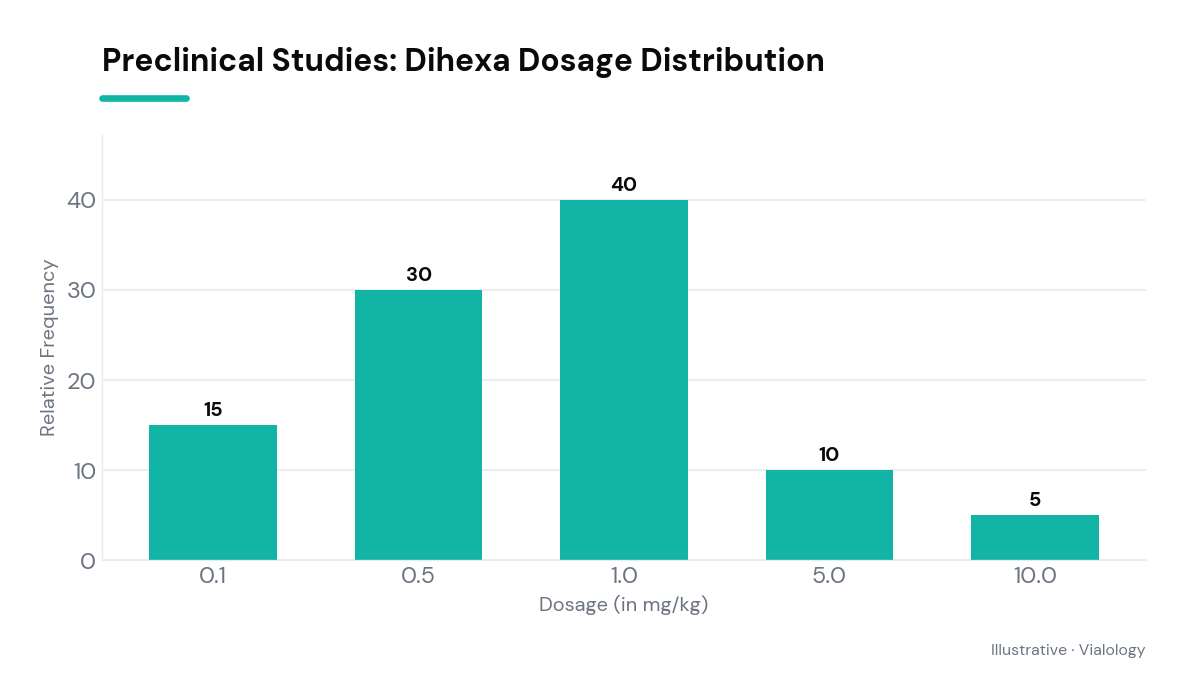
In establishing a baseline for scientific inquiry, researchers look to the foundational animal trials to understand how administration amounts correlate with cognitive changes. In key animal models, particularly those involving scopolamine-induced amnesia in rats, researchers evaluated several delivery methods to determine the compound’s potency. The primary dihexa dosage reference in these early papers utilized oral and intraperitoneal administration routes, demonstrating that even low doses could cross the blood-brain barrier effectively to stimulate dendritic spine growth.
Specifically, published studies from the early 2010s demonstrated that oral administration of Dihexa in rodent models at doses ranging from 1.25 mg/kg to 2.5 mg/kg daily successfully reversed cognitive deficits. When administered intraperitoneally, lower amounts—frequently around 0.25 mg/kg—were sufficient to achieve similar neuroprotective and regenerative outcomes. These preclinical doses are often cited in literature to illustrate the molecule’s high potency relative to standard neurotrophic factors like BDNF, which typically require direct brain infusion to bypass the blood-brain barrier.
Bioavailability and Administration Routes in Lab Models
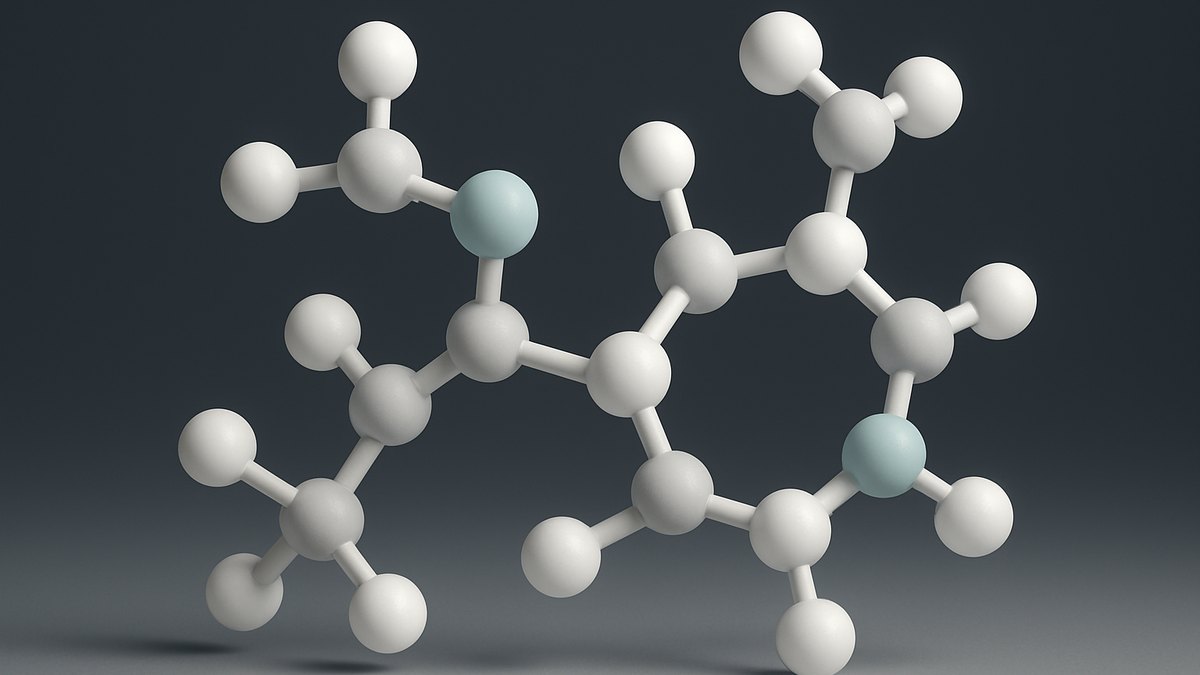
One of the most intriguing aspects of Dihexa’s preclinical profile is its high oral bioavailability compared to other peptide-based compounds. Traditional peptides are rapidly broken down in the gastrointestinal tract, necessitating subcutaneous or intravenous injection. Preclinical data indicates that Dihexa’s unique amide structure allows it to survive digestive enzymes, meaning oral delivery in rodent studies yielded therapeutic concentrations in the brain.
Despite these promising animal findings, translating these preclinical values directly to human equivalents involves complex mathematical scaling. The human equivalent dose (HED) calculated from rodent studies must account for differences in body surface area, metabolic rate, and clearance times. Because no large-scale, peer-reviewed human clinical trials have established a safe or effective dose for humans, any attempts to extrapolate these rodent parameters represent theoretical academic exercises rather than validated protocols.
The Future of Dihexa Research and Safety Profiles
While preclinical investigations highlight the impressive potency of the compound, the long-term safety profile of Dihexa remains largely uncharacterized. The HGF/c-Met pathway, while crucial for neuroregeneration, is also implicated in cellular proliferation and oncogenesis if overactivated. Consequently, researchers must carefully weigh the cognitive benefits observed in short-term animal trials against the potential risks of sustained, long-term stimulation of this pathway.
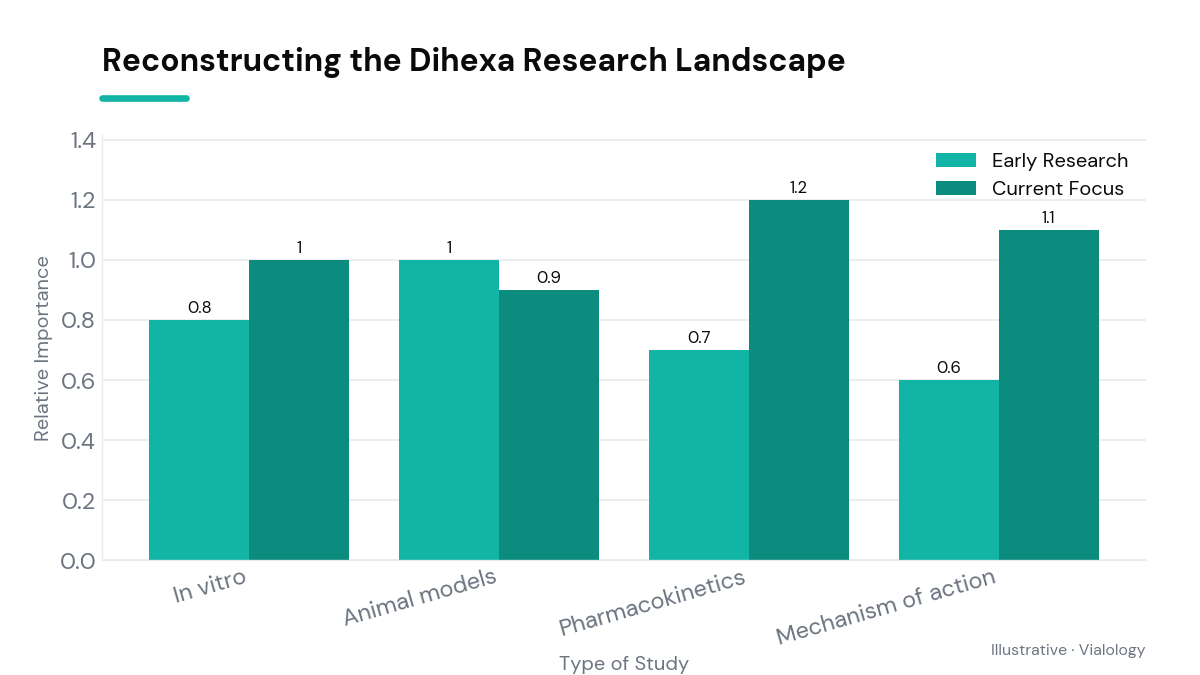
Future academic research will likely focus on establishing rigorous toxicology profiles and determining whether the synaptogenic effects seen in rodents can be safely replicated in human subjects. Until double-blind, placebo-controlled clinical trials are conducted, Dihexa remains strictly a research chemical, serving as an important tool for understanding neuroplasticity but not as an approved therapeutic agent.
Related on Vialology
Frequently asked questions
Is Dihexa approved for human use by the FDA?
No, Dihexa is not approved by the Food and Drug Administration (FDA) for human use and remains classified as an investigational research chemical.
What animal model dosage was used in initial studies?
In preclinical rodent models, researchers commonly utilized oral dosages between 1.25 mg/kg and 2.5 mg/kg, or intraperitoneal doses of approximately 0.25 mg/kg, to study cognitive recovery.
How does Dihexa bypass the blood-brain barrier?
Dihexa is a small-molecule peptide-mimetic designed with high lipophilicity, allowing it to easily penetrate the blood-brain barrier after oral or systemic administration in laboratory animals.
Educational use only. Vialology publishes journalistic and educational content about peptide science. Nothing here is medical advice, diagnosis, or treatment, and nothing should be taken as an endorsement to use any substance. Many peptides discussed are experimental and are not approved by the FDA for human use. Always consult a licensed healthcare professional before making any health decision.