
When exploring the rapidly growing world of biochemical literature, understanding Peptide CAS Numbers Explained: Why They Matter for Research Verification is essential for identifying compounds with absolute precision. These unique numerical identifiers serve as the universal language of chemistry, cutting through confusing commercial names and complex molecular structures. By learning to decode these registries, researchers can ensure they are analyzing the exact molecules intended for their studies.
What is a CAS Registry Number in Peptide Science?
A CAS Registry Number (often referred simply as a CAS RN) is a unique, unmistakable numerical identifier assigned by the Chemical Abstracts Service, a division of the American Chemical Society. Every time a new substance is discovered, synthesized, or described in scientific literature, it is cataloged in this master database. For peptides—which are chains of amino acids that can vary by just a single atom or bond—having a universally recognized registration code prevents dangerous misidentification. Unlike proprietary brand names or complex IUPAC chemical names, a CAS number is a simple string of numbers separated by hyphens that refers to one, and only one, specific chemical structure.
This system is crucial because the peptide landscape is highly susceptible to nomenclature confusion. A single peptide might be referred to by a research code, a generic pharmaceutical name, or various proprietary brand names. By referencing the standardized CAS registry, researchers can bypass marketing jargon and confirm the precise molecular profile of the substance under investigation, ensuring consistency across laboratory experiments and literature reviews.
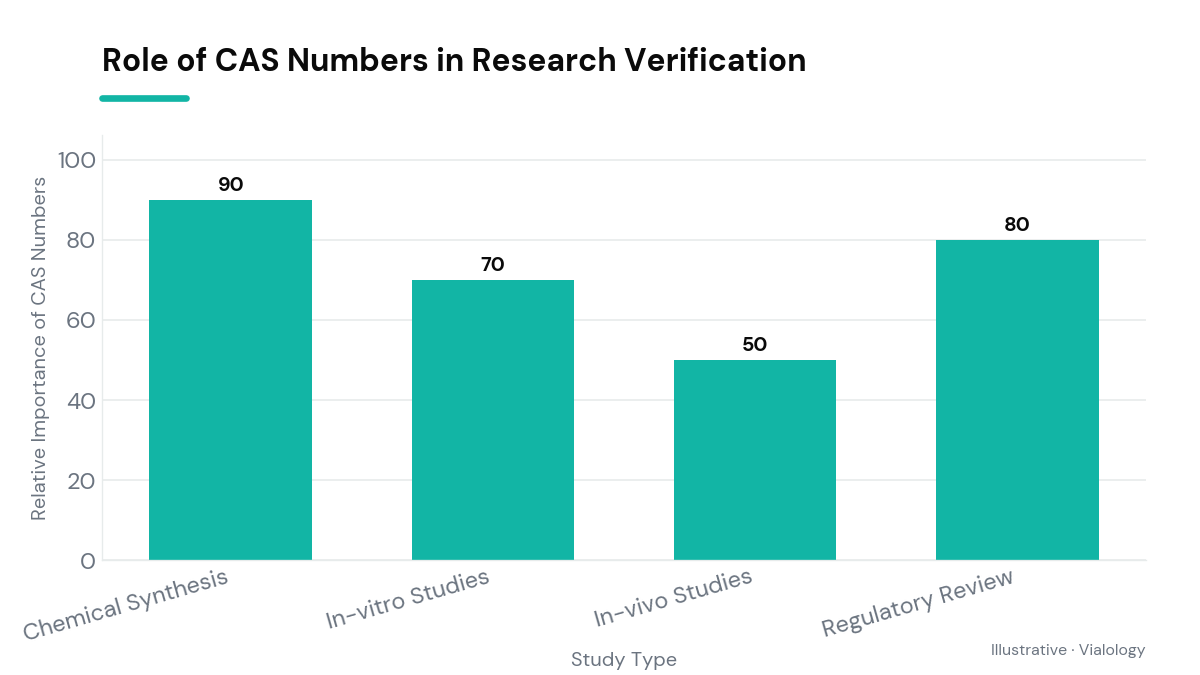
The Role of CAS Numbers in Verifying Research Authenticity
In laboratory settings, research verification is the cornerstone of scientific integrity. When scientists publish findings on a particular compound, replicating those results requires using the exact same molecule. If an investigator purchases a peptide from a supplier based solely on a commercial name, they risk acquiring an analog, a salt variant, or an entirely different formulation. Utilizing CAS numbers allows laboratories to cross-reference their materials with official databases to verify that the active ingredient matches the published literature.
Furthermore, many third-party analytical laboratories use these registry numbers during testing procedures, such as High-Performance Liquid Chromatography (HPLC) and Mass Spectrometry (MS). When a certificate of analysis (COA) is generated, linking the analytical data directly to a verified CAS number provides an essential layer of traceability. For those seeking to deepen their understanding of how chemical databases categorize these compounds, this guide offers valuable context on navigating biochemical registries and ensuring chemical purity.
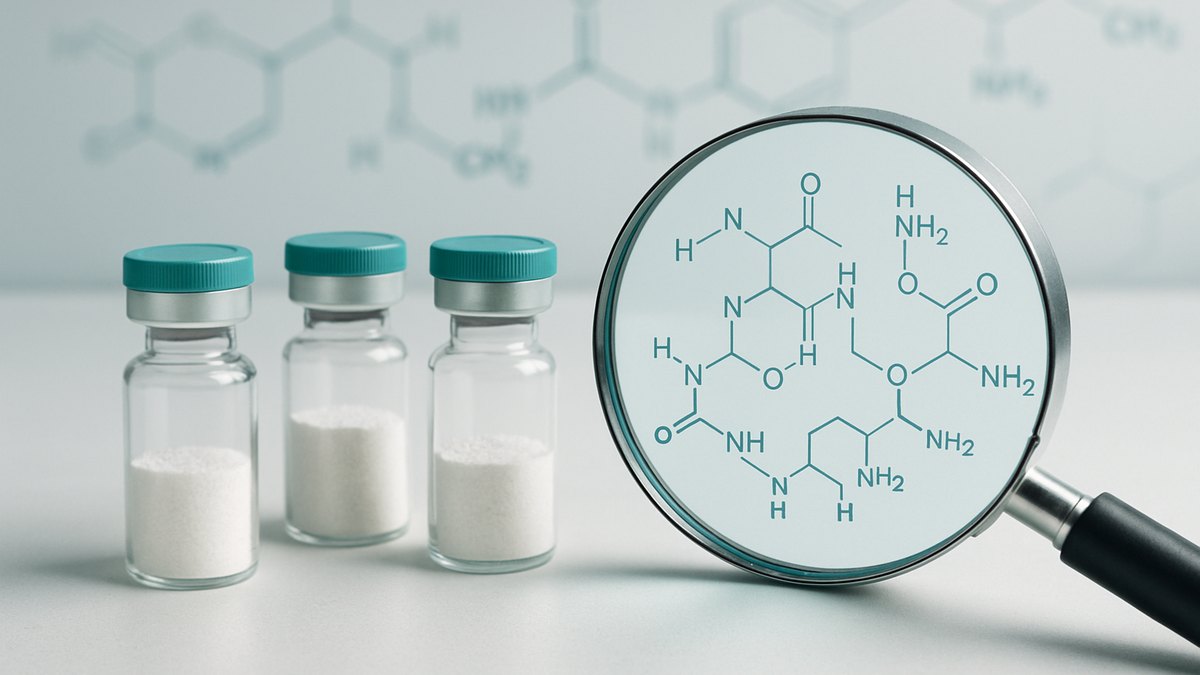
Peptide CAS Numbers Explained: Why They Matter for Research Verification in Laboratory Settings
Peptides are highly sensitive molecules, and minor structural variations can drastically alter their biological activity, binding affinity, and stability. For instance, a peptide with a modified C-terminus or an acetylated N-terminus might share a common name with its unmodified counterpart but will possess a completely distinct CAS number. In academic and pre-clinical research, failing to recognize these subtle modifications can lead to corrupted data, inconsistent cellular responses, or unexpected toxicities in animal models.
Because many novel research peptides are not yet FDA-approved for human use and remain strictly within the domain of laboratory investigation, standard regulatory safety nets do not always apply to their distribution. In this unregulated or semi-regulated pre-clinical space, the burden of verification falls entirely on the investigator. Understanding CAS numbers allows researchers to perform due diligence, confirming that the compounds they receive match the chemical specifications detailed in peer-reviewed journals rather than relying solely on supplier claims.
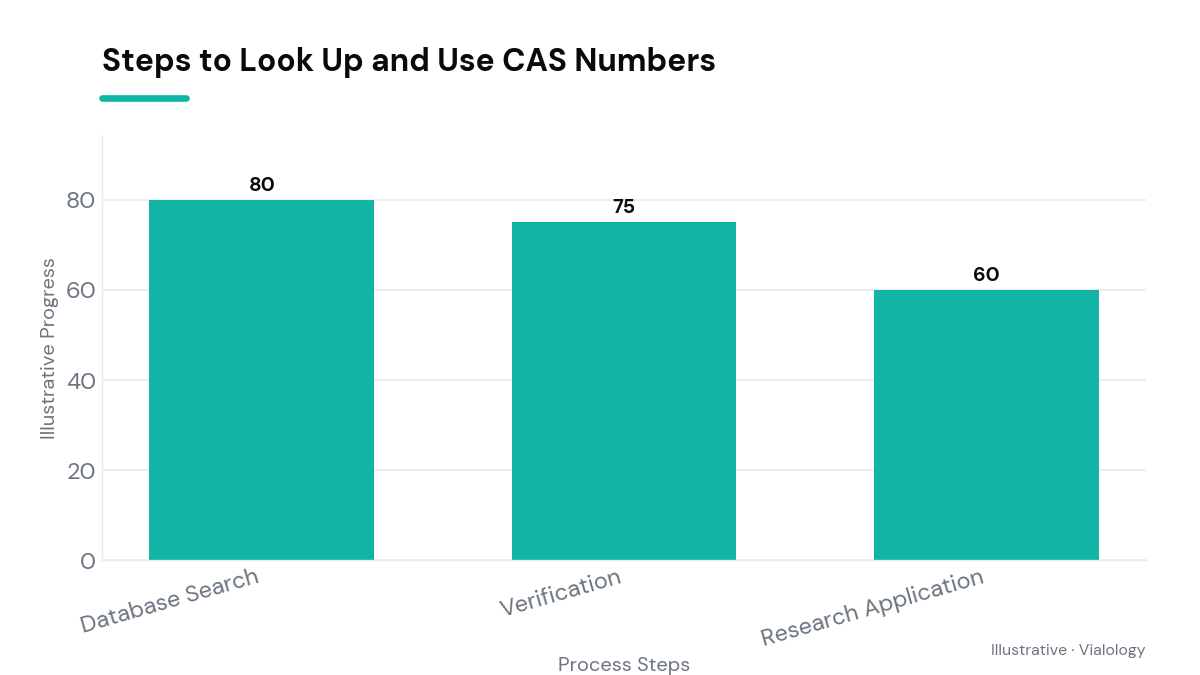
How to Look Up and Use CAS Numbers in Your Studies
Locating a peptide’s CAS number is a straightforward process that should be integrated into every research workflow. Most reputable scientific databases, such as PubChem, ChemSpider, or the official CAS Common Chemistry directory, allow users to search for compounds by name, molecular formula, or structure to retrieve the associated registry number. Once found, this number can be used to search academic databases, bringing up all published studies specifically associated with that exact molecular entity, rather than broader, less relevant search results.
Ultimately, keeping track of these identifiers is about maintaining scientific rigorousness. Whether you are a student analyzing metabolic pathways, a biohacker studying cellular longevity mechanisms, or a journalist reporting on the latest clinical trials, insisting on CAS number verification ensures your insights are grounded in verified chemistry. In a field as rapidly evolving as peptide science, relying on standardized nomenclature is the most reliable way to separate credible research from speculative marketing.
Related on Vialology
Frequently asked questions
What is a peptide CAS number?
A peptide CAS number is a unique, hyphenated numerical identifier assigned by the Chemical Abstracts Service to designate a specific peptide’s molecular structure, ensuring global consistency in scientific communication.
Can two different peptides share the same CAS number?
No, every distinct chemical substance, including minor structural variants or modified peptides, receives its own unique CAS number to prevent confusion.
Where can I find the CAS number for a research peptide?
You can locate CAS numbers by searching reputable biochemical databases such as PubChem, ChemSpider, or the official CAS Common Chemistry portal using the compound’s scientific name or molecular formula.
Why are CAS numbers important for laboratory research?
They are essential for research verification, allowing scientists to confirm they are purchasing, testing, and citing the exact molecular compound described in peer-reviewed literature.
Educational use only. Vialology publishes journalistic and educational content about peptide science. Nothing here is medical advice, diagnosis, or treatment, and nothing should be taken as an endorsement to use any substance. Many peptides discussed are experimental and are not approved by the FDA for human use. Always consult a licensed healthcare professional before making any health decision.