

The tesamorelin peptide has emerged as a major point of interest in endocrinology research due to its highly targeted influence on the human growth hormone pathway. Developed as a synthetic analogue of growth hormone-releasing hormone (GHRH), this compound offers researchers a precise tool to study metabolic regulation. By examining its structure and biological interactions, scientists continue to uncover how this peptide influences fat distribution and cellular energy systems without destabilizing other endocrine functions.
Understanding the Mechanism of the Tesamorelin Peptide
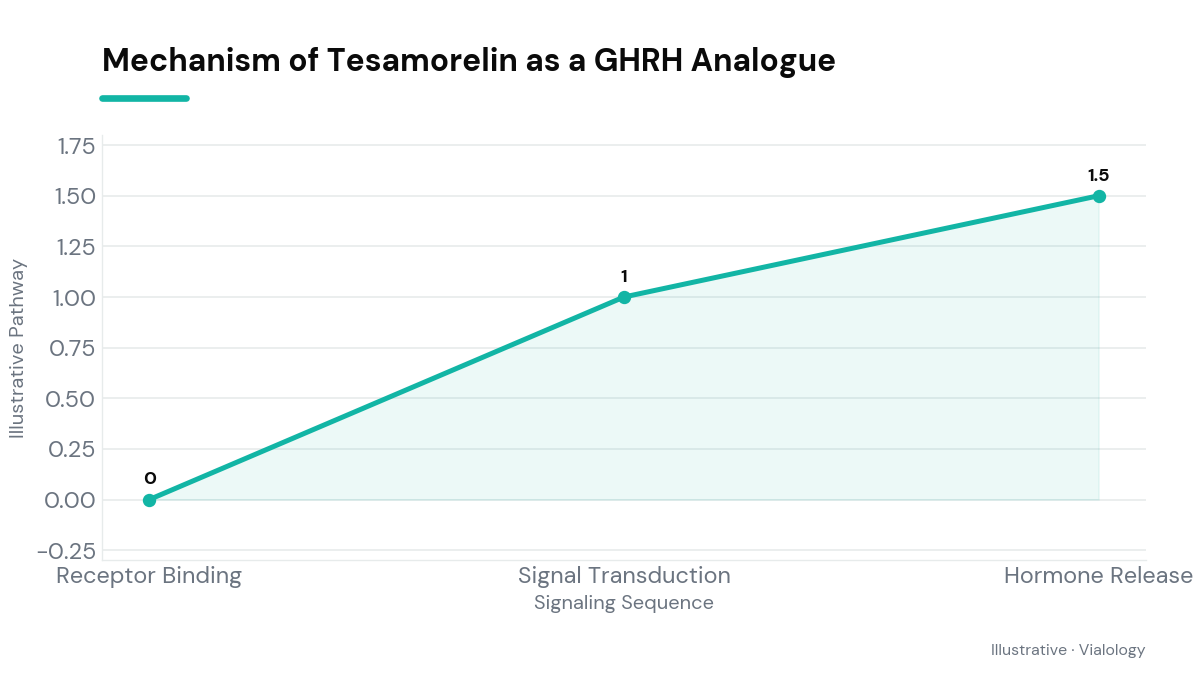
At its core, the tesamorelin peptide is a synthetic 44-amino-acid sequence that mimics endogenous growth hormone-releasing hormone (GHRH). By binding to GHRH receptors in the anterior pituitary gland, it stimulates the synthesis and pulsatile secretion of growth hormone (GH). Unlike direct growth hormone administration, which can cause erratic spikes and suppress natural production, research suggests that this analogue preserves the body’s natural feedback loops, maintaining a more physiological release pattern.
Once growth hormone is released into the bloodstream, it triggers the production of insulin-like growth factor 1 (IGF-1) in the liver and peripheral tissues. Researchers focus heavily on this secondary cascade because IGF-1 plays a critical role in cellular growth, muscle preservation, and lipid metabolism. This indirect approach allows scientists to explore therapeutic pathways for metabolic dysfunction without the adverse glycemic effects often associated with exogenous growth hormone therapy.
Clinical Research into Metabolic and Fat Distribution Effects
Much of the scientific interest in the tesamorelin peptide stems from its clinical evaluation in specific metabolic disorders, particularly HIV-associated lipodystrophy. In landmark phase III clinical trials published in peer-reviewed journals like The New England Journal of Medicine and JAIDS around 2007 to 2010, researchers observed that the compound significantly reduced visceral adipose tissue (VAT) in affected patients. Visceral fat, which wraps around internal organs, is highly linked to cardiovascular risk and insulin resistance, making its targeted reduction a primary endpoint of endocrine research.
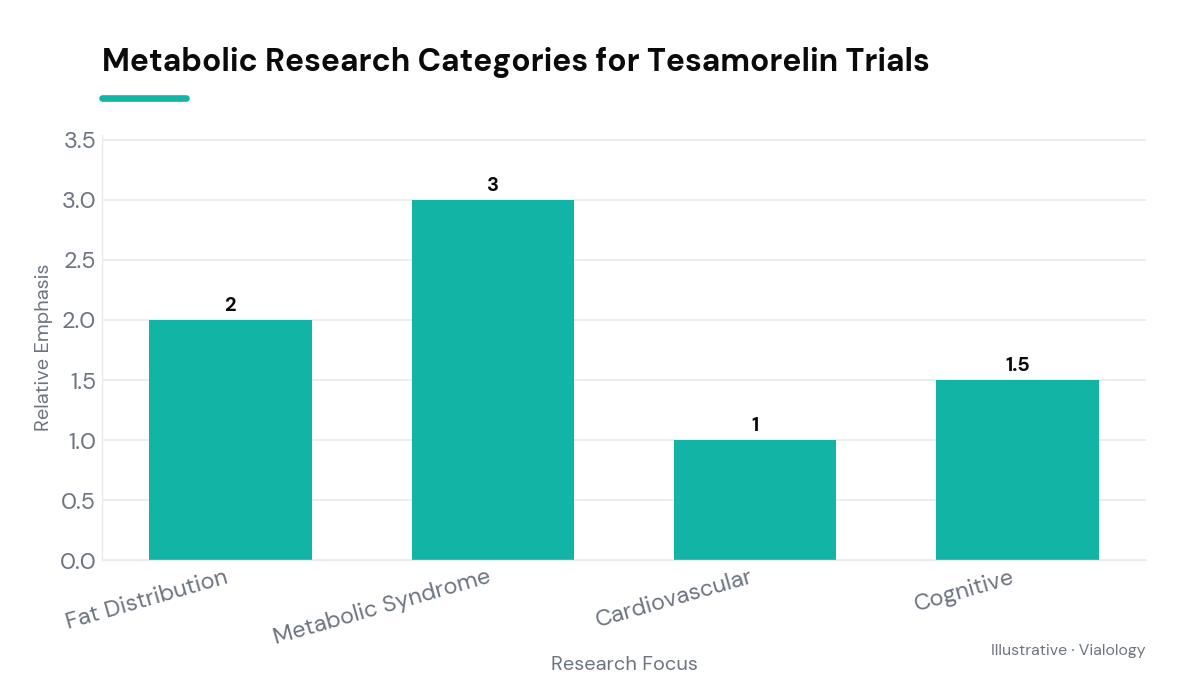
Beyond simply reducing deep belly fat, these clinical studies monitored changes in patient lipid profiles and body composition. The data indicated that while visceral fat decreased, subcutaneous fat remained largely unaffected, and patients often experienced improvements in cholesterol markers without significant disruptions to glucose tolerance. These findings have prompted broader inquiries into how GHRH analogues might be utilized to study obesity, metabolic syndrome, and age-related body composition changes.

Cognitive and Cardiovascular Horizons in Peptide Research
While metabolic research remains the primary focus, emerging pilot studies have begun to explore the potential neurological and cardiovascular implications of the tesamorelin peptide. Because GHRH receptors are present in the central nervous system, some researchers hypothesize that elevating growth hormone and IGF-1 levels could support cognitive health. For example, a 2012 study published in the Archives of Neurology suggested that GHRH administration improved cognitive function in both healthy older adults and those with mild cognitive impairment, sparking interest in further trials.
On the cardiovascular front, researchers are investigating how the reduction of visceral adiposity correlates with systemic markers of inflammation, such as C-reactive protein (CRP). Because chronic inflammation drives arterial disease, observing how GHRH-induced fat loss alters inflammatory signaling pathways provides valuable insights. While these cardiovascular and cognitive avenues of study are still highly preliminary, they underscore the multifaceted nature of GHRH analogues in modern clinical science.
Safety Profiles and Regulatory Status of Tesamorelin
In the United States, the Food and Drug Administration (FDA) approved tesamorelin in 2010 under the brand name Egrifta, specifically to treat lipodystrophy in patients with HIV. This specific approval means that while the compound has a documented safety profile for this indicated demographic under medical supervision, it is not approved for general weight loss, anti-aging, or performance enhancement. In research settings, investigators carefully monitor potential side effects, which can include joint pain, injection site reactions, and transient elevations in blood sugar or IGF-1 levels.
Understanding the regulatory and safety boundaries of the tesamorelin peptide is crucial for the scientific community. Because it actively stimulates the growth hormone pathway, researchers emphasize that its long-term safety profile outside of its FDA-approved indication remains under investigation. The scientific consensus highlights that while GHRH analogues present exciting therapeutic potentials, they must be approached with rigorous clinical oversight to mitigate risks associated with unchecked hormonal elevation.
Related on Vialology
Frequently asked questions
What is the tesamorelin peptide?
The tesamorelin peptide is a synthetic 44-amino-acid analogue of growth hormone-releasing hormone (GHRH) designed to stimulate the natural production and release of growth hormone in the body.
How does tesamorelin interact with growth hormone receptors in research?
In research settings, it binds directly to GHRH receptors on the pituitary gland, triggering a natural, pulsatile release of growth hormone which subsequently stimulates downstream insulin-like growth factor 1 (IGF-1) activity.
What have clinical studies shown regarding tesamorelin’s metabolic effects?
Clinical studies have demonstrated that tesamorelin can significantly reduce visceral adipose tissue (deep belly fat) and improve lipid profiles without causing major disruptions to glucose metabolism.
Is the tesamorelin peptide approved for general anti-aging use?
No, the FDA has only approved tesamorelin for a specific clinical indication—reducing excess abdominal fat in HIV-associated lipodystrophy—and it is not approved for general anti-aging, weight loss, or lifestyle enhancement.
Educational use only. Vialology publishes journalistic and educational content about peptide science. Nothing here is medical advice, diagnosis, or treatment, and nothing should be taken as an endorsement to use any substance. Many peptides discussed are experimental and are not approved by the FDA for human use. Always consult a licensed healthcare professional before making any health decision.