

As research into metabolic signaling expands, tirzepatide has emerged as a landmark dual-targeted therapeutic candidate that engages two distinct incretin hormone pathways simultaneously. Engineered to activate both glucose-dependent insulinotropic polypeptide (GIP) and glucagon-like peptide-1 (GLP-1) receptors, this synthetic peptide represents a significant evolution from traditional single-receptor metabolic interventions. Understanding its unique molecular design and clinical trial performance provides valuable insight into the evolving landscape of multi-receptor peptide therapeutics.
Understanding the Dual GIP and GLP-1 Receptor Mechanism
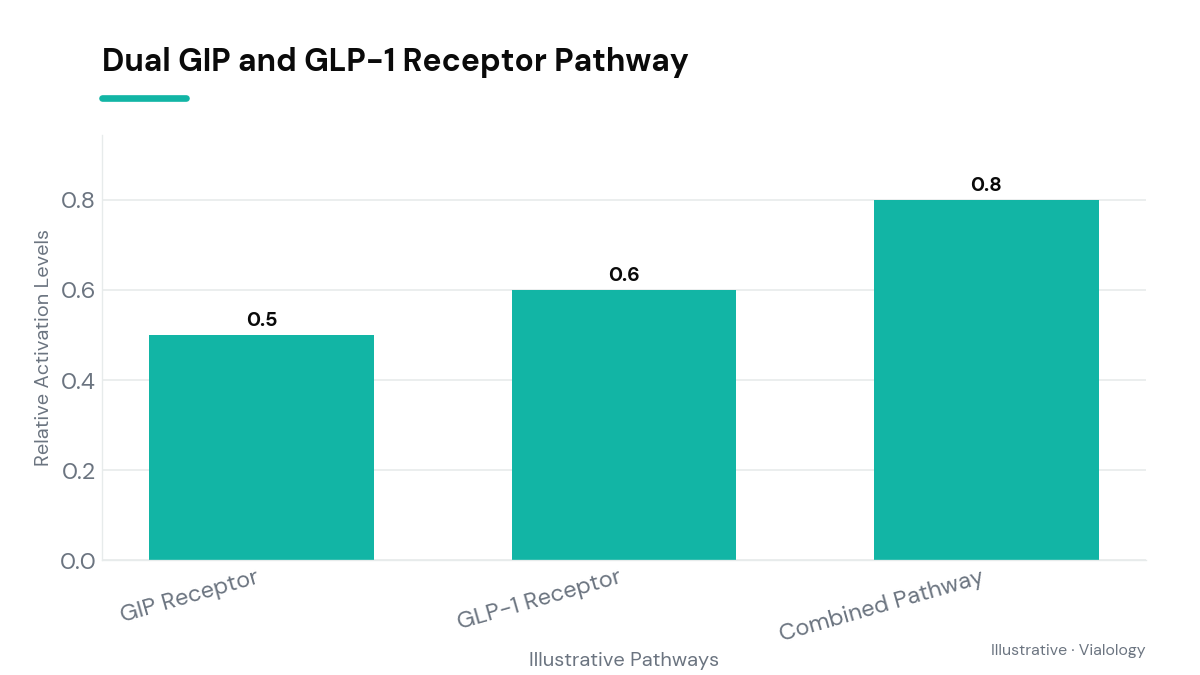
Incretin hormones are gut-derived peptide signaling molecules released following nutrient ingestion to modulate systemic glucose homeostasis, insulin release, and energy balance. While earlier peptide therapies focused exclusively on mimicking GLP-1 to enhance glucose-dependent insulin secretion and delay gastric emptying, researchers hypothesized that co-activating GIP receptors could amplify these metabolic benefits. Tirzepatide was engineered specifically as an imbalanced dual agonist, possessing equal affinity for the native GIP receptor compared to endogenous GIP, alongside approximately five-fold lower affinity for the GLP-1 receptor relative to native GLP-1. This precise functional ratio was designed to optimize synergistic metabolic signaling while minimizing receptor desensitization.
At the cellular level, simultaneous activation of GIP and GLP-1 receptors triggers intracellular signaling cascades through cyclic adenosine monophosphate (cAMP) production. In pancreatic beta cells, this dual pathway enhances insulin biosynthesis and secretion strictly in response to elevated blood glucose levels. Beyond pancreatic signaling, GIP receptor activation in central nervous system centers and adipose tissue appears to modulate lipid metabolism and central satiety pathways in ways that complement traditional GLP-1 activity, offering a multi-pronged approach to metabolic regulation.
Development History and Structural Engineering of Tirzepatide
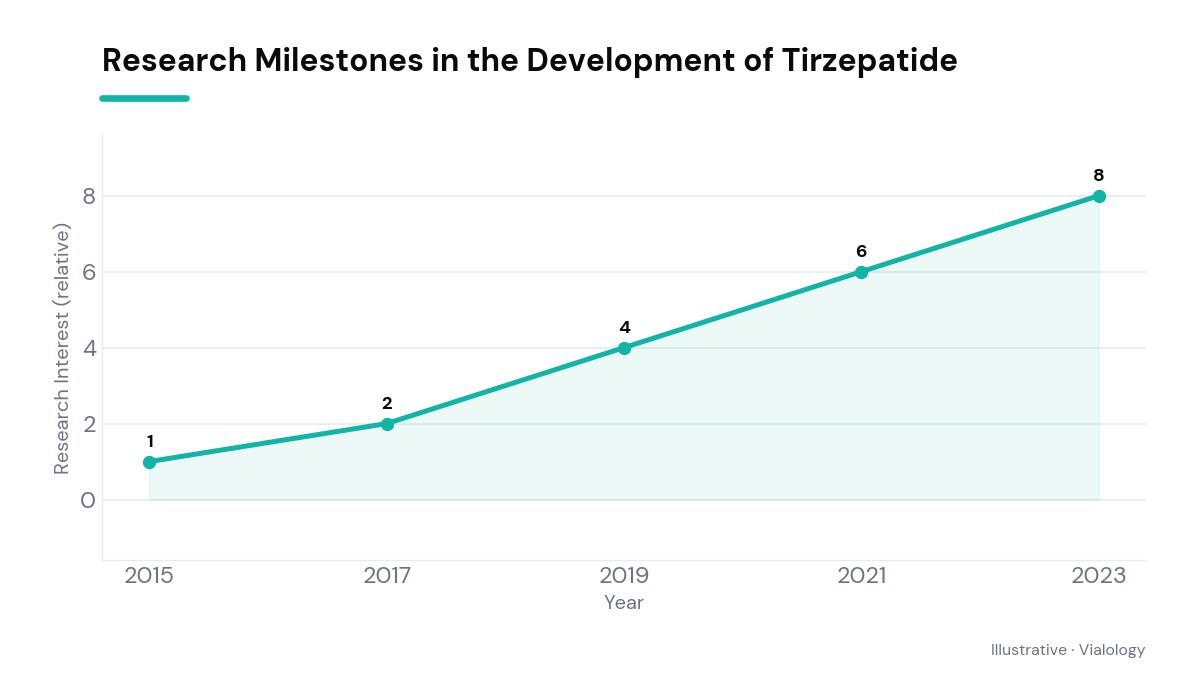
The development of tirzepatide stems from advancements in structural biology aimed at creating stable, long-acting peptide analog molecules capable of targeting multiple receptors without undergoing rapid enzymatic degradation. Naturally occurring endogenous GIP and GLP-1 peptides possess extremely short half-lives measured in minutes, primary due to rapid cleavage by the ubiquitous circulating enzyme dipeptidyl peptidase-4 (DPP-4). To overcome this therapeutic bottleneck, molecular engineers synthesized a 39-amino-acid peptide sequence derived from the native GIP sequence, modified with non-coded amino acid residues and a C-terminal conjugation to a C20 fatty diacid moiety.
This structural fatty acid acylation enables tirzepatide to bind reversibly to circulating human serum albumin in the bloodstream. By anchoring to albumin, the peptide evades rapid renal clearance and enzymatic degradation, extending its elimination half-life to approximately five days in human clinical pharmacokinetic studies. This sophisticated structural modification represents a major milestone in peptide engineering, demonstrating how targeted chemical alterations can preserve native receptor-binding specificity while radically extending biological half-life for sustained physiological activity.

Key Clinical Trial Findings from the SURPASS Program
The clinical profile of tirzepatide has been extensively documented through the SURPASS global clinical trial program, a comprehensive series of Phase 3 studies evaluating its efficacy and safety profile across diverse patient cohorts. In a pivotal 2021 study published in The New England Journal of Medicine (SURPASS-2), researchers conducted a direct head-to-head comparison evaluating tirzepatide against the selective GLP-1 receptor agonist semaglutide over a 40-week period. The clinical trial data demonstrated that dual GIP and GLP-1 receptor activation led to statistically superior, dose-dependent reductions in glycated hemoglobin (HbA1c) levels and total body weight compared to selective GLP-1 monotherapy.
Further clinical investigation across the SURPASS trial series indicated that the peptide consistently improved secondary metabolic biomarkers, including fasting plasma glucose, fasting insulin sensitivity indices, and circulating lipid profiles. Researchers noted that the concurrent activation of GIP receptors appeared to mitigate certain gastrointestinal tolerability issues historically associated with high-dose GLP-1 receptor monotherapies. These clinical findings underscored the potential of multi-target incretin analogs to achieve significantly broader metabolic control than single-pathway pharmacological strategies.
Exploring Broader Research Horizons and Future Implications
Beyond primary glycemic control and body composition metrics, ongoing clinical investigations are evaluating tirzepatide across a broad spectrum of cardiovascular, hepatic, and systemic metabolic conditions. Researchers are actively studying its therapeutic impact on non-alcoholic fatty liver disease (NAFLD) and metabolic dysfunction-associated steatohepatitis (MASH), where preliminary phase 2 trial data suggest substantial reductions in intrahepatic fat content and circulating markers of hepatic inflammation. Additionally, large-scale cardiovascular outcome trials are actively assessing whether long-term dual incretin agonism offers superior cardioprotective benefits compared to standard care.
Scientific interest in dual GIP/GLP-1 receptor agonism extends into neurobiology and chronic neuroinflammatory research as well. Preclinical models indicate that both GIP and GLP-1 receptors are widely expressed across key central nervous system structures that regulate systemic energy homeostasis, neuroinflammation, and reward signaling pathways. As researchers continue to map the systemic effects of multi-incretin targeting, tirzepatide serves as a vital proof-of-concept for the next generation of poly-agonist peptide therapeutics engineered for complex, multi-system metabolic conditions.
Related on Vialology
Frequently asked questions
What is the primary mechanism of action of tirzepatide in research?
Tirzepatide acts as a dual GIP and GLP-1 receptor agonist, simultaneously activating both incretin pathways to enhance glucose-dependent insulin secretion, suppress glucagon release, and modulate central satiety signals.
How does tirzepatide differ from single-receptor GLP-1 agonists?
Unlike selective GLP-1 receptor agonists that target a single signaling pathway, tirzepatide engages both GIP and GLP-1 receptors, utilizing a synergistic dual-mechanism designed to optimize metabolic control and energy balance.
What do clinical trials indicate about tirzepatide’s dual-agonist pathway?
Phase 3 clinical trials, including the SURPASS study program, demonstrate that dual GIP and GLP-1 receptor co-activation leads to greater improvements in glycemic control and body weight reduction compared to selective single-receptor GLP-1 agonism.
Is tirzepatide considered a peptide compound?
Yes, tirzepatide is a synthetic 39-amino-acid peptide analog structurally engineered with a fatty diacid side chain to extend its biological half-life in bloodstream circulation.
Educational use only. Vialology publishes journalistic and educational content about peptide science. Nothing here is medical advice, diagnosis, or treatment, and nothing should be taken as an endorsement to use any substance. Many peptides discussed are experimental and are not approved by the FDA for human use. Always consult a licensed healthcare professional before making any health decision.