

As research into cellular longevity accelerates, the klow peptide has emerged as a key subject of interest among molecular biologists investigating the science of aging. Derived from the well-documented Klotho protein, this synthetic compound is currently being evaluated in laboratory models for its potential to support cognitive performance and promote cellular resilience. While still in the early, preclinical stages of investigation, researchers are eager to understand how targeting these pathways might influence future therapeutic approaches to healthy aging.
The Origins of the KLOW Peptide: The Klotho Connection
The foundation of research surrounding the KLOW peptide begins with the discovery of the Klotho gene in 1997. Named after Clotho, the Greek Fate who spins the thread of life, this gene produces a protein that acts as a circulating hormone with powerful anti-aging properties. Laboratory studies over the past two decades have demonstrated that mice deficient in Klotho exhibit accelerated aging syndromes, while those overexpressing the gene enjoy significantly longer lifespans. However, utilizing the full-length Klotho protein as a therapeutic agent presents major challenges due to its large size and difficulty in crossing the blood-brain barrier.
To bypass these physiological limitations, researchers engineered smaller, synthetic fragments of the protein, leading to compounds like the KLOW peptide. These shortened chains are designed to retain the biological activity of the parent protein while offering superior bioavailability and tissue penetration. By studying these specialized sequences, scientists hope to isolate the specific mechanisms responsible for Klotho’s protective effects on the nervous and cardiovascular systems without the delivery hurdles associated with the full-size molecule.
Investigating the KLOW Peptide for Cognitive Health and Synaptic Plasticity
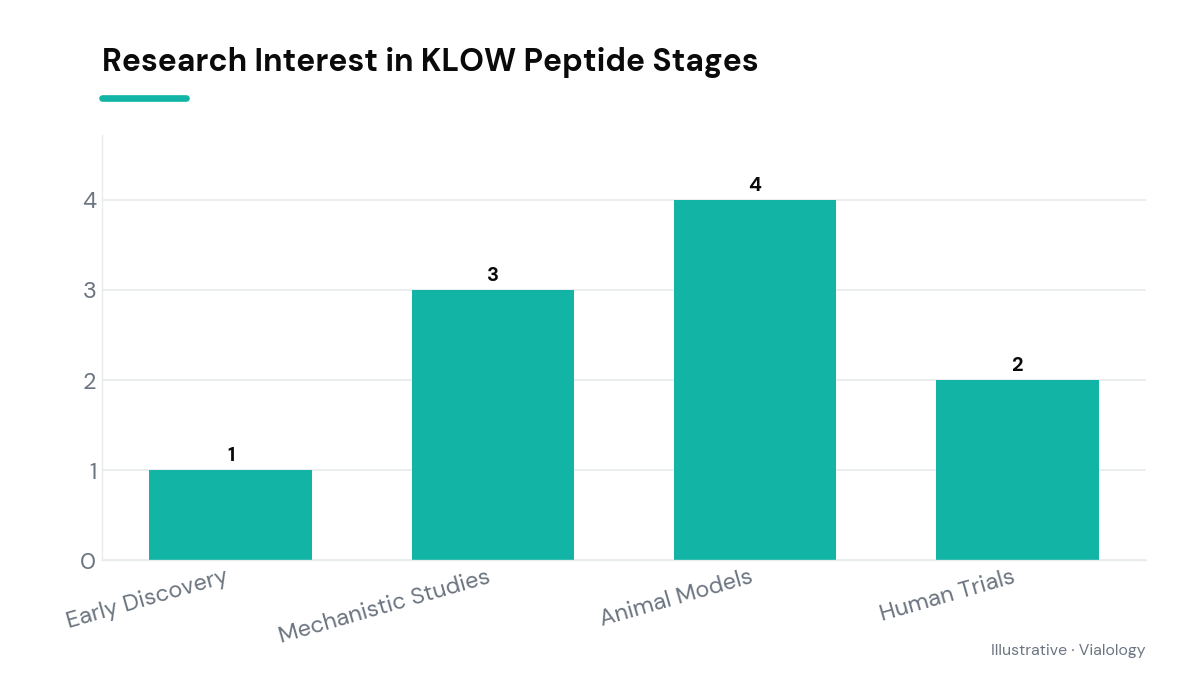
One of the most active areas of investigation into the KLOW peptide is its potential role in enhancing cognitive function. In animal models, researchers have observed that elevating Klotho levels or administering Klotho-derived peptides can lead to measurable improvements in learning and spatial memory. A pivotal study published in 2014 demonstrated that even a single administration of a Klotho fragment could boost cognitive performance in both young and aging mice. These cognitive benefits are believed to stem from the peptide’s ability to reinforce synaptic plasticity, the fundamental process by which brain cells establish and strengthen connections.
At the molecular level, preclinical evidence suggests that the KLOW peptide interacts with NMDA (N-methyl-D-aspartate) receptor subunits, which are critical mediators of synaptic transmission and memory formation. By modulating these receptors, the peptide appears to enhance long-term potentiation, the cellular basis for learning. Furthermore, researchers are studying how this compound might protect against neurodegenerative processes. In animal models mimicking Alzheimer’s disease pathology, Klotho-related compounds have shown a capacity to mitigate synaptic deficits and protect neurons from toxicity, sparking interest in its potential as a protective neuro-agent.

Cellular Longevity and Metabolic Pathways
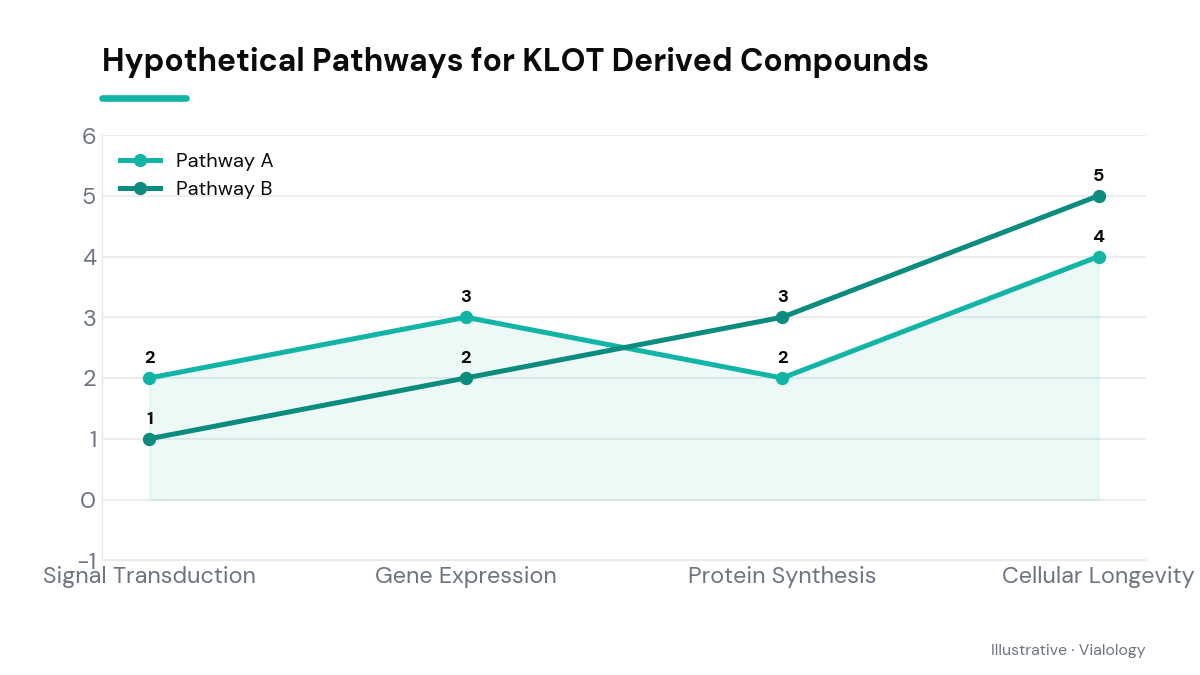
Beyond its neurological implications, the KLOW peptide is a subject of intense focus for its systemic anti-aging and metabolic properties. Endogenous Klotho plays a critical role in regulating insulin and insulin-like growth factor 1 (IGF-1) signaling pathways, which are deeply conserved regulators of lifespan across many species. By mimicking these regulatory actions, the KLOW peptide is studied for its ability to modulate metabolic homeostasis, potentially improving insulin sensitivity and helping cells manage energy resources more efficiently under stress conditions.
Additionally, researchers are evaluating how the KLOW peptide assists in cellular defense mechanisms, particularly in combatting oxidative stress. Oxidative damage from free radicals is a primary driver of cellular senescence and tissue degeneration. In laboratory cultures, cells treated with Klotho-derived peptides show a heightened tolerance to oxidative insults, largely through the upregulation of endogenous antioxidant enzymes such as superoxide dismutase. This dual action of metabolic support and antioxidant defense positions the peptide as an intriguing candidate for future research into cellular longevity.
The Preclinical Reality and Future Directions
While the laboratory findings surrounding the KLOW peptide are highly encouraging, it is essential to emphasize that the compound remains strictly in the preclinical phase of development. Because the vast majority of studies have been conducted in vitro or in rodent models, the safety, tolerability, and efficacy of the peptide in humans are still entirely unknown. The complex biology of human aging means that successful animal trials do not always translate directly to clinical success, requiring a cautious and methodical approach to future research.
As of today, the KLOW peptide is not approved by the Food and Drug Administration (FDA) or any other global health authority for human use, nor is it available as a medical treatment. Future milestones for this compound will rely on rigorous toxicity studies and phase I clinical trials to determine if the cognitive and cellular benefits observed in mice can be safely replicated in humans. For now, it remains an invaluable tool for researchers seeking to untangle the complex molecular mechanisms of aging and cognitive vitality.
Related on Vialology
Frequently asked questions
What is the KLOW peptide?
The KLOW peptide is a short, synthetic peptide fragment modeled after the naturally occurring Klotho protein, which is associated with longevity and cognitive health.
How does the KLOW peptide relate to the Klotho gene?
The KLOW peptide is designed to mimic the active regions of the protein produced by the Klotho gene, offering a smaller molecule that can more easily cross physiological barriers to exert similar biological effects.
Has the KLOW peptide been tested in clinical trials?
No, the KLOW peptide has not yet transitioned to human clinical trials; all existing data regarding its efficacy and mechanism of action are derived from preclinical animal and cell culture studies.
Is the KLOW peptide approved for medical use?
No, the KLOW peptide is not approved for any medical use or therapeutic administration in humans, and it is restricted exclusively to laboratory research settings.
Educational use only. Vialology publishes journalistic and educational content about peptide science. Nothing here is medical advice, diagnosis, or treatment, and nothing should be taken as an endorsement to use any substance. Many peptides discussed are experimental and are not approved by the FDA for human use. Always consult a licensed healthcare professional before making any health decision.