
While often celebrated in wellness circles, understanding the true scope of glutathione injection benefits requires looking closely at the underlying clinical science. Known as the body’s master antioxidant, glutathione plays a critical role in neutralizing free radicals, supporting cellular detoxification, and maintaining mitochondrial health. As interest in systemic administration grows, researchers are actively investigating how direct intravenous or intramuscular delivery compares to traditional oral supplementation.
The Science Behind Glutathione Injection Benefits
Glutathione is a tripeptide composed of three amino acids: glutamic acid, cysteine, and glycine. Produced naturally by the liver, it acts as a primary endogenous antioxidant, defending cells against oxidative stress which can damage DNA and cellular membranes. While oral glutathione supplements are widely available, clinical research indicates that oral bioavailability is relatively low due to enzymatic degradation in the gastrointestinal tract. Consequently, scientists often utilize parenteral administration routes—such as intravenous or intramuscular injections—to bypass the digestive system and achieve higher, more rapid systemic concentrations in clinical studies.
In clinical settings, researchers have evaluated these direct administration routes for various therapeutic applications. For example, clinical trials have historically examined intravenous glutathione’s ability to mitigate oxidative stress and neurotoxicity associated with certain chemotherapeutic agents, such as cisplatin. To better understand how these delivery methods alter cellular markers and systemic antioxidant capacity, scientists frequently refer to specialized literature; those interested in the chemical kinetics of the compound can read the research to analyze how bioavailability shifts across different delivery methodologies.
Cellular Detoxification and Oxidative Stress Mitigation
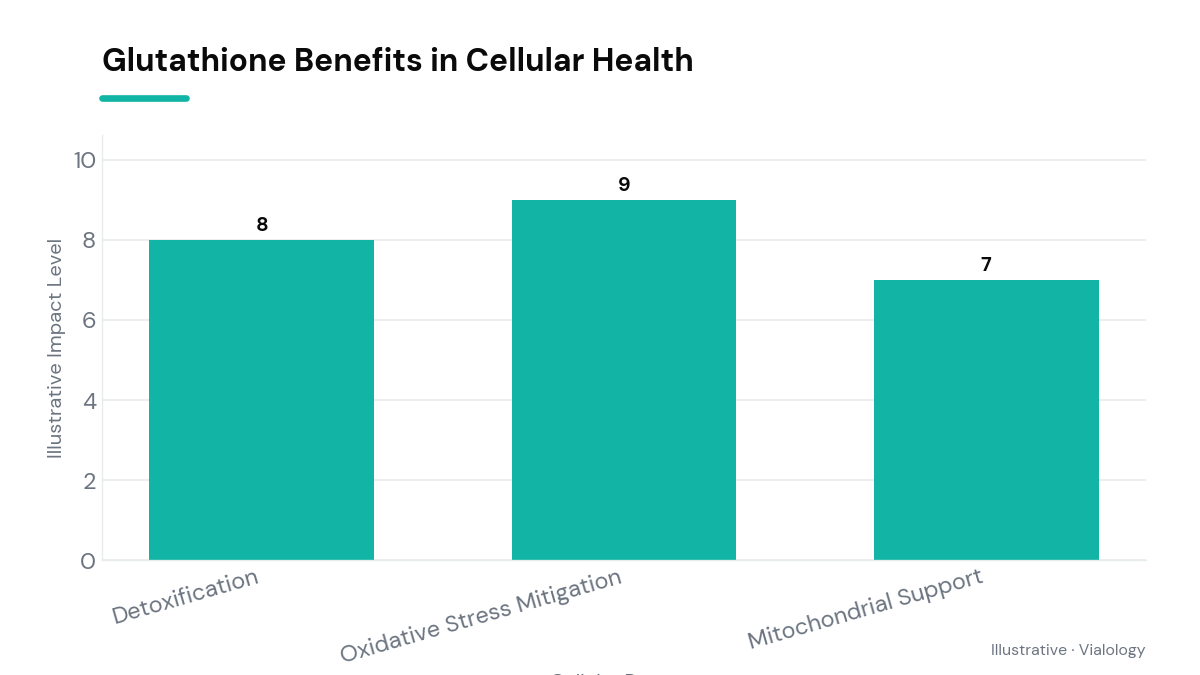
At the molecular level, glutathione operates via two primary states: reduced (GSH) and oxidized (GSSG). The ratio of GSH to GSSG serves as a vital biomarker for cellular health, with a higher ratio indicating robust defense against oxidative insult. Research suggests that sustaining adequate levels of reduced glutathione is essential for protecting hepatocytes—the primary functional cells of the liver—from toxins and lipid peroxidation. A pilot study published in 2017 observed that individuals with non-alcoholic fatty liver disease who received therapeutic support showed improvements in markers of liver cell damage, pointing to the peptide’s role in hepatic support.
Beyond the liver, glutathione’s antioxidant activity extends to the vascular system and skin biology. Some laboratory models suggest that high levels of systemic glutathione may influence melanogenesis by inhibiting the tyrosinase enzyme, which temporarily alters melanin production. However, dermatological researchers emphasize that large-scale, long-term human trials are still required to establish the safety, durability, and systemic impact of utilizing glutathione injections for aesthetic or skin-lightening purposes, as current evidence remains preliminary.

Neurological and Mitochondrial Research Directions
Emerging areas of peptide science are exploring the relationship between glutathione depletion and neurodegenerative conditions. Because the brain consumes a disproportionate amount of oxygen, it is highly susceptible to oxidative damage. Preliminary studies in animal models and small-scale human cohorts have investigated whether maintaining high systemic glutathione levels can support mitochondrial function in neurons. Some researchers hypothesize that supporting mitochondrial health may help mitigate the progressive cellular decline observed in neurodegenerative pathologies, though clinical trials have yet to confirm definitive therapeutic outcomes.
For instance, research into Parkinson’s disease has explored the potential of intravenous glutathione to address the localized glutathione deficiency typically observed in the substantia nigra of patients. While early-phase clinical trials showed temporary improvements in symptom scores for some participants, larger double-blind, placebo-controlled studies are necessary to determine whether these observations translate to long-term disease modification or if they represent transient physiological responses.
Safety, Regulatory Status, and Clinical Considerations
Although glutathione is a naturally occurring peptide, the administration of exogenous glutathione injections carries specific clinical considerations. In the United States, the Food and Drug Administration (FDA) has not approved glutathione injections for general wellness, anti-aging, or skin lightening. Approved medical uses are typically limited to specific therapeutic contexts, such as reducing toxicities associated with chemotherapy. Compounded preparations of glutathione, while utilized by some practitioners off-label, do not undergo the same rigorous pre-market FDA review as standardized pharmaceutical drugs.
Clinical researchers note that potential side effects of systemic glutathione administration can include abdominal cramps, thyroid dysfunction, kidney issues, and, in rare instances, severe allergic reactions like Stevens-Johnson syndrome when administered in high doses. Because of these risks and the scarcity of long-term safety data, scientific consensus emphasizes that any investigation into glutathione injections should occur under strict medical supervision, prioritizing patient safety and evidence-based protocols over anecdotal wellness trends.
Related on Vialology
Frequently asked questions
What is the primary difference between oral glutathione and glutathione injections?
Oral glutathione undergoes significant degradation by enzymes in the digestive tract, whereas injections deliver the peptide directly into the bloodstream or muscle tissue to bypass the gut and achieve higher systemic bioavailability.
Is there clinical evidence supporting glutathione injections for skin lightening?
While some small studies indicate that glutathione can temporarily inhibit melanin production, major dermatological organizations warn that there is insufficient long-term, large-scale clinical evidence to support the safety or efficacy of injections for cosmetic purposes.
Are glutathione injections approved by the FDA?
The FDA has not approved glutathione injections for general wellness, anti-aging, or cosmetic use; its approved clinical applications are highly specific, such as mitigating side effects of cisplatin chemotherapy.
What are the potential side effects of glutathione injections observed in research?
Reported adverse effects in clinical literature range from mild issues like abdominal cramping and headaches to severe risks, including thyroid instability, renal dysfunction, and serious systemic allergic reactions.
Educational use only. Vialology publishes journalistic and educational content about peptide science. Nothing here is medical advice, diagnosis, or treatment, and nothing should be taken as an endorsement to use any substance. Many peptides discussed are experimental and are not approved by the FDA for human use. Always consult a licensed healthcare professional before making any health decision.