

While GLP-1 receptor agonists have dominated recent headlines, the broader landscape of Metabolic and Weight Research Peptides: A Category Guide Beyond GLP-1s reveals an intricate web of alternative biological pathways. Researchers are increasingly looking beyond simple appetite suppression to study how other peptide hormones influence mitochondrial efficiency, lipid mobilization, and energy expenditure. Understanding these emerging classes of compounds is essential for keeping pace with the rapidly evolving science of metabolic health.
The Growth Hormone Secretagogue Pathway in Research
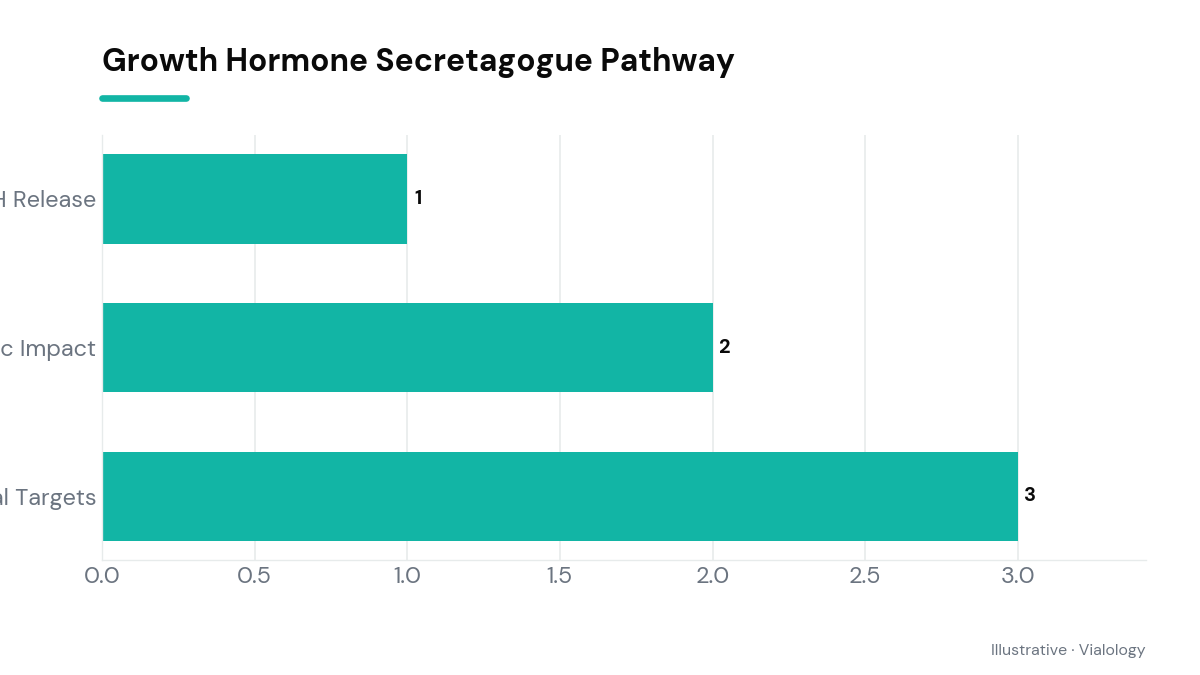
Growth hormone secretagogues (GHSs) represent a major area of study within the metabolic research space. These peptides, which include compounds like Ipamorelin and Tesamorelin, work by mimicking ghrelin or growth hormone-releasing hormone (GHRH) to stimulate the pituitary gland’s natural release of growth hormone. Unlike synthetic growth hormone administrations of the past, GHS molecules act via pulsatile release patterns. A 2014 clinical trial on Tesamorelin, for instance, demonstrated its ability to significantly reduce visceral adipose tissue in patients with metabolic complications, sparking broader scientific interest in how these agents might assist in body composition reorganization without triggering severe insulin resistance.
In pre-clinical models, the mechanism of action for these peptides involves the selective activation of the growth hormone secretagogue receptor (GHSR-1a). Researchers observe that this pathway not only assists in lipolysis—the breakdown of lipids—but also preserves lean muscle mass during caloric deficits. Because maintaining metabolic rate is heavily dependent on skeletal muscle preservation, studying these alternative mechanisms provides vital clues for researchers looking beyond GLP-1 peptides to address the complex issues of sarcopenia and metabolic slowing during weight loss.
Mitochondrial and Fat-Targeting Peptides: A Category Guide Beyond GLP-1s
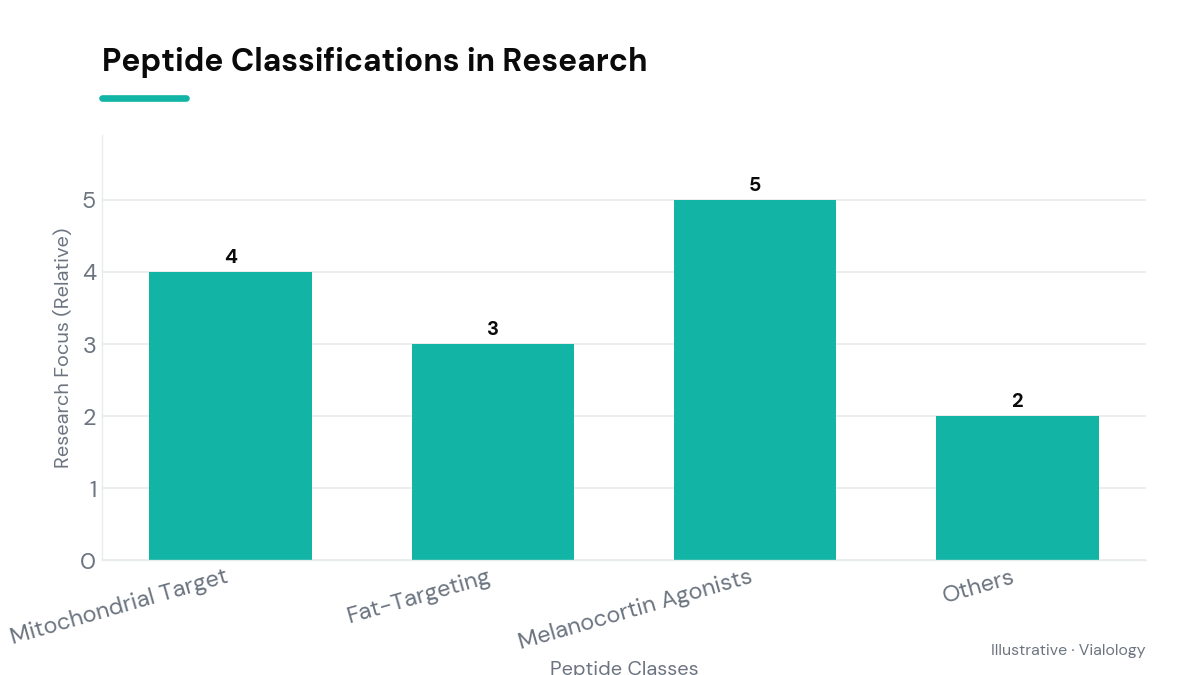
Another fascinating domain in metabolic research focuses on mitochondrial-derived peptides and specific fragments of human growth hormone. AOD9604, a modified C-terminal fragment of human growth hormone (tyrosine-stabilized fragment 177-191), was originally developed to isolate the fat-burning properties of growth hormone without its corresponding diabetogenic or growth-promoting effects. Animal studies published in the early 2000s indicated that AOD9604 stimulates lipolytic activity in adipose tissues while inhibiting lipogenesis, making it a key subject of investigation for targeted fat reduction without affecting systemic insulin sensitivity.
Concurrently, MOTS-c, a 16-amino-acid peptide encoded by the mitochondrial genome, represents a paradigm shift in how we understand exercise mimetics. A landmark 2015 study in cell and animal models demonstrated that MOTS-c regulates metabolic homeostasis by targeting the folate-AMPK pathway, effectively mimicking the metabolic benefits of physical exercise. By promoting glucose uptake in skeletal muscle and enhancing fatty acid oxidation, MOTS-c is currently being evaluated in early-stage research for its potential to reverse age-associated insulin resistance and mitochondrial dysfunction.

Melanocortin Agonists and Energy Balance Pathways
The complexity of weight regulation has also led researchers to examine the synergy between GHRH analogs like CJC-1295 and pancreatic hormones such as amylin. Amylin, co-secreted with insulin from pancreatic beta cells, plays a critical role in postprandial glucose control and satiety. Research into amylin analogs, such as pramlintide, shows that they slow gastric emptying and centrally suppress appetite via distinct neuroendocrine pathways. When studied alongside growth hormone secretagogues, these compounds present an intriguing multi-pathway model for metabolic intervention.
Investigating these multi-hormonal approaches highlights why single-receptor targets rarely tell the whole story of metabolic science. While CJC-1295 (specifically with DAC to extend its half-life) focuses on steady GHRH receptor activation, pairing such research with amylin-mediated satiety signals allows scientists to model how the body coordinates energy storage, expenditure, and appetite across different organ systems. These models are crucial for developing future therapeutic paradigms that can mimic natural human physiology more closely than isolated receptor stimulation.
Related on Vialology
Frequently asked questions
Are these metabolic research peptides approved by the FDA for weight loss?
Most metabolic research peptides, such as MOTS-c and Ipamorelin, are not approved by the FDA for weight loss and remain classified as investigational compounds restricted to laboratory research.
How do mitochondrial-derived peptides differ from traditional GLP-1 agonists?
While GLP-1 agonists primarily target gut-brain signaling to reduce appetite and delay gastric emptying, mitochondrial-derived peptides like MOTS-c act cellularly to enhance fatty acid oxidation and mimic the metabolic changes induced by exercise.
Why is muscle preservation a major focus in metabolic peptide research?
Preserving skeletal muscle during weight reduction is crucial because muscle tissue is highly active metabolically; losing muscle can significantly decrease resting energy expenditure and lead to long-term metabolic rebound.
Educational use only. Vialology publishes journalistic and educational content about peptide science. Nothing here is medical advice, diagnosis, or treatment, and nothing should be taken as an endorsement to use any substance. Many peptides discussed are experimental and are not approved by the FDA for human use. Always consult a licensed healthcare professional before making any health decision.