

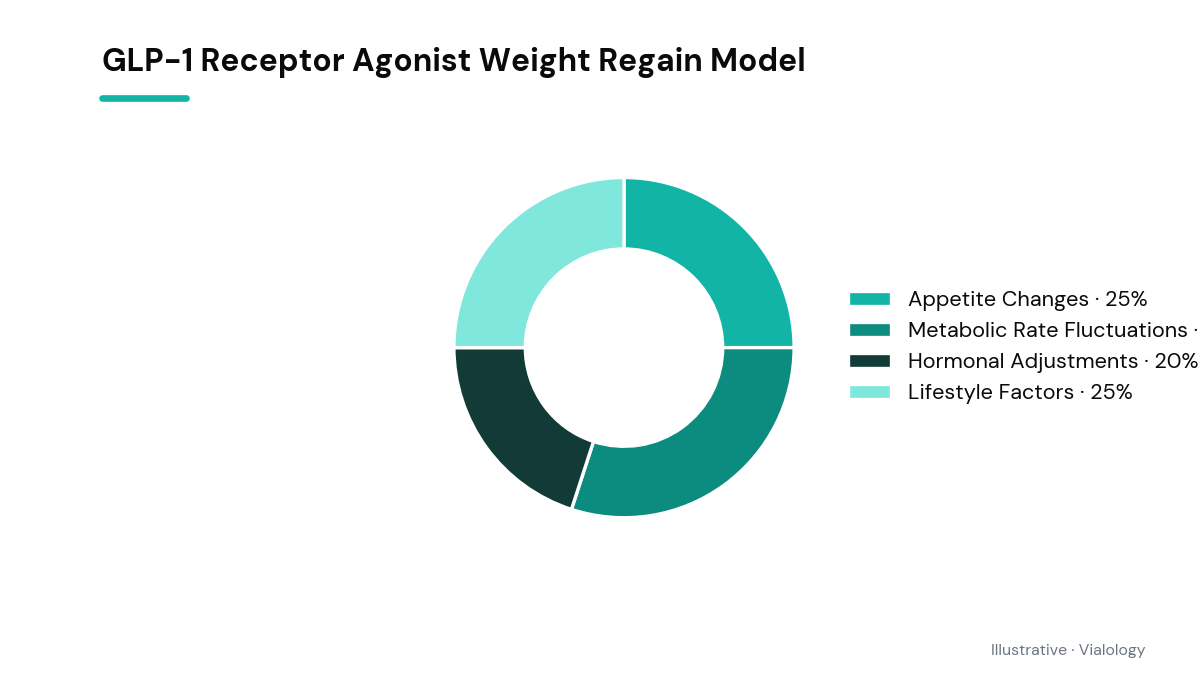
As clinical use of obesity medications expands, a major question persists regarding GLP-1 Receptor Agonists After Discontinuation: What Research Says About Weight Regain. Clinical data shows that GLP-1 receptor agonists, such as semaglutide and tirzepatide, effectively mimic natural metabolic hormones to induce satiety. However, emerging long-term data indicates that when these therapies are stopped, the underlying metabolic factors regulating appetite often return to their baseline states.
The Physiology of GLP-1 Receptor Agonists After Discontinuation: What Research Says
GLP-1 receptor agonists function by mimicking glucagon-like peptide-1, an incretin hormone secreted by the intestines that slows gastric emptying, stimulates insulin secretion, and signals satiety to the brain. When these synthetic peptides are cleared from the system, these exogenous satiety signals disappear. Without the continuous stimulation of these receptors, the physiological mechanisms regulating hunger revert to their baseline levels, often leading to a phenomenon colloquially referred to as rebound hunger as the body attempts to return to its previous adipose set point.
In a landmark 2022 clinical trial known as the STEP 1 extension study, researchers observed patients who had completed a 68-week course of once-weekly semaglutide. Upon discontinuation of the peptide and the supportive lifestyle interventions, participants regained approximately two-thirds of their prior weight loss within one year. This return to baseline status demonstrates that the metabolic modifications induced by these agents are transient rather than permanent physiological shifts.
Analyzing the STEP 4 and SURMOUNT-4 Withdrawal Trials
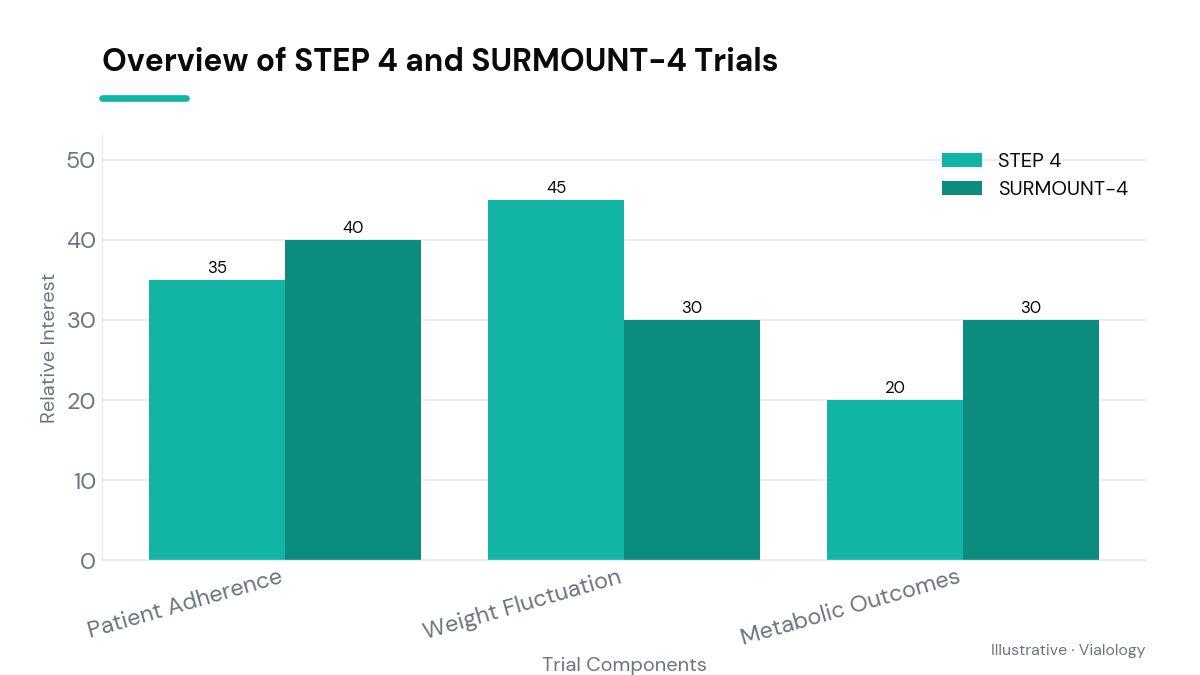
Further insights into the trajectory of weight maintenance can be found in the STEP 4 randomized withdrawal trial. In this study, all participants received semaglutide for 20 weeks, after which one group was randomized to continue the treatment while the other was switched to a placebo. The group that transitioned to the placebo experienced a gradual, steady increase in body weight, illustrating that the peptide’s presence is a primary driver of the sustained caloric deficit required for weight management.
For those studying these biological pathways in laboratory settings, understanding these hormonal feedback loops is critical. Researchers investigating these mechanisms can access specialized databases and GLP-1 discontinuation research to evaluate how receptor density and metabolic adaptation fluctuate in animal models following the cessation of active compounds.
Cardiometabolic Reversion Post-Cessation
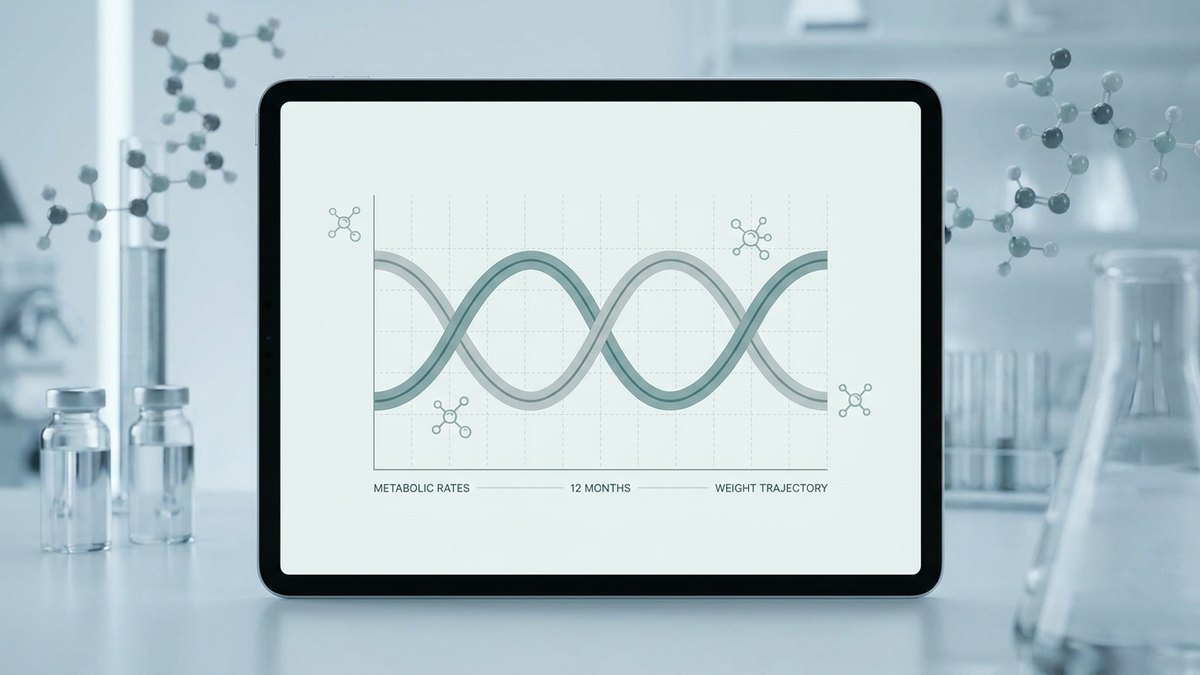
The reversion that occurs after stopping GLP-1 therapy is not limited to body weight alone. Clinical assessments from the STEP 1 extension trial showed that beneficial changes in cardiometabolic risk factors—including blood pressure, glycated hemoglobin (HbA1c), fasting lipids, and insulin sensitivity—also tended to return toward pre-treatment baselines within 52 weeks of stopping the medication. This suggests that the cardiovascular and glycemic benefits of GLP-1 agonism are highly dependent on continuous receptor activation.
These findings highlight a fundamental shift in how researchers and clinicians view obesity management, moving from a paradigm of acute, short-term treatment to one of chronic, long-term metabolic support. Because the body’s homeostatic mechanisms are wired to defend its highest historical weight, cessation of the hormone analog allows historical physiological triggers to resume dominance.
Factors Influencing the Rate of Regain
While the trend toward weight regain is consistent across large-scale cohorts, individual rates of regain vary. Factors such as the duration of the initial therapy, the specific molecule used (such as semaglutide versus the dual GLP-1/GIP agonist tirzepatide), and individual metabolic baseline characteristics play significant roles. In the SURMOUNT-4 trial evaluating tirzepatide, participants who switched to placebo after 36 weeks regained approximately 14% of their body weight by week 88, confirming that multi-receptor agonists follow a similar rebound pattern.
Additionally, preclinical models suggest that the preservation of lean muscle mass during active weight loss may influence how efficiently the body regulates energy expenditure post-treatment. Ongoing research is aiming to determine whether gradual tapering protocols or specific dietary structures can mitigate the rapid return of appetite signals.
Related on Vialology
Frequently asked questions
Why do people regain weight after stopping GLP-1 receptor agonists?
Weight regain occurs because GLP-1 receptor agonists do not permanently alter the body’s metabolic set point; once the synthetic hormone is cleared, the natural signals for appetite and gastric emptying return to their pre-treatment baseline.
What did the STEP 1 extension study show about discontinuation?
The STEP 1 extension study showed that participants regained approximately two-thirds of their lost weight within one year of discontinuing weekly semaglutide and lifestyle interventions.
Do cardiometabolic benefits also disappear after stopping the therapy?
Yes, research indicates that improvements in blood pressure, blood sugar control, and lipid profiles largely revert toward pre-treatment baselines once the therapy is discontinued.
Educational use only. Vialology publishes journalistic and educational content about peptide science. Nothing here is medical advice, diagnosis, or treatment, and nothing should be taken as an endorsement to use any substance. Many peptides discussed are experimental and are not approved by the FDA for human use. Always consult a licensed healthcare professional before making any health decision.